
Latin America. Influence U.S. elections or the U.K.'s political future with the personal information millions of people post on Facebook and powerful data analytics technology.
Not too long ago, something like this would have seemed like something out of a science fiction novel, but the Cambridge Analytica scandal, revealed in 2018, showed that it is possible and that the advancement of technology and machine intelligence puts us in front of fundamental dilemmas that we have never considered before.
The Neurorights Initiative, led by the Neurorights Foundation, promotes the recognition of a new set of protective measures to address the challenges arising from these technical advances. Some of them are part of the debate on the Artificial Intelligence Law that is being negotiated within the European Union, a law that should regulate, among other aspects, the ability of AI to influence people's subconscious (as in the case of Cambridge Analytica, but at much deeper levels).
Ignasi Beltran de Heredia, professor at the Faculty of Law and Political Science at the Open University of Catalonia (UOC) and author of the book Artificial Intelligence and Neurorights (Aranzadi, 2023), has just published an article in which he analyses the challenges posed by the advance of AI and questions the latest proposal for a European Union law through a neuroscientific perspective.
The Risks of Giving AI Access to Our Subconscious
It is estimated that only 5% of our brain activity is conscious. The remaining 95% works below the conscious level, without us really having any control over it or even perceiving that it is occurring. As Ignasi Beltran de Heredia points out in his article, we are overt by this extraordinary torrent of neural activity because the interaction between the conscious mind and unconscious behavior is extremely complex, and the forces that guide our lives are far beyond our control.
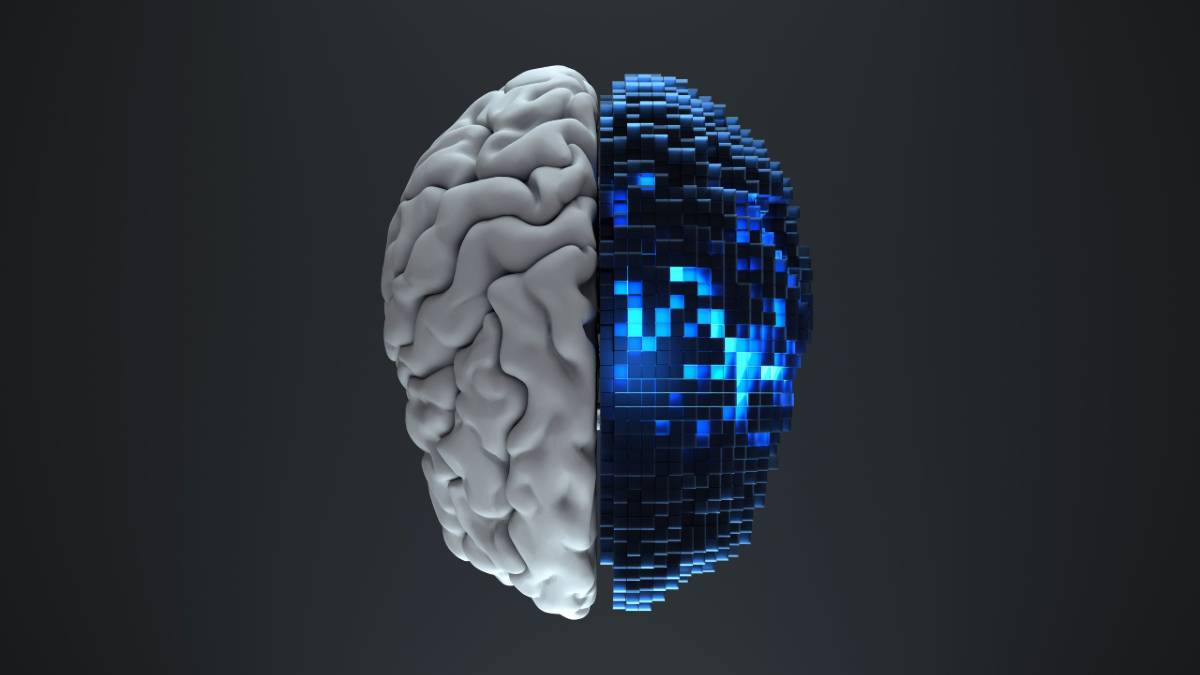
However, that doesn't mean there aren't ways to influence beyond consciousness. "Artificial intelligence can do this in two ways," says the researcher. "The first is by collecting data about our lives and creating an architecture of decisions that leads you to make a certain decision. The other, less developed for now, consists of applications or devices that directly generate irresistible impulses for our unconscious mind and that subliminally manage to generate impulsive responses, that is, that they manage to manufacture impulses."
"As we develop better, more powerful machines and become more connected to them, the two options will become more and more common. Algorithms will have more data on our lives and it will be easier to create instruments that generate these impulsive responses," adds Beltran de Heredia. "The risk that these technologies carry is that, as in the Pied Piper of Hamelin, people end up dancing without knowing why."
For the researcher, the field where we are likely to start seeing attempts to condition human behavior through AI is work and, more specifically, occupational health. He argues that there are a variety of intrusive technologies in use, such as devices to monitor bus drivers' microsleeps or electroencephalography (EEG) sensors, which allow employers to track employees' brain waves to detect levels of stress and attention while they work. "It's difficult to make projections about what the future will look like, but if we don't put limits on this type of intrusive technology, which is still in a very early stage of development, it is likely that they will continue to improve and spread for the sake of productivity," says Beltran de Heredia, who is also director of the UOC's Law and Political Science Studies.
The (fuzzy) boundaries proposed by the EU
The new artificial intelligence regulation being discussed in the European Union aims to anticipate the possible risks arising from this and other uses of AI in the future. Article 5.1 of the original bill included the express prohibition of the marketing, putting into service or use of an AI capable of influencing beyond the conscious level of a person in order to distort their behaviour. However, since then, amendments and modifications have been introduced that have diluted the categorical nature of this prohibition.
The proposal currently on the table, and which will serve as a reference for the final drafting, establishes the prohibition of such techniques as long as they are deliberately manipulative or misleading and significantly affect the person's ability to make an informed decision, thus causing the person to make a decision that they would not have otherwise made and that somehow causes significant harm to someone. This prohibition will also not apply to approved AI systems for therapeutic purposes.
"The proposal includes the prohibition when there is serious harm and the person ends up doing something they were not going to do. But that's an impossibility. If I don't have access to my unconscious self, it's impossible for me to prove what else I would have done if I hadn't been stimulated, nor to prove the damage," explains Ignasi Beltrán de Heredia. "If subliminal advertising is now totally prohibited, without any nuances, why are we leaving room for subliminal conditioning by artificial intelligence?"
The researcher argues that, if we leave the door of our unconscious mind open, even if it is with good intentions, we will not be able to control who has access to it, what that access is like, and what goals they seek. "Someone might think that these reflections appeal to a dystopian future that is difficult to realize. However, there is no doubt that we are already being victims of intrusions at a level of depth unimaginable a few years ago and, for this reason, citizens should have the highest level of protection. Our unconscious mind refers to the innermost part of our personality and should be absolutely shielded. In fact, these things shouldn't even be discussed," he adds.
There's still a lot we don't know about how our brains work and the relationships between our conscious and unconscious minds. The brain is still a very elusive organ and, although science is advancing a lot and very fast, we do not know many of the effects that a certain stimulus can have on its functioning. "We have to be aware of the risk involved in giving other people and companies access to those very deep levels of our being. In the context of the data economy, there are many public and private institutions that compete for access to our information, but, paradoxically, there are many examples that allow us to verify that citizens attribute little value to privacy," concludes Beltrán de Heredia.