
Latin America. The deployment of mobile broadband services in Latin America and the Caribbean presents challenges for authorities when it comes to increasing coverage in rural areas and far from large urban centers.
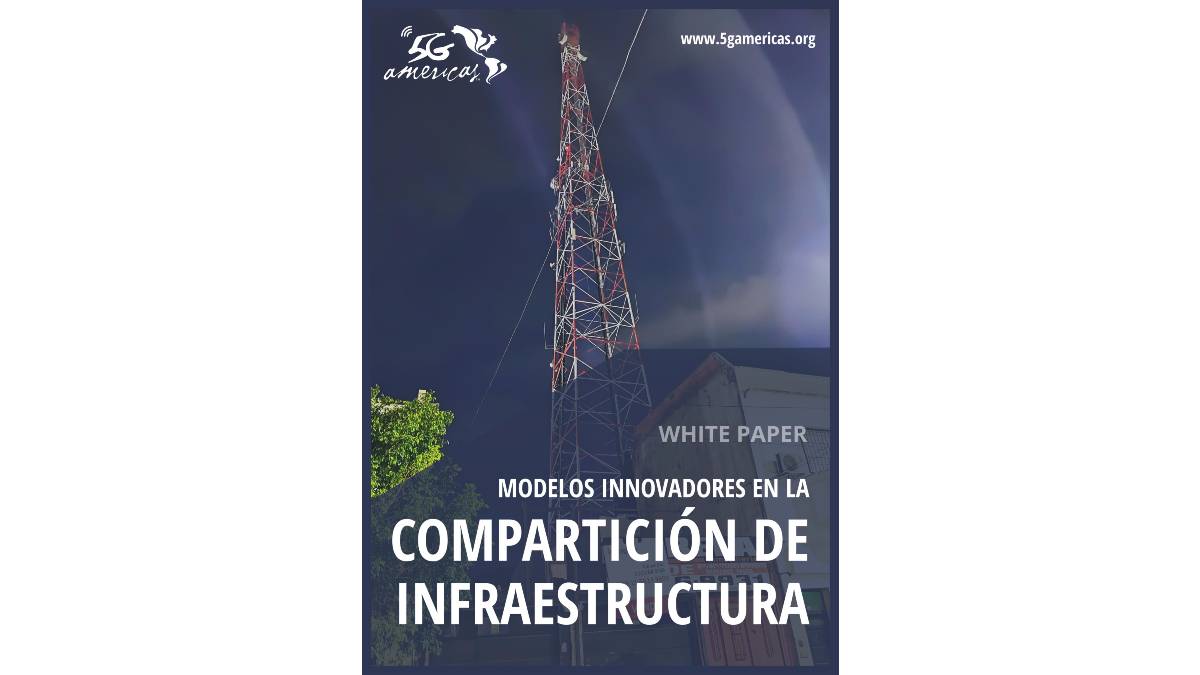
The voluntary sharing of passive and active infrastructure is a tool in the policies to be implemented in the countries of the region, as explained in the White Paper "Innovative Models in Infrastructure Sharing" published by 5G Americas.
The study considers that the voluntary sharing of infrastructure is a positive tool to achieve access to rural areas and towns far from large urban centers. It allows connectivity to be brought to previously unserved areas with a good quality of services and high data speed, allowing the development of different verticals and services provided by the State such as education, health and security.
"In addition to measures such as the creation of an agenda that allows the industry to plan the laying of its networks, the reduction of bureaucratic obstacles that weigh on its deployment, as well as the concept of a single window for procedures, it is important that the authorities of the region consider the voluntary sharing of active and passive infrastructure," explained José Otero, Vice President for Latin America and the Caribbean at 5G Americas.
The study offers a conceptualization of the different modalities of infrastructure sharing, taking into account their benefits. It also analyzes the experiences carried out in the region in markets such as Brazil, Chile, Colombia and Peru. In addition to considering other global examples such as Denmark, Finland and the United Kingdom.
The White Paper "Innovative Models in Infrastructure Sharing" can be downloaded here.