
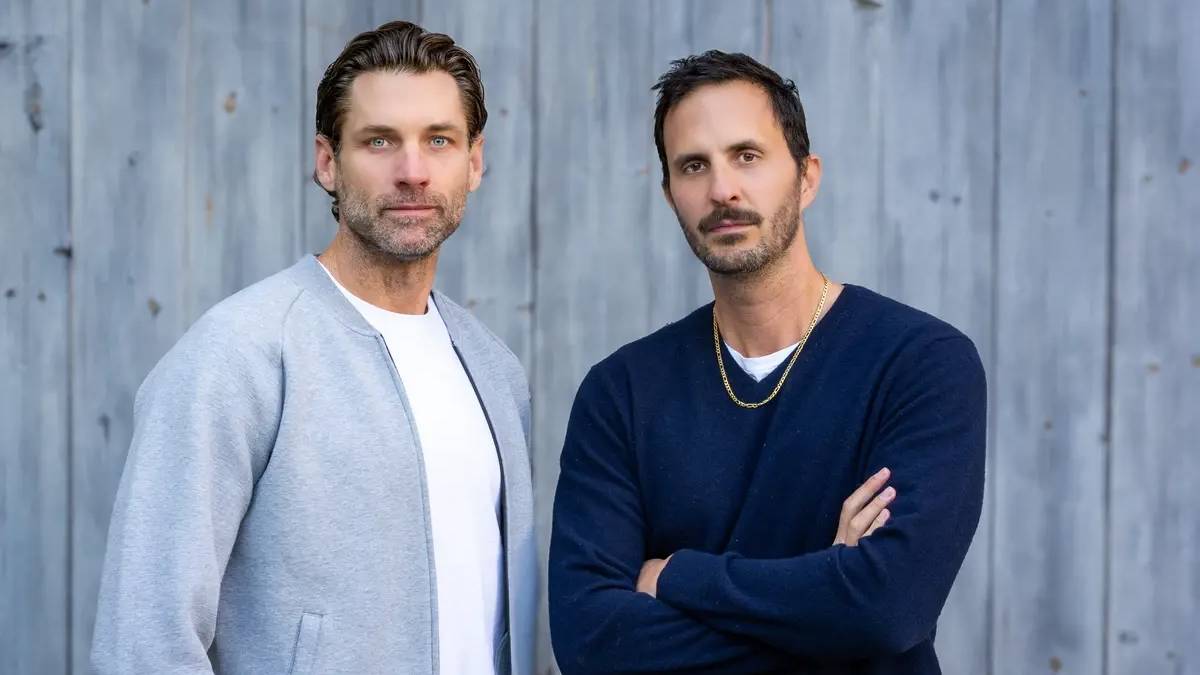
Slipstream's catalog exceeds one million tracks, in addition to more than 300,000 sound effects.
Richard Santa
A few weeks ago, the purchase of the Megatrax company by Slipstream was announced, making it an important player in the music industry for productions, with a catalog that adds up to more than 1 million tracks from various brands and catalogs.
To learn a little more about the scope of this business, the company and the plans in the region, TVyVideo+Radio spoke with the founders of Slipstream Dan Demole, who is now its CEO, and Jesse Korwin, who acts as Chief Revenue Officer.
They recalled that Slipstream was born in 2021, bringing together a long career of both in the music industry. Their idea was to develop a modern and technologically advanced licensing platform that could serve everyone, from individual creators to large global companies.
"The premise was simple: the production music industry was fragmented, its technology was outdated, and it didn't meet the needs of all today's content creators. We set out to create a single platform that would manage music licensing for everyone from a YouTuber with 10,000 subscribers to a global television network," they said.
In 2024, with new financial partners, Pollen Street Capital, they took their most important step to date: the acquisition of Anthem Entertainment's production music portfolio, which included the iconic Jingle Punks library, 5 Alarm Music and UK-based Cavendish Music. This transaction added more than 650,000 tracks to their catalog and made them the largest independent production music licensing platform in the world. In addition, in March 2026, they closed the acquisition of Megatrax, thus exceeding one million tracks in their catalog.
The business vision
Slipstream executives explained that today the business "is focused on three main customer segments: Media (television networks, studios, film and television production companies, and trailer distributors), Enterprises (advertising and marketing agencies, digital publishers, social media platforms, small and medium-sized businesses, and global brands) and the creator market, which includes digital content creators on YouTube, TikTok, Instagram, podcasts and more."
In addition, in the technology space, they are investing heavily in AI-based search and discovery tools that allow customers to find the right music faster and easier, even under pressure. The platform is designed to scale, offering unlimited licensing, global rights management, and seamless integration into business workflows.
"Strategically, we are actively consolidating the music for production sector. We believe that the industry is ready for an independent player, with capital and cutting-edge technology, to assemble the best catalogs and serve the global market more efficiently than the previous model. The acquisition of Megatrax is the latest step in this strategy," they said.
Megatrax and expansion in Latam
Megatrax has been an institution in music production since Ron Mendelsohn and JC Dwyer founded it in Los Angeles in 1991. For more than three decades, they created a highly regarded catalog, led by composers, with strong relationships with clients in television, film, advertising, and, crucially, Latin America and Brazil. And that work aligns with Slipstream's expansion plans in Latin America.
They explained that "The acquisition of Megatrax drives our strategy on several fronts simultaneously. First, it expands our catalog to more than one million tracks, a significant milestone both symbolically and practically, as it reinforces our position as the world's largest independently produced music platform."
Second, it gives them their first significant direct sales operation in Latin America and Brazil. Megatrax has maintained staff and customer relationships in various Latin American markets for years, and that infrastructure is invaluable. "You can't build trust in those markets overnight; Megatrax has worked on it for decades, and we're taking those relationships carefully."
And third, it strengthens the offering for the radio and television imaging market in North America, where Megatrax has been a go-to resource for decades.
They added that "Latin America is one of the fastest growing regions in media and brand marketing globally, and has been underserved by the production music industry. Streaming platforms are expanding rapidly throughout the region, advertising investment is growing, and there is a growing demand from local broadcasters and producers for high-quality, culturally specific music."
What Megatrax brings to them is not just a catalog, but authentic, regional music that reflects the diversity of Latin American culture, combined with direct relationships with clients in markets such as Brazil, Mexico, Argentina, Colombia, and others. That's a foundation that would have taken years to build from scratch.
"Our expectation is that the Latin American business will be an important growth driver for Slipstream in the coming years. We plan to invest in the region – in people, catalog and local partnerships – to provide you with the service you deserve. Brazil, in particular, is a market we are very focused on, given its magnitude and the richness of its musical culture," they said.
A wide catalog
Slipstream's catalog spans all genres, moods, rhythms, and uses: from cinematic orchestral soundtracks to hip-hop, from Latin rhythms to indie folk, from high-energy sports music to intimate acoustic pieces.
Within the catalog, they have several distinctive brands with identities and stories of their own: Jingle Punks, known for its deep roots in unscripted television and advertising; 5 Alarm Music, with a strong track record in action, drama, and reality shows; Cavendish Music, its U.K.-based record label and one of the oldest in the industry.
Dan Demole and Jesse Korwin, mentioned that "Our music is created by a global cast of professional composers, lyricists and musicians, of the same caliber who create chart-topping hits, soundtracks for great movies and produce viral content. We work with more than 1000 artists across our various brands and catalogs."
And here Latin America continues to play an important role. Through Megatrax, they do not have a single catalog, so they will continue to produce Latin music by country. The vision is clear: Brazilian music sounds different from Colombian music, which sounds different from Mexican music, which sounds different from Argentinian music. That cultural specificity is what customers in the region value and what their audience responds to.
A matrix platform
Slipstream operates as the parent platform and licensing infrastructure, with several distinct brands integrated. Its current portfolio includes:
Jingle Punks: Flagship production music brand in the U.S., with a strong track record in television, advertising, and unscripted shows.
5 Alarm Music: A U.S.-based library with a strong presence in action, drama, sports, and reality shows.
Cavendish Music: UK-based label with strong relationships with European broadcasters, a high-quality catalogue, archival albums dating back to the 1920s and its own production team commissioning original albums.
Megatrax: the recently acquired Hollywood-based library with three decades of experience in television, film and advertising, and a strong client base in Latin America.
Slipstream: The digital platform for creators and enterprises, serving businesses, brands, and content creators globally.
They highlighted that "Each brand retains its creative identity and customer relationships, while benefiting from a shared technology infrastructure, rights management and operational support. Megatrax will continue to operate independently as it integrates with the Slipstream platform in the coming months. Pollen Street Capital continues to be our financial partner and provided the financing for the Megatrax transaction."
Music and artificial intelligence
Undoubtedly, artificial intelligence also broke into the music industry. In this regard, the founders of Slipstream mentioned that "AI is transforming the music industry, and we are aware of that. Technology is advancing rapidly and will continue to do so. We believe that AI is most powerful as a tool in the hands of human creators, helping songwriters work faster, explore more ideas, and produce more efficiently. In that context, we welcome it with enthusiasm."
What they are most concerned about is AI-generated music that completely dispenses with human creativity, especially when used to harm songwriters and artists who have dedicated their careers to this craft. The production music industry is built on the trust of both customers and creators: customers need to know that the music they license is properly licensed and managed, and creators need to know that their work is valued and remunerated.
That's why they're committed to keeping art at the heart of their work. They believe that human-created music, with all its nuances, cultural specificity, and emotional depth, will continue to have a significant competitive advantage in the sync licensing market, even as AI tools become more widespread.
Dan Demole and Jesse Korwin concluded that "The production music industry in five years' time will be substantially different than it is today. The volume of content will continue to grow exponentially. Streaming platforms, social media, video games, podcasts, and digital advertising generate more content than ever before, and all of it requires music. AI will transform production workflows, but we believe that the highest-value music—the one that truly enhances content—will continue to be created by humans. The market is likely to bifurcate: on the one hand, AI-generated, low-cost, and standardized tracks, and on the other, premium sync music created by humans."