
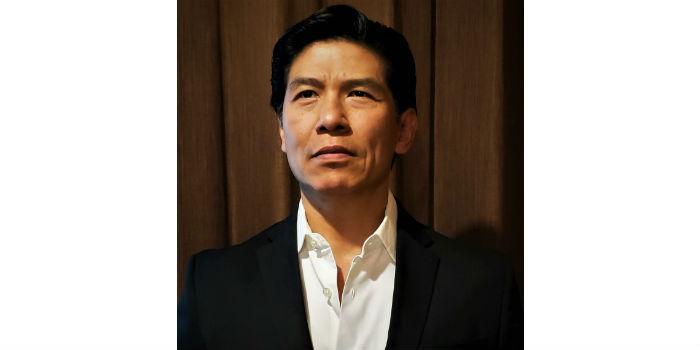
Luis Miguel retires to enjoy life
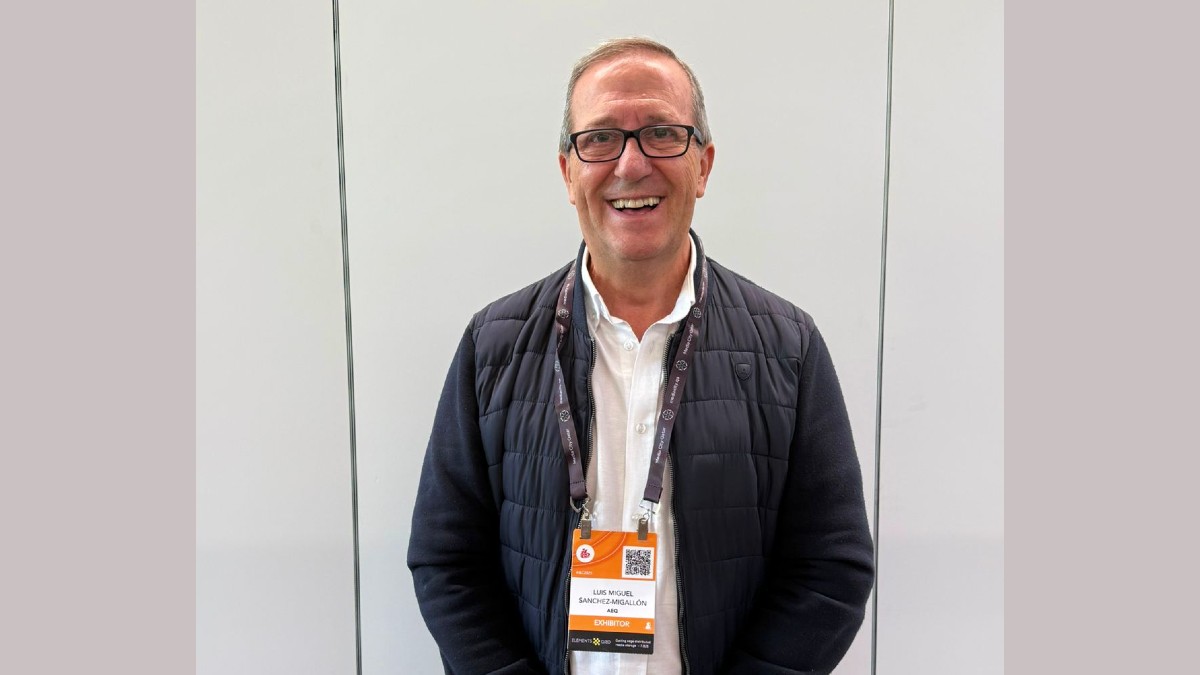
After 17 years of traveling to Latin America, and more than 45 years of professional life, Luis Miguel Sánchez will dedicate himself to enjoying his family and being happy.
Richard Santa
His colleagues were never a competition, they were his friends. He thinks the same of his customers. And in general, for everyone you know, there is always a kind comment, a chat. That is why now that he announces his retirement from working life, Luis Miguel Sánchez-Migallón, leaves a long list of friends in all the countries of America where he has been for the last two decades, offering solutions for the broadcast industry.
In his last conversation with TVyVideo+Radio before starting to enjoy his retirement, Luis Miguel recounted what his professional life has been like for more than 45 years, he also recalled his multiple trips between his native Spain and America and the sacrifices that this entailed, mainly with his family.
From books to technology
His professional life began far away from technology and the broadcast industry. At the age of 19 he worked as a librarian at the Monte de Piedra savings bank in Madrid. From there he made the leap to Eurotronica, a European electronics manufacturer, where he began doing maintenance for teleprinters, and had to do a specialization in electromechanics.
"While I was there, someone from above noticed and said, hey, look, this little guy, I would have been about 20 years old at the time, we could start him in the subject of sales sales, sales technician. And that's how it started, I was there for 16 years as a salesman, a commercial technician. Think that at that time Eurotronica was a large company, a very large company with great prestige, involved in many government contracts," said Luis Miguel.
He added that they were distributors of what was later Harris, which was formerly GatesAir. And then, in 1993, Eurotronica closed without warning. On November 17, 1992, he went from being happy on the 16th to being fired on the 18th.
At that time, advised by a great friend, now deceased, Vicente Sales, he founded his company, Ayudas a Proyectos Especiales, APE. Taking advantage of his contacts with distributors, with the brands he distributed, he managed to be a distributor of several important brands.
"It was six years in which, I think, I had two days of vacation. It was a very small company that was me and my circumstances, nothing more. I was the cleaning lady, I was the one in this. Well, I was about to be reported three times because he was touching my leg and I say, look, the managing director is touching the cleaning lady's leg. I mean, that was just, alone, alone. It was overwhelming and at the age of six, in 2001, I decided that the first train that passed through my door would undo that and I would leave. I still had orders. My clients were Radio Nacional de España, COPE, SER, Onda Acero, Empresa Nacional Bazán, that is, I had luxury clients," he said.
From there he went to Ibérica de Componentes, taking advantage of the emergence of videoconferencing at that time. The company also distributed Harris.
Arrival in Latin America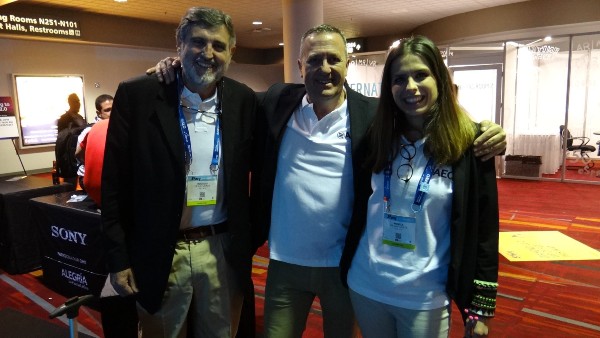 Six years later, Luis Miguel arrived at AEQ, which was a challenge for his professional life, because, although it was broadcast, he was more focused on audio and his experience was in the transmission part.
"Rogelio de la Fuente called me to hire me at AEQ. Moving to audio was something very chaotic for me, but well, thank God I was able to do it well. I carried part of the market from Spain, but in the 2008 crisis they proposed to me to take Latin America, more specifically South America and well, who said fear? I said yes and nothing, they threw me to the lions there and thank God it went very well, it has gone very well, I continue to do very well, with a lot of people who have taught me. I have learned socially, professionally, humanly from all of them and this is as far as we have come," he recalled.
Of that arrival in the region he said that he was used to a certain order and when he arrived "the bewilderment is order. Obviously they have their own way of working and each country has its idiosyncrasies. It is a very different way of understanding the market, of understanding business. So I have had to adapt so much to the businesses of Bolivia, Colombia, Argentina, Chile, and blend in a little with each country, even be a bit of a chameleon. At first I was scared, because I have never traveled with anyone. When I was offered this, no one explained to me, no one introduced me, no one showed me the way to go or where not to go. They released me there and here, give it."
The University of White Rice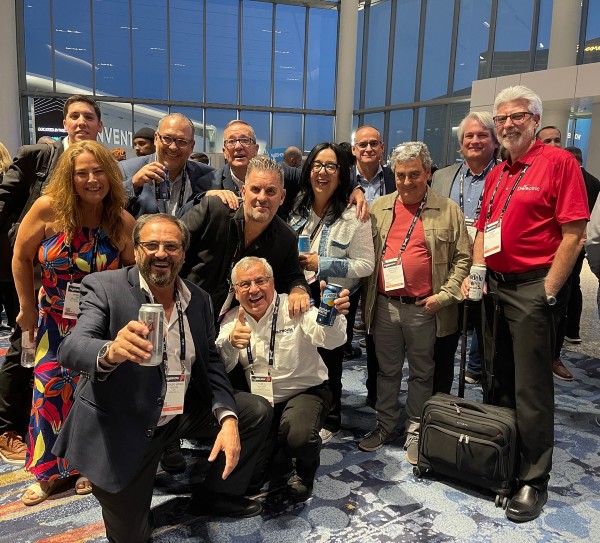 Luis Miguel reiterated that he has to "thank each and every one of those I have met in this world, from whom I have been learning, they have been patient with me, very patient with me and everything I am I owe to this type of people that I have met in absolutely all countries, even in Spain, before leaving. But in Latin America it is like being 10, 12 thousand kilometers from your home, any gesture is valued much more. And I can proudly say that I leave many, many friends."
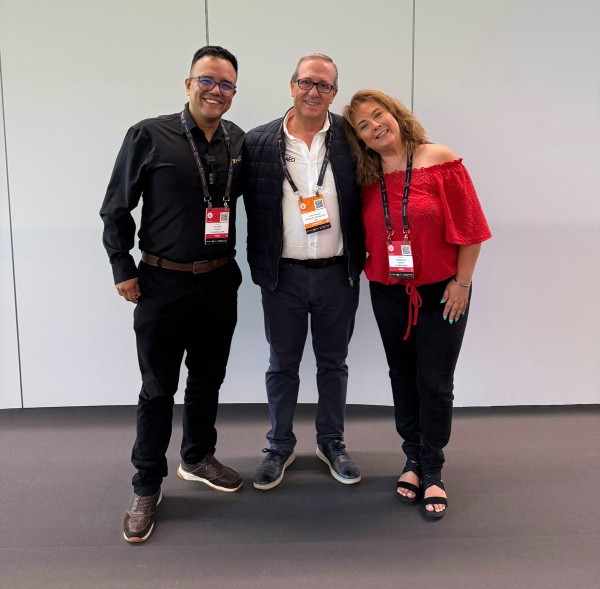
Part of those friends are a group that are colleagues, competition, friends, or as he calls them, fairgoers who live in different countries around the world, but they have managed to maintain a friendship over the years that they do not miss the opportunity to meet and keep in constant communication.
"We are in communication, we have our group, we laugh at a distance, when we can, we also laugh face to face and we are looking forward to having the opportunity of any show, any event, to be able to get together. And when we see each other we enjoy it a lot. We are 12 or 14 friends who get together, not to tell each other about our sorrows, but to laugh at them. It's a camaraderie that goes beyond the competition."
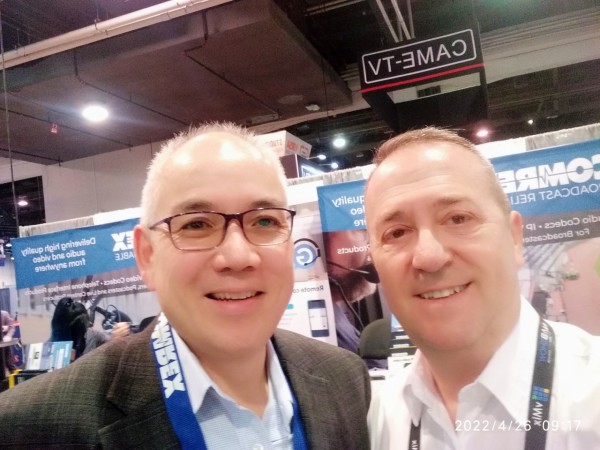 Some of those who are part of this group are María Eugenia Quintero, Rubén Navarro, Raúl Hun, Daniel Bizet, Moisés Martini, Oliver Baumann and Luis Miguel Sánchez, among others.
The name of the group: the university of white rice, is due to one of the many anecdotes in the meetings. Raul Hun, of Chinese descent, is very fond of rice, but the meat-savvy Argentines in the group have never understood why he always has to order a bowl of rice when they're eating a good steak or any other dish. The name of the group is a tribute to him.
Now the time is for the family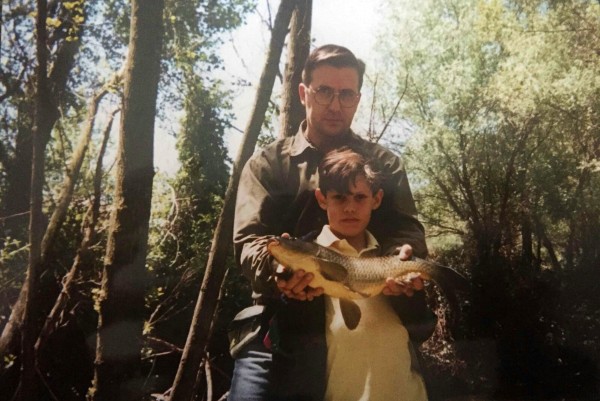 For 17 years, Luis Miguel was on the road for about 200 days each year, mainly visiting the countries of Latin America, which could be compared in kilometers to the fact that he has traveled 18 times around the world. The impact of those trips has been felt mainly by his family.
"Obviously the family throws you in your face at the end, hey, you weren't here, you were away. And, Dad, you were away at the time. And I remember that there, and then they start talking about them, and I say, what I have missed, obviously. In the end, well, contact with the customer is good, I'm from the old school, that touch makes affection, but that logically undermines other facets, other areas of your life, such as family."
That family to which Luis Miguel will now dedicate himself is made up of Maite, his wife, with whom he has been married for 41 years, and his two children, Adriana, 37, and Alejandro, 28, from whom he expects grandchildren soon to dedicate himself fully to them.
From his retirement, which becomes effective on January 31, 2026, his main objective is to be with the family, to be on birthdays and special dates. "Sometimes I've planned what to do with the free time during the week and in two days I've done everything."
Luis Miguel ended the conversation with TVyVideo+Radio by pointing out that "My soul is overflowing with good memories. My goal now is to make others happy and be happy by making others happy, nothing more than enjoying."
 Those responsible for technology must enable strategies that allow them to point towards the connected future, but without losing sight of the fact that just under half of the world's population is not connected and this represents a real opportunity.