

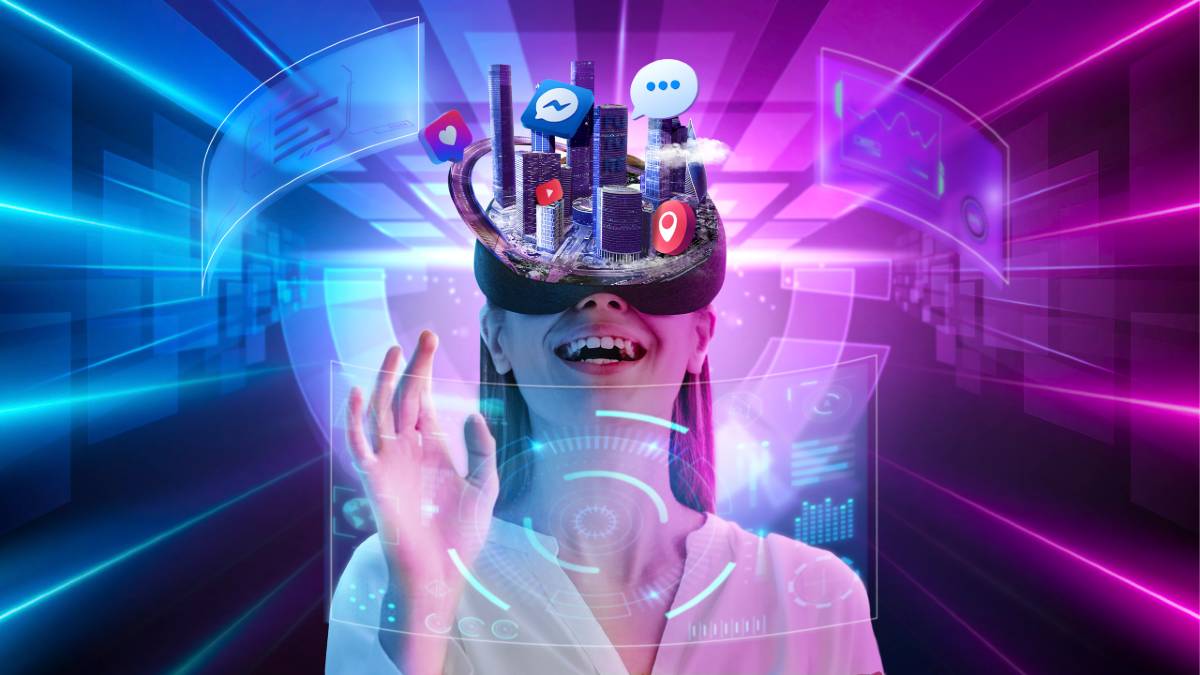
Latin America. Although the concept of Metaverse is something in constant evolution, some define it as a virtual universe where we can interact through avatars, which will immerse us completely in that digital world.
Others have dubbed it the evolution of the Internet. The truth is that, although its announcement caused a lot of media coverage, it is still in the design and development phase, and promises to offer new opportunities for growth and innovation for companies.
Although we do not have a definitive version of web 3.0, various approaches to the Metaverse have been made through video games, applications, books, movies and series. Already in the 90s, the Matrix universe presented a futuristic vision of the virtual world. Video games, in particular, have been pioneers in offering the experience of inhabiting virtual worlds, allowing players to interact with characters and immerse themselves in these environments in almost tangible ways.
The new way of interacting through innovative hardware devices, such as helmets, glasses and other advanced technologies, will open the doors to a more immersive augmented reality, unleashing unlimited possibilities in areas such as study, work, social relationships, shopping and much more.
The new immersion possibilities of companies to communicate with their customers
In the business field, the Metaverse is a place for diversified interactions and conversations between customers and their brands, to enhance satisfaction, increase retention rates and promote loyalty. Virtual clothing stores where it is possible to try on garments from home, access virtual technical support in a more dynamic way and other immersive experiences, will be possible to expand and strengthen the relationship between companies and their customers.
"With the help of the new 5G network, people will have the ability to create their own avatars in the Metaverse, allowing them to participate in various activities such as attending brand events, making purchases and much more. Faced with this new reality, companies must begin to design customer experiences in the Metaverse that generate optimal communication and meet the new needs brought by the new era of the internet." Vivian Jones, VP Infobip for LATAM.
Nike, Walmart and Spotify, for example, have already dared to involve the Metaverse in their businesses, offering from a brandverse of games, immersive experiences, to a virtual island of co-creation of music. With these developments, brands are consolidated as pioneers in the use of these tools, in search of the massive interactions they require for their business idea.
The customer experience will transition to more immersive environments, where it will even be possible to engage our 5 senses. The interaction will allow us to approach environments that imitate reality, the physical-real, the Realverse.
The possibilities of activities in the Metaverse are endless and will be closely linked to the industry from which a business is developed. Both the retail and gamification sectors are expected to continue to benefit from virtual reality and augmented reality technologies. Big brands like Gucci are already exploring retail experiences, including selling digital accessories.
Gamification will also continue to take advantage of the benefits that augmented reality offers for its industry. Its goal of creating new universes and making the most of the possibilities offered by Web 3.0 does not stop. Companies such as Epic Games, creator of the popular video game Fortnite, have made large investments in development. They have managed to raise around 1,000 million dollars from investors to continue evolving and expanding in the context of the Metaverse.
Meta, Mark Zuckerberg's electronic conglomerate, continues in its intention to build the Metaverse, the future of computing. Jones believes that this will bring new challenges to strengthen the link between brands and their customers, seeking to take communications to another level. "There will be room for the development of omnichannel strategies that merge the physical and digital experience in what we call the 'Phygital' model. The harmonization of these two universes in a single omnichannel strategy will accommodate much more satisfying customer journeys, revolutionizing the customer experience."" says the Infobip expert.