
 Mexico. In Mexico, two of the three mobile operators have already declared themselves ready to start operating with 5G technology in the coming months and early 2020 thanks to the infrastructure they currently have, but there are doubts about the connectivity capacity according to the use of the network.
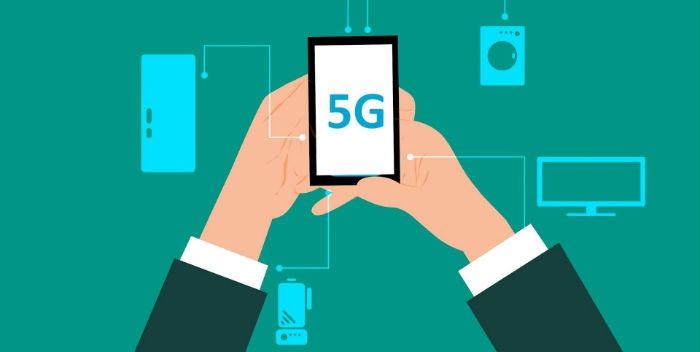
There is no point of contention: the 5G network will dramatically improve the user experience by offering higher data transfer speeds, but at the same time it will redesign the security market.
Knowing the growing demand for connectivity
Let's talk about connectivity first: Today, the average smartphone generates 1.6GB of data traffic monthly, and is expected to reach 7GB by 2021. This is due to the increased demand from entertainment centers and mainstream media, regardless of whether it is online communication, content downloads or video streaming.
The 5G network will make access to more innovative technologies popular: virtual reality and augmented reality. Through 5G it will be possible to offer a bandwidth, data processing, consistency, mobility and speed that the 4G network is not able to offer.
But there's more! As technology evolves, connected devices will play an important role in our daily lives, from traffic lights connected to cars, factories, to gas and water meters and an endless list. The rise of these connected objects increases the collective need for better and faster connectivity, no matter the location.
Security
We rely on connectivity for entertainment, communication and simplifying our lives, but an important issue we should not forget is security. Connectivity also keeps us safe. If you've ever been to a music festival or some other massive event, you've probably experienced a lack of connectivity. It is difficult to make or receive calls, text messages stay in the outbox due to oversaturation of the network.
If we include an accident in this equation, such as a natural disaster, public safety becomes a major concern. Fortunately, the advent of the 5G network will bring the concept of network slicing, or better known as leveraging the band strategically and intelligently. In a future scenario, various networks will be able to operate at the same time for police and firefighters, massive IoT devices and bandwidths for mobile networks, thus, resources will be dynamically reallocated to ensure that certain networks have optimal connectivity regardless of the circumstances.
Physical SIM cards will also evolve to bolster security in the new 5G world. For example, the IMSI (International mobile subscriber identity) code, which is unique to each mobile user, will be encrypted to protect subscriber privacy.
Here, there and anywhere
When we talk about 5G technology, the statistics are full of zeros. We forecast close to 25 billion connected devices by 2025, generating considerable connectivity gains while reducing power consumption and bandwidth requirements. We have come a long way from the first steps of connectivity such as the arrival of the 1G network and we are a couple of months away from turning the 5G network from "the technology of the future" to "our everyday connection".
*Text written by Diego Cecchinato, Senior Vice President of Mobile Operators for Latin America at IDEMIA and Stéphane Jacquelin, Director of Advanced Business at IDEMIA.