
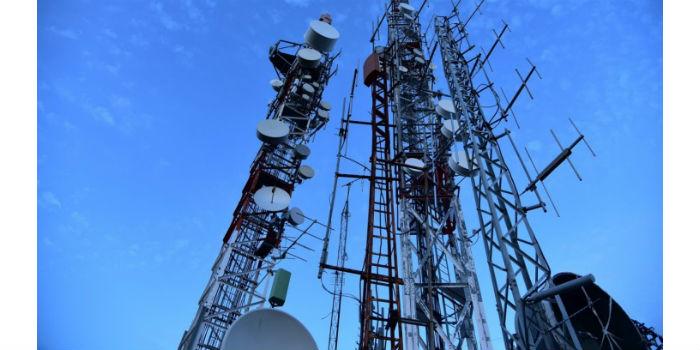
 Argentina. Through Decree 1340/2016, the Argentine government established the guidelines for the implementation of basic standards to achieve a greater degree of convergence of telecommunications networks and services.
Based on this legislation and within a period not exceeding 6 months, Enacom will call for a National and International Public Tender for the allocation of new frequency bands for the provision of mobile communications services, with the aim of maximizing and increasing the radio resources used. In this sense, the President of the National Communications Agency (Enacom), Miguel De Godoy said that "this decree will create conditions of competition and promote investments to recover lost time."
The decree has among its main objectives to generate the conditions for new mobile operators to enter the market, setting criteria for more competition, and provides for the allocation of new frequencies to improve the quality of communications. It also authorizes telephone companies to provide cable television with conditions that take care of cooperatives and small and medium-sized enterprises in the different localities of the country; and authorizes satellite television companies, which have permits, to also provide satellite internet. Finally, it protects users from anti-competitive practices and sets the guidelines for forming a network of Public Protection and Relief, Defense and Security Operations.
Within this legal framework, rules and procedures will be adopted to ensure the reassignment of frequencies of the radio spectrum, with economic compensation and shared use, to frequencies previously attributed to another service and assigned to providers of Information and Communications Technology (ICT) Services or Audiovisual Communication Services that request to reuse them for the provision of mobile or fixed wireless services with LTE technologies or higher. To this end, the Implementing Authority shall impose specific coverage obligations and targets.
Enacom, in turn, will be empowered to assign frequencies of the radio spectrum, establishing compensations, deployment obligations and coverage within the corresponding deadlines. Likewise, and to ensure the necessary investments for the country, the legislation will guarantee an investment framework that protects the deployment of infrastructure for 15 years in last-mile networks.
In order to guarantee investments, the interconnection prices of the new operators were taken into account, considering the asymmetries that exist in the sector. In this way, not only the provision of services throughout the national territory by incoming operators is promoted, but also the realization of investments necessary to deploy their own infrastructure.
From this, communications cooperatives and SMEs that provide essential support in the deployment of networks and services at the local level in different parts of the country will also be protected.