
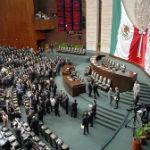
 Mexico. In record time, the telecommunications reform in Mexico was approved, after an agreement between President Enrique Peña Nieto and the deputies of his country, which allowed its approval in just ten days after it was presented.
In the area of television, the new law approved the elimination of Cofetel and Cofeco, and the creation of the Federal Institute of Telecommunications, Ifetel, an entity that will assume the functions of regulation, promotion and supervision of the use, exploitation and exploitation of the radio spectrum, networks and the provision of broadcasting and telecommunications services.
In addition, it obliges subscription television operators to transmit free of charge the open signal channels that have a coverage of more than 50% of the national territory, including the new ones that will be tendered in the coming months.
In addition, in what has to do with foreign investment in telecommunications, up to 49% is allowed in radio and television under international reciprocity rules, while in fixed, mobile and internet telephony, foreign investment is maintained at 100%.
Another important point is the criminalization of telecommunications offences, as well as the creation of divisions of the Public Prosecutor's Office and specialized courts for this type of crime.
One of the issues contemplated in the reform that has attracted the most attention is the one that controls the monopolies in telecommunications, which is concentrated in the companies of Carlos Slim, and the economic group Televisa.
Now the bill must be approved by the Senate, a chamber in which they announced a judicious study of what was approved in the Chamber of Deputies.