
The standard by acclamation and technical legitimation in audiovisual industrial culture.
Jesús Odremán*
I imagine that you have ever heard an industry professional refer to a particular software, camera, or methodology as "it's the industry standard".
In the audiovisual environment, two forces coexist that shape our way of working: formal technical standardization, validated by organizations and committees, and a practical legitimation born of mass use. This tension—between what is normed and what is customary—runs through workflows, the tools we choose, and the ways in which we construct our images.
From the moviola to digital broadcast
I saw it for myself. I began my career in the nineties, as a newsreel editor in Moviola with positive 35 mm, in the twilight of the photochemical era. But while I was learning to splice the film and understand the layout of negative, the digital revolution of non-linear editing was already brewing.
When I joined the world of broadcasting, the challenge was no longer just to narrate with rhythm, but to understand the science behind post-production. Real-time editing, color correction, sound mixing, and technical tuning now coexisted on the same computer, like a portable laboratory within everyone's reach. This evolution not only changed the processes, but also the tools for telling stories: we went from the physical cut to the digital timeline, from the matcher to layers, nodes and algorithms.
How then is coordination and interoperability achieved in the midst of this growing technological diversity?
Very brief reflection on standards
The history of standardization in the audiovisual industry is also the history of its operational evolution. From benchmarks such as the CIE 1931 colour model, which mathematically defined the limits of human colour perception, to the current standards promoted by organisations such as SMPTE, ITU or EBU, the standards have shaped the entire audiovisual ecosystem: from the electrical pulse of analogue video to the representation of colour in HDR and the conventions on format and resolution required by digital broadcasting.
These frameworks build bridges between science, industry, and craft. A key example is the joint work between the SMPTE (Society of Motion Picture and Television Engineers) and ITU-R, which since the beginning of the 21st century promoted the technical definition of HDR as an international standard, not only in terms of luminance, but also in perceptual representation and color coding, as in the cases of PQ (Perceptual Quantizer) and HLG (Hybrid Log-Gamma). These standards emerge from a collaboration between technical bodies, the Hollywood industry, broadcasters, and manufacturers such as Dolby, Sony, Panasonic among others, in a cross-cutting effort to standardize how we view images with high dynamic range.
On the Standard by Acclamation in Industrial Culture
There is another type of legitimation that is more subtle, although no less influential. Over years of post-production work, I have observed how many technologies and workflows become norms not by certification, but by collective repetition, by practical necessity or by market influences, characteristics inherent to industrial culture.
I have called this phenomenon in previous posts "standard by acclamation"; unofficial practices that, without any technical sanction, are legitimized by widespread use. The selection of the camera for production, the popular codec, the editing, the color correction, the delivery, are plagued by these spontaneous standards that are repeated in a way that is as unreflective as it is enormously massive, to impose itself as an implicit law: if it works and everyone uses it, it is legitimized.
Groupthink and its paradoxes
This collective process is related to the concept of groupthink (Janis, 1972), where group consensus can become inertia, resistance to change or the adoption of non-optimal solutions due to social pressure. In many cases, technical pedagogy occurs directly on sets, studios, forums, or online tutorials, without collegial validation or formal technique. They even resort to fallacies of authority or fear: "if you don't use this tool, you won't get a job".
In contrast to formal standardization, practical legitimation does not always follow a regulated process either. For example, while MXF was proposed as an open standard for professional media sharing, many publishers have preferred to continue using QuickTime (.mov) for hardware compatibility – also standardized by acclamation. Thus, what works, even if it is not approved, ends up imposing itself in practice.
Communities as catalysts
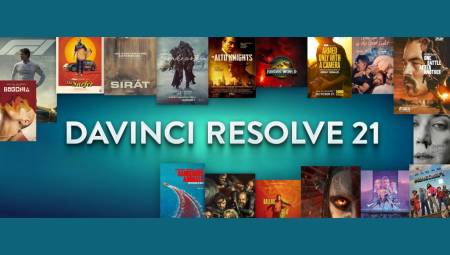
But not all collective dynamics lead to stagnation. Both specialized blogs and some communities are today true engines of technological democratization. Forums such as Blackmagic Design or the Blender Community, for example, actively promote tips for implementing workflows in which the use of free software – such as Blender and other tools – or the free version of DaVinci Resolve, allows small production companies to access high-quality tools without incurring high licensing costs or high-end hardware.
On the contrary, on social networks there is a proliferation of niches of users who share immediate solutions, from render adjustments to optimized color flows. While these communities drive efficient setups and sustainable practices, they often lack both the technical rigor and consensus needed to scale their influence beyond the local or amateur level.
The agnostic in audiovisual technology: ACES and new formats
I recently interviewed colorist and instructor Diego Yhamá, who shared a broad overview of color science, as a transversal fact between technique, art and industry, and in this framework, he also reflected on the relevance of agnostic tools in post-production: "Because if there is one thing we all want, it is, in many cases, an optimal workflow, natural and flexible. And for that we need tools that are agnostic" (Yhamá, 2025). This vision resonates with my professional philosophy. In my productions – documentaries, reports, short films – I have integrated free software and proprietary tools, always looking for functional workflows beyond the brand or the system.
A clear example in the industry is ACES (Academy Color Encoding System), an open color management system developed by AMPAS (Academy of Motion Picture Arts and Sciences). Although its implementation requires a certain technical rigor, it allows the color flow to be unified without depending on manufacturers, avoiding reprocessing that consumes time and computational resources.
Interoperability and fragmentation
But for this neutrality to work in practice, effective interoperability between platforms is indispensable. DaVinci Resolve, for example, enables round-trip workflow with Avid and Premiere using formats such as AAF, XML, or EDL, as well as offering cross-platform support for a wide variety of codecs, as long as the color workspace is set up correctly. In other post-production suites, the MXF container – although officially standardized – continues to generate friction in mixed flows within audiovisual production companies that depend on codecs such as ProRes in Apple environments or DNxHR in Windows systems. In these scenarios, interoperability emerges both as a solution and as a challenge, as not all systems communicate with the same level of fidelity.
Technical efficiency, budget and sustainability
These solutions become even more valuable in contexts where operational ingenuity is as important as budget. Compression codecs such as H.265/HEVC allow you to reduce file sizes without compromising quality, relieving the storage and bandwidth needed for streaming.
In the Ibero-American area, where many productions operate with limited resources, adopting efficiency standards can translate into economic savings and a lower carbon footprint, by reducing the need for energy-intensive servers.
Although the reuse of equipment, the adoption of agnostic flows or the reduction of costs are not always born of an explicit environmental awareness, sustainability is often a side effect of that forced efficiency. And it is not minor: these practices can tangibly reduce the environmental impact of post-production. Of course, the human costs of the learning curve must also be considered, as well as the need for continuous training to adapt to these more flexible environments.
By way of closing a prologue
In a world where "standard" can be defined in both technical committees and Reddit threads, the key is not to blindly follow rules, but to understand their origin and consequences. Thinking critically about our workflows, reflecting on the tools and recognizing both the contributions of tradition and the limits of technical fashion is essential to build a more coherent, efficient and sustainable audiovisual industry.
This article inaugurates a series of post-production notes for TVyVideo, where I hope to explore those invisible tensions that shape our craft. Not to dictate rules. To understand how they are conceived. Because perhaps, without knowing it, from each editing room we are already writing the standards of the future. It is worth asking:
Which of our decisions today will be, tomorrow, "the industry standard"?
References:
- Odreman, J. (2025, July 9). #apuntesdepostproducción: Interview with Diego Yhamá – The Science of Color in the Era of Technological Democratization. ODREMANPOST.
https://odremanpost.wordpress.com/2025/07/10/apuntesdepostproduccion-entrevista-a-diego-y hama-the science-of-color-in-the-age-of-technological-democratization/
- 6.6E: Groupthink. (2021, December 29). Social Sci LibreTexts; Libretexts. https://socialsci.libretexts.org/Courses/Collin_College/Introduction_to_Sociology/06%3A_Social
_Groups_and_Organization/6.06%3A_Group_Dynamics/6.6E%3A_Groupthink
- Deshpande, A. (2015). And you call yourself technology-neutral! Technology agnosticism, telecommunications, and the powers that be. https://oro.open.ac.uk/43879/
https://www.blender.org/community/ https://forum.blackmagicdesign.com/
*Jesús Odreman is an audiovisual narrator, editor and post-producer with more than three decades of experience in the industry. She currently combines her technical work with research and dissemination on post-production through her blog Odremanpost and the #apuntesdepostproducción series, where she reflects on free technologies, low-budget audiovisual post-production, sustainability and critical thinking. This article marks his debut as a columnist for TV and Video Latin America, a medium he has followed with interest for several years.