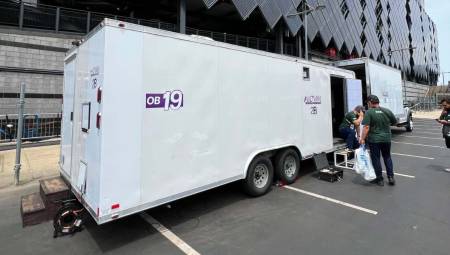

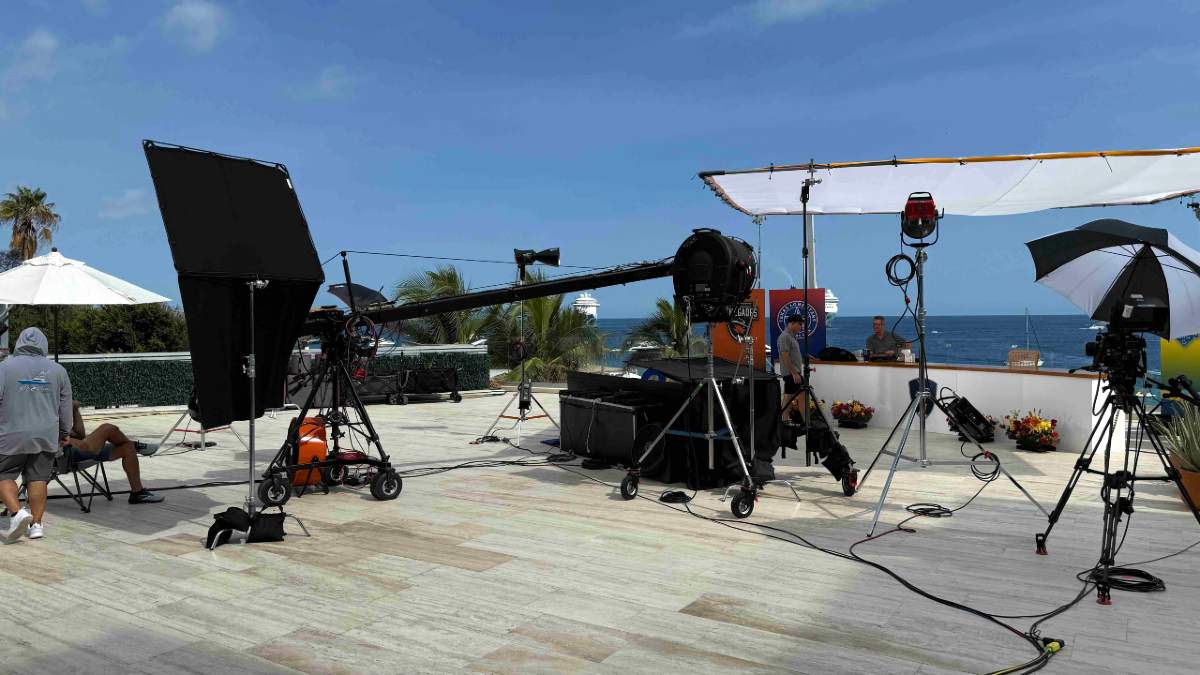
Mexico. TNDV, a division of Live Media Group and mobile entertainment production company and REMI, sent a REMI flypack and camera arm to the production plant in Cabo San Lucas, Mexico, representing the company's first live streaming project outside of the United States.
These teams were used to live produce the 2025 Zane Grey Championship Playoffs, a sportfishing tournament that aired live on ESPN+ from Oct. 18-20.
TNDV managed the acquisition of live set content and audio for the live broadcasts over the three days, delivering three-hour live streams to TCL REMI's broadcast facility, located at The Plex's production facility in Fort Worth, Texas. It leveraged SRT connectivity for secure, low-latency signal transmission between both points, ensuring a consistent signal in near real-time for all live streams.
TNDV's custom flypack kit included four Kokusai Denki HD cameras for video capture and Haivision Makito X H.264 encoders for SRT transport, plus Sennheiser MD46 handheld microphones and HMD 27 headphones for equipment audio.
Live commentators used Studio Technologies' Model 214A personal consoles, a Dante-compatible audio product that eliminates interference, delays, and other issues that interfere with discussion and intelligibility. This represented a small change from TNDV's previous work with the TCL REMI team, which normally handles feedback locally.
"TCL's usual strategy of producing feedback in-house eliminates all video and audio delay issues," said Rob Devlin, president of TNDV. The commentators at this event used to talk about what they were watching on TV and needed to hear each other in real time, with no two-second delay between the flow back and forth to the control room. Announcers' consoles eliminate those distractions, and because we provide our own audio signal, we use it to manage each commentator's mix.
While the live session was held in an outdoor plaza next to the action, TNDV had to get creative in other areas. Devlin, TNDV's only technician on site, transformed a hotel conference room into a temporary control room, located nearly 90 meters from key procurement and production points. This allowed all cables to be connected within the distance limit, including dedicated cables for camera and Cat5 for audio. Key components included an AJA router, Haivision encoding, and camera engineering equipment.
Three of the Kokusai Denki cameras were placed in fixed positions along the coast, while the fourth was added to a crane for coverage of the live session. And since no truck was required for the production workflow, sending an arm demanded an extra dose of creativity.
"The boom systems are built primarily at the event venue, using bars as a counterweight to the camera weight, which keeps everything level," Devlin said. "Shipping bars involves extremely expensive counterweights. We developed the idea of using water counterweights, which involves sending empty bags and adding 113 kg of water on site. This made it possible to send a 5.5-meter arm, the ideal size for this event."
Devlin confirms that driving a truck to Cabo San Lucas, located at the southern tip of Baja California, proved impractical for both commercial and technological reasons. "It's a 20-hour drive from San Diego to Baja California, and there are desert roads along that route," Devlin said. The fuel savings alone made sense, but the expense of sending a full crew of trucks for modestly sized production didn't make up for it. We restructured an existing TNDV flypack to meet size and weight parameters, and TSA and FAA air freight requirements. Our flypacks have gained popularity for many reasons, but this project was an excellent example of how to position them as an economical option."