
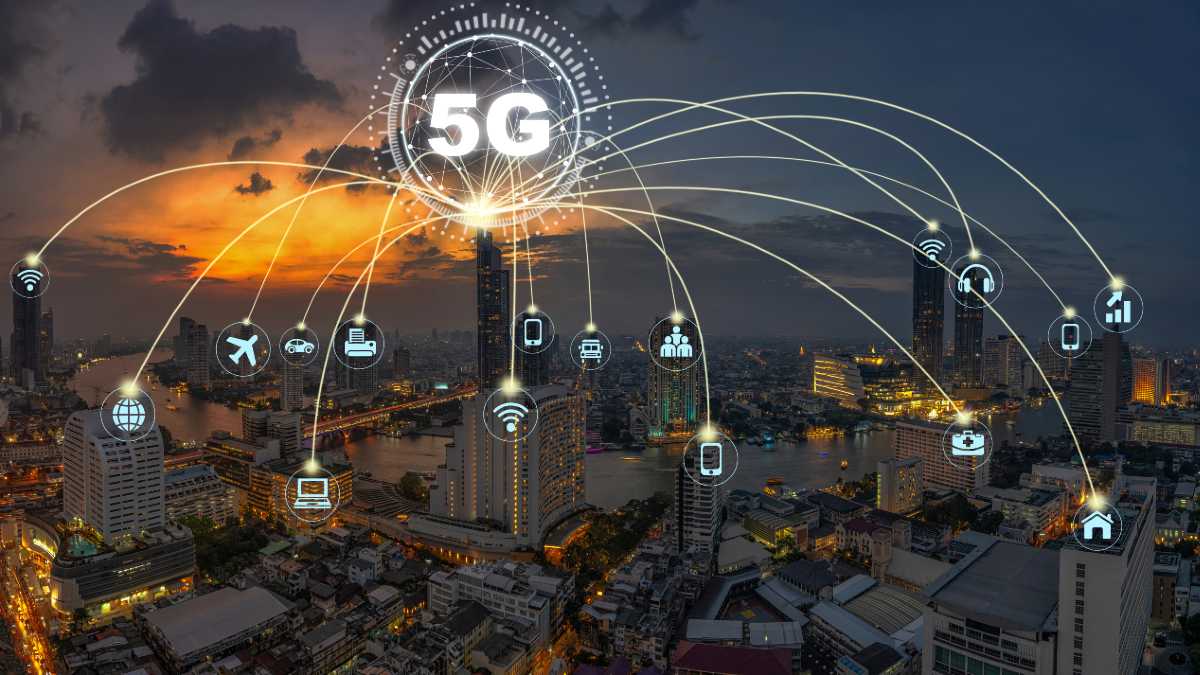
Colombia. It's been more than five years since the first 5G networks were deployed globally. During this time, there has been much debate about the benefits of this technology, which offers low latency, higher spectrum capacity, and significantly better performance on devices.
However, from the perspective of the customer, both companies and end users, these benefits have not been reflected in a truly differentiating daily use. While 3G promoted massive data consumption and 4G fueled the rise of smartphones and social networks, it is not easy to identify how 5G transforms the lives of the average citizen in Colombia.
Impact of 5G on the digital ecosystem
The functionalities offered by 4G still have room for growth, and the applications that truly require the characteristics of 5G (low latency and high download speed) are not yet relevant enough for most users in Colombia. This makes monetization a challenge for local operators.
An analysis by GSMA shows that 4G is still sufficient for demanding tasks such as remote work, group video calls and online gaming. Applications that require the specific advantages of 5G, such as augmented reality, immersive internet, or autonomous vehicles, have not yet reached mass use.
Challenges for operators in Colombia
In Colombia, as in other countries, one of the main challenges for operators is to justify the additional cost of 5G in a market where 4G is still adequate for most needs. In addition, operators must manage the coexistence of 4G/5G infrastructures with legacy networks (2G/3G), which increases costs and hinders operational efficiency.
Maintaining duplicate networks is not only uneconomical, but also limits the ability to scale and innovate. The long-term solution for operators in Colombia involves unified platforms that can support legacy, current and future networks, facilitating an efficient and cost-effective transition to 5G.
The what and how of 5G in Colombia
Although operators in Colombia do not yet see a clear return on investment from 5G demand, they can find opportunities by rethinking how they optimize their operations and efficiency. One of the biggest differences between 5G and its predecessors is the depth of the technological changes it introduces, such as network slicing, edge computing, and containerization.
The adoption of these tools varies widely depending on the size and resources of each operator, but those who successfully implement these technologies will be better positioned to compete in the Colombian market.
The deployment of 5G in Colombia: challenges and opportunities
In Colombia, the implementation of 5G has advanced in initial phases, with pilot tests and growing interest from the Ministry of Information and Communications Technologies (MinTIC) and the Communications Regulatory Commission (CRC). Sectors such as agriculture, mining, and manufacturing could benefit greatly from the development of this technology.
5G has the potential to improve Colombia's competitiveness in the digital environment, facilitating the adoption of technologies such as the Internet of Things (IoT) and the analysis of large volumes of data. These advances could promote more efficient management of resources, improving productivity and generating new business opportunities in the country.
Despite the benefits, the challenge lies in finding the balance between the investments needed for the deployment of 5G and the demand in a market where the value of this technology is not yet fully apparent to consumers. However, those operators that manage to capitalize on the advantages of 5G will have a competitive advantage that could be crucial for Colombia's future in the global technological landscape.
Analysis by JSC Ingenium.