
Latin America. The strategic vision for the development of 6G mobile telecommunications systems is outlined in the International Telecommunication Union's (ITU) IMT-2030 Framework, which lays the foundation for innovation, performance standards and cooperation around the world.
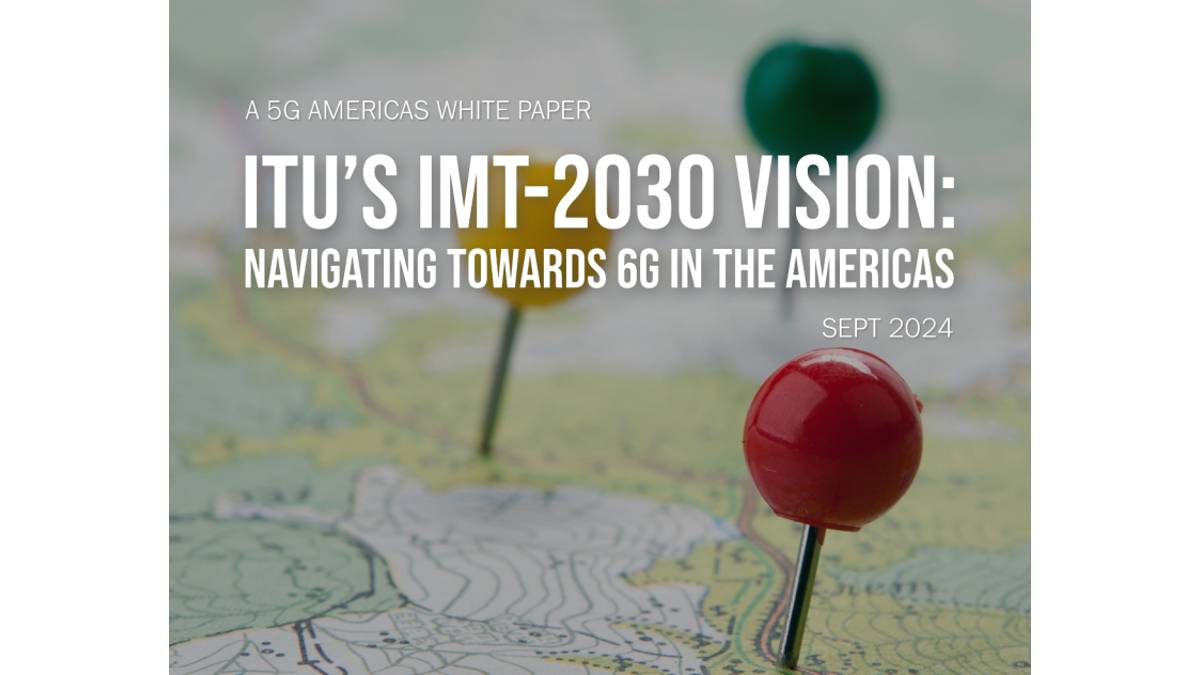
5G Americas, the voice of 5G and subsequent wireless generations in the Americas, announced the publication of its latest white paper, 'ITU's IMT 2030 Vision: Navigating Towards 6G in the Americas', which studies ITU's IMT-2030 vision and its implications for the Americas.
"5G Americas is pleased to provide its detailed insight into ITU's foundational framework for the next generation, which will outline the development of 6G standards," said Viet Nguyen, Vice President of Public Relations and Technology at 5G Americas.
ITU's IMT-2030 vision framework emphasizes increased capabilities and new usage scenarios that push the boundaries of today's 5G technologies, setting the stage for the future of mobile communications worldwide. These advances aim to expand connectivity, integrate artificial intelligence (AI), and support emerging technologies such as sensors and integrated communications (ICAS), among other technologies.
ITU's IMT 2030 Vision: Navigating Towards 6G in the Americas covers the following key key points:
Optimized Performance: Significant improvements in data rates, latency, and reliability, focused on delivering high-speed and ultra-reliable, low-latency communications for industries and consumers alike.
New use scenarios: advanced use cases, including immersive multimedia, intelligent industrial applications, digital twins, ubiquitous connectivity, and the integration of AI to create intelligent machine learning systems.
Global harmonization: emphasis on aligning standards, spectrum policies, and regulatory frameworks around the world to ensure interoperability and a unified approach to 6G development.
Strategic 6G Initiatives: The U.S. government and other governments in the Americas initiated several research and policy activities to drive innovation in 6G.
Sustainability and security: Promoting energy-efficient technologies and robust security measures to protect data integrity, privacy, and national security.
"The IMT-2030 framework represents a collaborative effort between industry, governments and academia to shape the future of mobile communications," said Karri Kuoppamaki, senior vice president of Advanced and Emerging Technologies at T-Mobile. "As the industry moves towards 6G, the focus will be on driving innovations that enable new economic opportunities, increase connectivity, security and sustainability while maintaining global leadership in technology development."
"The IMT-2030 vision is a crucial step in enabling a 6G ecosystem in the future, and charts a roadmap for the evolution of mobile systems beyond 5G. Industry stakeholders in the Americas are encouraged to participate in the development of favorable technical details, particularly in the areas of spectrum utilization, AI integration, and next-generation air interface technologies," said Brian Daly, AT&T and AVP Fellow of Industry Standards and Alliances, and leader of the white paper working group.
"As the industry takes the first steps towards 6G, ITU's IMT-2030 framework provides a crucial roadmap for collaboration and innovation around the world," said Ali Khayrallah, Senior Technology Advisor at Ericsson. "It's not just about faster networks, it's about a new way for industries and societies to connect, operate and grow in the digital age."
To see the full 5G Americas document, click here.