
Colombia. The Communications Regulation Commission, CRC, presented the Barometer of Pluralism in the audiovisual ecosystem of open television in Colombia, which is composed of two studies that expand the risks to pluralism and how some communities are socially represented in the contents on national TV.
In the approach of risks to pluralism, it was investigated how citizen participation occurs in the contents, which are the controlling economic groups and the levels of government that exercise control of open television operators and economic interests in different economic activities. Likewise, it was investigated how the electoral contest is expressed in the pluralism of information and opinion content and how the scale of risks in electoral periods is modified.
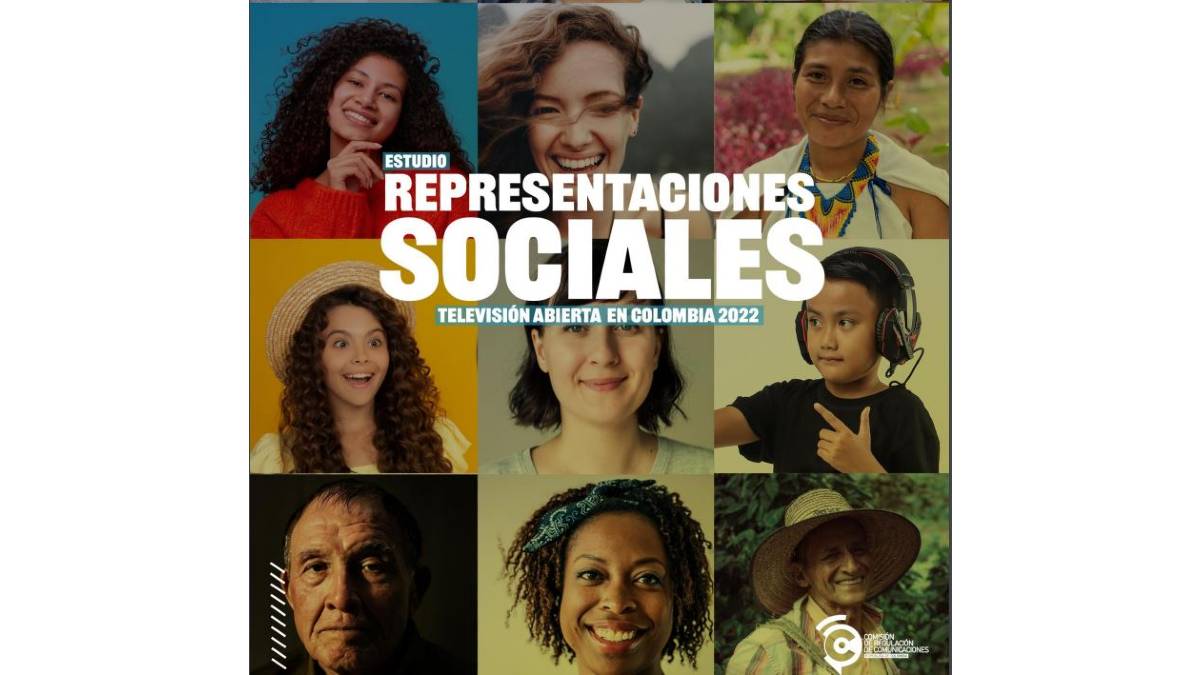
With regard to the component of social representations, the differential approach was continued to characterize the following four communities: sexually diverse population, ethnic groups, children and adolescents and people who are part of the main cultural regions of the country. All these populations make up the different identities that allow us to recognize ourselves as a multi-ethnic and multicultural country.
This is a study that implemented a rigorous methodology of analysis of the contents broadcast on open television with a representative sample of more than 2,600 television programs from 23 public and private television channels. And it is part of the research work carried out by the CRC to generate updated information based on reliable data, on social representations that will allow in the future to demonstrate the evolution of diversity and socio-cultural inclusion in Colombian television.
It should be remembered that the media and especially television have a great impact on the way we identify and recognize ourselves culturally and socially. Therefore, knowing the roles and behaviors assigned to the different population groups in the television content that is currently broadcast on the service is essential to demonstrate the level in which concepts such as diversity or pluralism are taken into account in said content.
With the Barometer, the risk visualization board was updated to information pluralism and a map of ownership of open television operators was incorporated, which constitutes an essential input for regulatory, sectoral and programming decision-making.
Barometer Results
Some results of the two studies are presented below:
Study Risks to pluralism
• Citizen participation in the cycle of content generation: When formats have live interaction spaces with the audience, participation is supported on social networks in which citizens tell their own stories with recordings made through the cell phone, sending photos and participating in contests, surveys, among others. In public operators there is greater closeness with their audience through their different informational, educational, entertainment programs. Meanwhile, in private companies, citizen participation is emphasized in dynamics that allow them to know the audience and the content they consume from surveys, focus groups, rating studies, content performance analysis (audience curves).
• Diversity in the contents of information and opinion. The topics most addressed in the news and opinion content on Colombian open television were public order, economy and national politics. The topic of least presence in the information and opinion content is sexual diversity.
• Map of risks to pluralism in electoral periods: From workshops with experts, it was highlighted that the impacts and frequency of several of the risks identified in 2021 increase in electoral periods. Regarding the impact on pluralism, these are perceived greater because the quality, veracity and impartiality of the information received by a citizen is affected that, considering the decision to be taken, its effect is greater due to the relevance of the decision.
Study of social representations in Colombian open television 2022
• Low presence of sexually diverse people on Colombian television.
• Tendency to associate sexually diverse people with antagonistic or secondary characters.
• Colombian ethnic groups have a low presence in fiction content.
• Costumbrista vision on open television of people belonging to Colombian ethnic groups.
• Greater visibility of some cultural regions on Colombian open television, for example, Paisa, Llanera, Costeña and Bogotana.
• The presence of the social representation of children and adolescents on Colombian open television corresponds to its population percentage, which is 31%.
• The commitment of public television to produce and program content aimed at children and adolescents is valuable.
Learn about the Pluralism Risk Barometer here.
Learn about the Social Representations Barometer here.