
 Latin America. IP control and audio pioneer Barix celebrates its 20th anniversary this month. Over the course of two decades, the Swiss company has grown from an upstart in control and automation to a globally recognized audio-over-IP innovator serving primarily the security, broadcast and professional audiovisual industries.
Barix has shipped nearly one million devices to serve control, transmission and transportation applications for end users, OEMs, service providers and system integrators.
Current Chief Technology Officer Johannes G. Rietschel founded Barix in 2001 to escape the pitfalls of corporate operations that slowed down his product development ideas, which evolved from standard legacy network components to IT-centric control products by the turn of the century. "I had spent too much time traveling to trade shows doing 'research' with little to show for beyond expense reports," he said. "My vision was to build a product that would fit the market and adapt to customer requests from there, rather than overthinking. That's the premise on which Barix was founded."
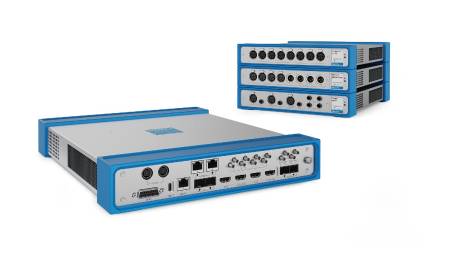
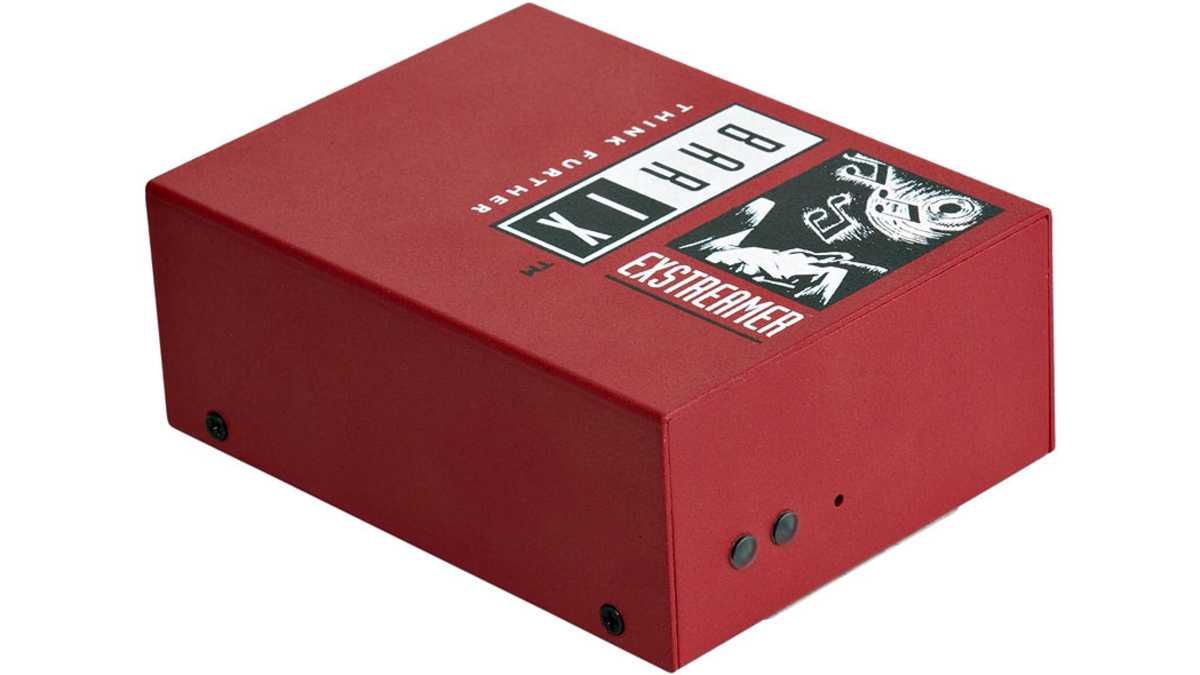
Barix's roots took shape in residential automation, an area in which the company remains active through partnerships with Aiphone, Crestron and other companies. Rietschel soon added audio distribution to his vision, introducing products to move voice and music in homes. Trading markets called in search of inexpensive ways to move audio and control signals through the then-novel IP networks. Barix's four core product lines were established in a short time, with proven hardware devices for voice and intercom (Annuncicom), automation and control (Barionet), and music/audio transmission (Instreamer encoders, Exstreamer decoders).
The broadcast industry was among the first to take an interest, and radio engineers recognized that Instreamer and Exstreamer products offered a low-cost alternative to expensive microwave STL systems. It wasn't long before broadcasters adopted Barix to transport live program signals between studios and broadcast sites over IP networks.
Around the same time, Barix saw growing interest in its Annuncicom products for intercom systems and IP pagers, and its Instreamer and Exstreamer systems for background music delivery (BGM). Visionary integrators and service providers soon moved BGM, paging, intercom, and even control functions (HVAC, lighting, and more) over a common IP architecture using Barix hardware.
In 2006, Barix had a global network of partners, including the successful division of Barix Technology USA, long managed by the late Andy Stadheim, and a global presence in environments such as education, government, hospitality, medicine, radio broadcasting, retail, science, transportation, and worship.
As Barix continues to develop new IP audio and control hardware devices, the company's focus has increasingly shifted toward more software-defined and cloud-based architectures. This has led to game-changing enterprise-grade background music streaming solutions, such as RetailPlayer and SoundScape; cloud-based radio signal distribution solutions such as Reflector; and fully networked communications systems such as Paging Cloud and Simple Paging.
Barix was also one of the first innovators of SIP (Session Initiation Protocol) technology, first adopted by security customers for efficient VoIP connections and now gaining traction in transmission; and among the first to merge digital signage and BYOD mobile applications with its AudioPoint solution. Meanwhile, the company's OEM business continues to flourish; Barix is now in its fourth-generation IPAM series module (IPAM400) and, more recently, introduced its IP Former solution to help speaker manufacturers transition their legacy products to IP networks.
The never-ending innovative spirit and sense of creative freedom at Barix has been instrumental in the company's global growth. The company continues to attract engineering talent from within and outside its core industries, and recently opened a new "innovation hub" in Portugal that focuses on research and development for new and existing markets. Current CEO Reto Brader, who has accelerated the company's transition to more cloud and SaaS solutions, seized the opportunity to join Barix after becoming familiar with Rietschel's ever-evolving vision. He finds Barix inescapable even when he goes about his daily business.
"I bring the Swiss federal train system to work every morning and smile knowing that the platform's ads are coming from an Annuncicom in a dispatch center hours away," Brader said. "The same thing happens when I'm on the New Jersey Transit train system that goes to New York City or on the Rio de Janeiro subway. When I go skiing to the Titlis resort in the Swiss mountains or drive to the BMW campus in Munich, Barix solutions transmit the music and open the barrier to entry. Recently, I was communicating with a university research department that used Barix for remote-controlled construction excavations. I am constantly amazed at where and how Barix devices are used, most of which relate to the efficient use of the public Internet."
One of Brader's favorite stories is that of a farmer in a rural area of the northwestern United States who uses Barix to play music for 3,000 cows on a 30-acre dairy farm. "It's been running in a very severe weather environment where temperatures are very extreme and energy issues abound, but everything is still working," he said. "The creativity and innovation at Barix extends to our partners and customers who continue to find unique and engaging ways to use our products."