
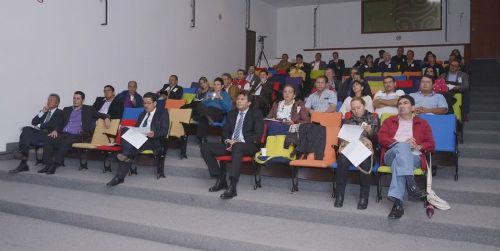
 Colombia. On May 31, the socialization days of the regulatory project through which Resolution 433 of 2013 is modified began. In this first meeting the National Television Authority, ANTV, revealed figures that are very worrying, in light of the current regulations, community television would be on the verge of extermination.
It is said that there are 705 licenses in operation but 57% made an extemporaneous presentation or did not present the policy required by the standard, 27% filed extemporaneously or did not submit the compensation settlement, 25% did not submit the documents for the extension of their license and 18% have not made compensation payment.
All these conditions or situations presented by community television operators are grounds for cancellation of the license and the amending proposal is not that it leaves them better off than they are. The ANTV proposes that: "The grounds for cancellation contained in paragraphs 7 (Not to constitute or not to maintain the guarantees in force), 8 (Inaccuracy, inconsistency or lack of veracity in the information provided with the application for the license or the request for extension decreed by the competent authority), 9 (Breach of the transitory paragraph of article 3 of resolution 433 of 2013) and 10 (Failure to present the self-assessment form of two consecutive periods), which would impose sanctions disproportionate to the stipulated conduct.
The cause of cancellation derived from non-compliance with the regulatory framework is modified, establishing that it will only proceed when the organized community presents more than two sanctions in a period of 5 years counted from the enforceable date of the same sanction
The cause of cancellation related to the delay in the payment of the compensation is modified, it is established that the cancellation will proceed when the Organized Community fails to pay the compensation for a period of 180 days or more
The following grounds for cancellation are included:
• When the Organized Community modifies its legal nature as a non-profit entity (No. 4 of article 37 of Law 182 of 1993)
• When the Organized Community does not provide the authorized public television service. This ground does not apply when the Organized Community, in compliance with its obligations, has informed the anTV of the suspension of the service.
Within the regulatory proposal, the principle of favorability is presented as follows:
• Non-presentation of policies: Period of twelve (12) months for their presentation under penalty of incurring the penalties provided
• Request for extension not submitted or having been submitted does not have the extension: Period of six (6) months for the presentation of new procedure of request for extension.
• Late payment of compensation: Term of six (6) months to request and sign payment agreements with the ANTV.
• Failure to provide the self-assessment form for two consecutive periods: Period of twelve (12) months for its presentation under penalty of incurring the sanctions provided."
"More than 50% of the municipalities in the country have community television services and that is why from the entity we want to socialize and receive the comments, observations and suggestions of those who make up this type of television in the country," said the Director of the ANTV, Ángela María Soto.
The schedule presented for this socialization is given by the exhibition of these points in Bucaramanga on June 8, in Barranquilla on June 10, Cali on June 13 and ending in Medellín on June 17. In this way it would be given until that date to receive comments and observations in this regard, during the month of July the reform to the resolution would be issued and until November a comprehensive review of the Community Television would be made.
For the rest of the year they have a plan of visits to clandestine providers that already have an order to suspend the service, to which the preventive confiscation of the equipment will be carried out. There is talk of 150 visits where the list is headed by the departments of Nariño, Boyacá, Santander, Choco, Cauca and Antioquia. To date they have made 49 accompaniments to the CTI for the seizure of equipment and closure of establishments, Boyacá leads the black list with 13 visits and is followed by Huila with 12, the podium is closed by Cundinamarca with 7.
Several of those affected state that they are part of this misnamed "Black List" because they submitted their application for the granting of a license for more than three years and that the ANTV has not taken the time to grant them their license, textually "How do you want one not to be illegal if they do not want to give us the license and we do not have open television in the municipality?". As it looks, these 150 cases pending visits are part of the more than 300 new applications that have reached the ANTV and have not been resolved to date.
If the problem that is presented to attack is that of piracy and underreporting, on this side there is not the bulk of the matter, the strong one is in those large operators that provide a service that mathematically and financially is not possible to provide, the prices with which they offer do not cover the minimum costs of operation, it is known that in their expansion campaigns they offer the service at less than three (3) dollars with a package of channels of 100 coded signals, between sports, cinema, children and in short, which for others is worth nine (9) or ten (10) dollars per user, the truth is that everyone does their accounts, the only way to provide the service at those prices is not to report users to anyone and everything is for the pocket.
I can conclude very personally that the rule as it stands and as it will look is not the solution that community television requires. Nowhere is the promotion of own production or the advancement of new technologies by the hand of the State, the internet is not mentioned in any of its sections and much less the OTT as a way out of this issue. It will dawn and we will see, it may be that the recommendations of the Department of National Planning are heeded and applied to this model of provision of the unique television service in the world.
Text written by Luis Pinto, commercial technical advisor of TVyVideo+Radio