
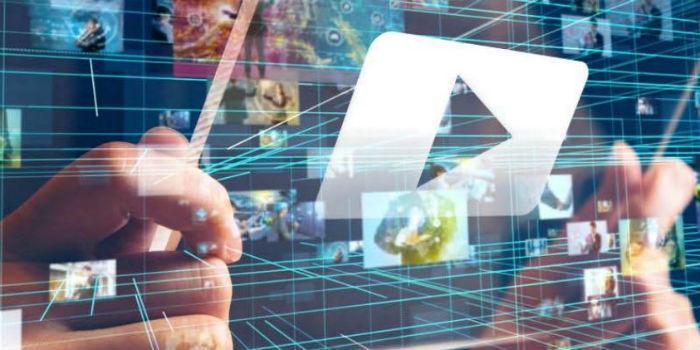
 Latin America. Machine Learning is a tool for statistical analysis that is based on artificial intelligence. The company Mediastream explained that this technology is used to find patterns, trends, group individuals or automate processes with high-volume information, to facilitate decision making.
This technology is gaining more and more space in all industries and is no longer exclusive to the largest media, such as Google and Yahoo search engines or the social networks Facebook and Twitter, all of which use machine learning for the most diverse tasks, from understanding search intentions to facial recognition.
According to Cloudera, at the end of 2018 35% of the largest companies in Europe implement machine learning in all their departments and another 31% do so partially. In addition, 58% of companies see data analysis as an important asset at a strategic level.
Today, machine learning has also become prevalent in the television and content distribution industry, from watching movies and streaming series to listening to music.
Supervised and unsupervised learning
The difference between learning processes in machine learning is that in supervised learning there is human assistance, while in unsupervised learning, algorithms automate information.
If we feed the system with news clips and do it using the label "news", the system will create categories that generalize the characteristics in these files, to later decide if a video contains a news or not. This is a supervised learning system and an example of classification tasks.
If, on the other hand, we offer the system multiple clips to sort them, what we will get will be categories that contain the videos under automatically created tags. This is an example of an unassisted and clustering model, where the system creates sets that significantly describe the belonging of each element.
How machine learning improves content management
The automatic generation of categories (clustering) allows, among other things, to analyze our content, for example, to identify people or brands, their feelings and expressions, in addition to optimizing the internal processes of content organization.
This is an example of some of the most obvious possibilities in which machine learning can be used for the management of audiovisual content, but there are many other ways in which this technology allows to improve the service:
- Feelings and emotions: Evaluate the expressions of the people who appear in the videos. Example: evaluate how our faces are expressing themselves, what kind of feelings they project.
Process optimization: Easily find faces, brands and other elements within your content. Example: Search for brands that have appeared within a video. Find the exact moment(s), optimizing the times of your editorial team
Generation of keywords automatically
Automatic transcription of content
Recommendation Systems: based on the previous information we can place an element in a category.
Anomaly Detection: facilitates the detection of events that are significantly different from those that are recorded. Example: Identify the upload of videos with inappropriate content
Association: Tracks events that occur under similar conditions. Example: describe whether users use the platform during a live sporting event and anticipate recommending future events.
Mediastream Plataform already has a machine learning module that will allow you to optimize the management of audiovisual content and thus deliver the best experience to the end user.