
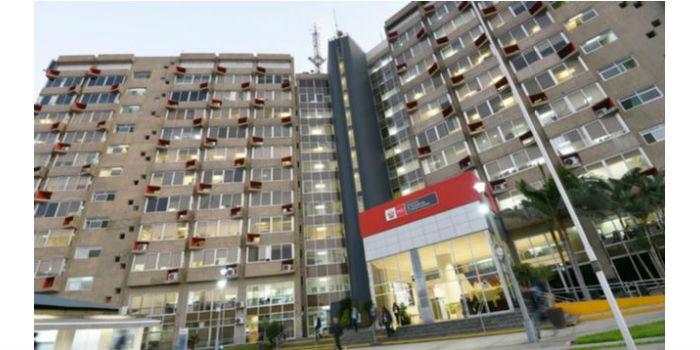
 Peru. Within the framework of its leading role in communications, the Ministry of Transport and Communications, MTC, supervises at the national level that the purpose of the broadcasters conforms to the type of authorization that was granted to them to operate.
It should be noted that radios are classified as educational, commercial and community.
"The audit carried out by the MTC responds to a work plan of national scope. It does not focus on a single region or province, let alone a single holder," said patricia Díaz, general director of Communications Audits and Sanctions (DGFSC), of the MTC.
In accordance with the aforementioned plan, 36 inspections of authorized sound broadcasting stations were carried out in the Moquegua region. Of these, seven were carried out to broadcasters for educational purposes. In addition, administrative sanctioning proceedings were initiated against those who reported reasonable indications of non-compliance with the purpose of their authorization.
"The administrative procedures initiated are not aimed at closing the broadcasting stations, but to verify that they comply with the essential conditions of their authorization in compliance with the provisions of the Radio and Television Law No. 28278 and its regulations," said the official.
He explained that the educational purpose provides advantages for obtaining the operating authorization. It also establishes a lower payment for the commercial exploitation rate (0.5% of the company's income).
If the broadcaster for educational purposes makes another use of its authorization, it evades the full payment of the commercial exploitation fee and goes against the established rules.
Díaz said that the investigation stage of the administrative sanctioning procedure gives companies and individuals the option to present their disclaimers, in order to exercise their right of defense.
Datum
As of October 2019, the MTC has identified 3965 radios for commercial purposes, 1040 for educational purposes and 63 with authorization to operate for community purposes. Inspections are constant in all regions of the country.