
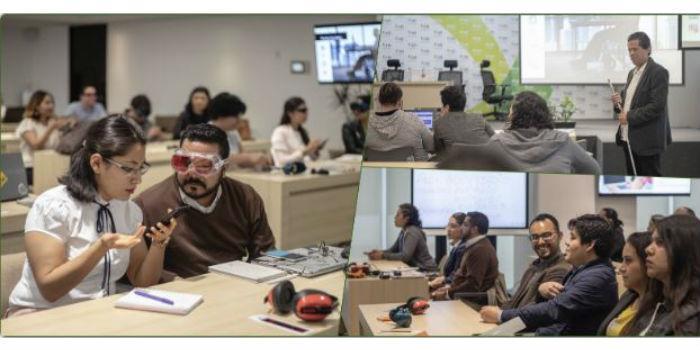
 Mexico. The Federal Institute of Telecommunications, IFT, carried out the first course "Induction to Web Accessibility (WCAG 2.1)", aimed at the creators of digital content of the concessionaires and authorized that provide telecommunications services, with the aim of providing tools for the design and development of web pages that meet accessibility criteria for people with disabilities.
This course aimed to sensitize participants on the importance of digital inclusion and create accessible web content for people with disabilities, according to the international standard Web Content Accessibility Guidelines 2.1, which allows the web content of a page to be more accessible for people with blindness and low vision, deafness and hearing loss, learning disabilities, cognitive limitations, psychomotor limitations, speech disabilities, photo sensitivity, among others.
With an accessible digital environment, users with disabilities are able to know the contracting conditions offered, compare the prices, rates and services offered and, in general, make informed decisions when contracting and using their services.
The course, taught in collaboration with Accesibility Lab, an expert company in web accessibility, was attended by digital content creators from 24 concessionaires and authorized that provide fixed and mobile telephony and internet services, restricted television and public telephony.
Some of the topics addressed in the course were: disability simulator, disability legislation, statistics, assistive technologies, inclusive language, accessible social networks, international standard Web Content Accessibility Guidelines 2.1, among others.
This training provides companies that provide telecommunications services with elements that facilitate the implementation of regulatory measures that the IFT has issued in terms of accessibility, which allows these users to exercise the various rights that the Federal Law on Telecommunications and Broadcasting and the regulations provide for them.
On a regular basis, the IFT informs and trains, in person or remotely, people with disabilities so that they know their rights, make them enforceable and learn to use existing assistive technologies that allow them to use devices such as cell phones, tablets and computers.
Additionally, an annual report is issued on accessibility to telecommunications services that allows identifying the progress and results that the application of the General Guidelines for Accessibility to Telecommunications Services for Users with Disabilities has brought.
The report can be found at: http://usuarios.ift.org.mx/primer_informe_en_materia_accesibilidad/