
 Latin America. The process of migration from analog to digital television in Latin America will advance smoothly in the region and will have the advantage of flexibility that will allow the use both in HD transmission, as well as for radio and television on mobile devices, according to the words of Eric Small, engineer and founder of Modulation Sciences Inc., a manufacturer of high-tech equipment for transmission, in an interview with TV&VIDEO.
Small explained that the model of digital terrestrial television that will predominate in the region will be the Japanese-Brazilian ISDB-Tb, except for some countries such as Mexico, which uses the US ASTC system, Colombia and Panama, which will use the European DVB/T. The advantage of ISDB-Tb over the other models is the possibility of adjusting the settings according to the use that will be given, transmitting HD television, radio and mobile television at the same time.
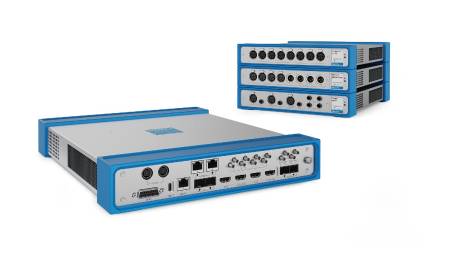
For this to be possible, it is necessary to invest in new amplification installations, with more sophisticated amplifiers and exciters . Small considers that "the exciter of the ISDB-Tb model is the most complex of the three available systems, while the amplifier appears similar, although not identical, to that of the DVB model".
For Small, Latin America does have the technological capacity for the transition to digital signal, because "the fact that the chosen system is mostly ISDB-Tb puts the region at a significant advantage over the rest of the world, since hardware is a new technology that, although it has been partly manufactured in Japan, will also be manufactured in the future in Latin America, so new equipment will be used during the transition."
On the other hand, he pointed out that although the move to open digital signal in the U.S. was not the most successful, since currently less than 15% of U.S. households receive this type of television because they consume satellite or cable television, in Latin America the panorama will be different because the vast majority of the inhabitants will receive digital terrestrial television and hopes that "it will happen without problems thanks to the solidity of the ISDB-Tb system and will be an experience. successful for those involved" and concludes by saying that in Latin America the process of implementing digital terrestrial television has begun in a smarter way, "learning from the experience in North America so as not to fall into the same mistakes."