
While AI is consolidating itself as the main driver of intelligent industrial maintenance, AR and VR are advancing as complementary, strategic and increasingly connected tools.
Sergio Ramos*
For years, technologies such as augmented reality (AR) and virtual reality (VR) coexisted in the industrial imagination as long-term promises. Today, with the arrival of artificial intelligence and its potential in conjunction with other advances, in Latin American factories that discussion is no longer theoretical.
However, in the face of the wave of innovation, a question arises for companies: in which technologies should we invest the most? While there is no blanket answer, companies that take an innovative approach to solving specific needs are often more successful than those that simply seek to join trends without a clear purpose.
In sectors such as manufacturing, food, energy and logistics, solutions are being implemented that combine the benefits of these technologies to improve operability in various use cases.
Technologies at the forefront of industrial digitalisation
AI-based predictive maintenance platforms have become the main gateway to industrial digitalization in the region. The reason is practical: it allows you to reduce unplanned failures, optimize spare parts inventories and extend the useful life of assets without requiring major changes to the existing infrastructure.
"Companies are prioritizing technologies that solve immediate problems," explains Ricardo Román Santurio, CSO of Fracttal. In the case of AI, it has managed to position itself because it addresses real needs such as costs and operational continuity.
For their part, AR and VR have not been left off the radar. Its adoption is advancing, although with a different logic. Instead of massive deployments, pilot projects focused on critical tasks predominate.
According to Román Santurio, "they have been used to train people for a long time. For example, NASA trained astronauts on the ground for activities that they would later do in space." This type of training avoided extreme risks, as test spacewalks are often dangerous and expensive.
In companies, augmented reality is mainly used in field maintenance, where technicians receive real-time visual instructions or remote assistance from specialists located in other countries. This has been shown to reduce human error and intervention times, especially in plants with complex equipment or few specialized personnel.
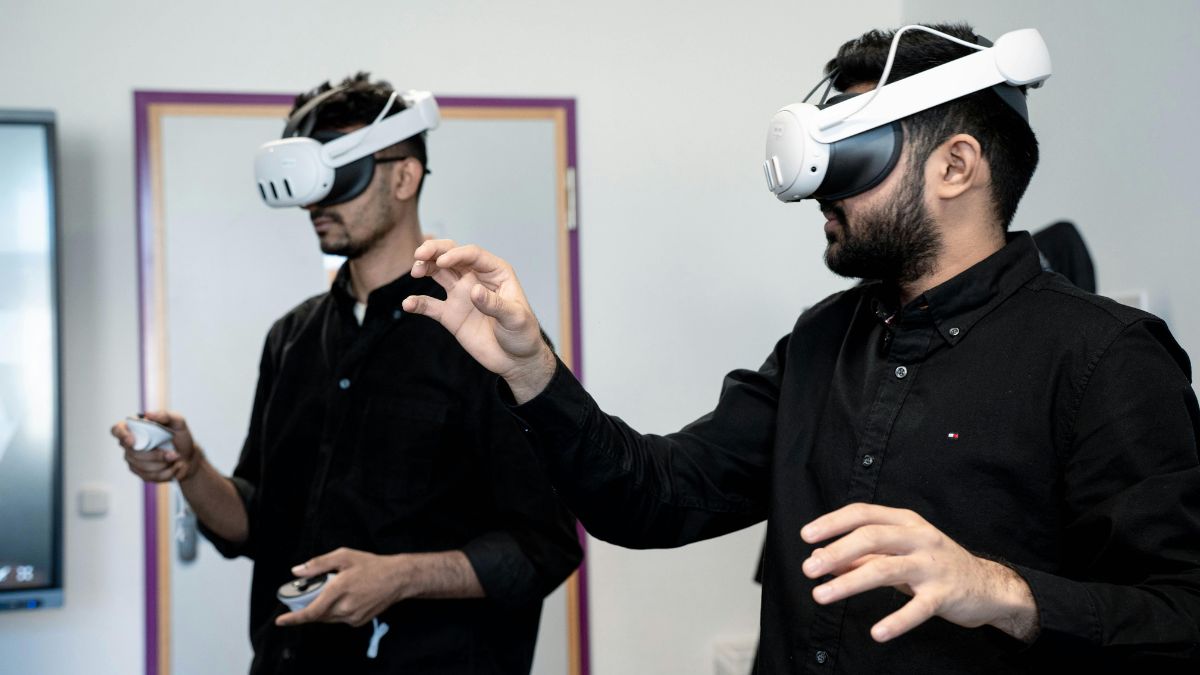
As for virtual reality, it finds its greatest value in industrial safety and training simulators. Factories are investing in virtual environments to train operators in high-risk procedures without exposing them to real-world situations. Although its impact is clear in terms of accident prevention, its adoption usually depends on more limited budgets and very specific objectives.
A fourth element is beginning to gain relevance: digital twins. These virtual models of assets or processes allow you to simulate operational scenarios, plan maintenance, and evaluate decisions before executing them in the physical world. In Latin America, its implementation is still incipient, but it is growing as companies combine historical data, sensors and artificial intelligence.
The regional trend shows a pattern in which investment is not distributed equally among emerging technologies, but responds to the expected return in the short and medium term.
While AI is consolidating itself as the main driver of intelligent industrial maintenance, AR and VR are advancing as complementary, strategic and increasingly connected tools.
Rather than competing, these technologies are beginning to integrate. The real change is not in choosing one over the other, but in how Latin American factories build digital ecosystems where data, visualization and automation work in a coordinated way. In this process, industrial digitalization ceases to be a global trend to become a local reality with a direct impact on productivity.
* Sergio Ramos is a journalist with more than a decade of experience covering technology and innovation issues.