
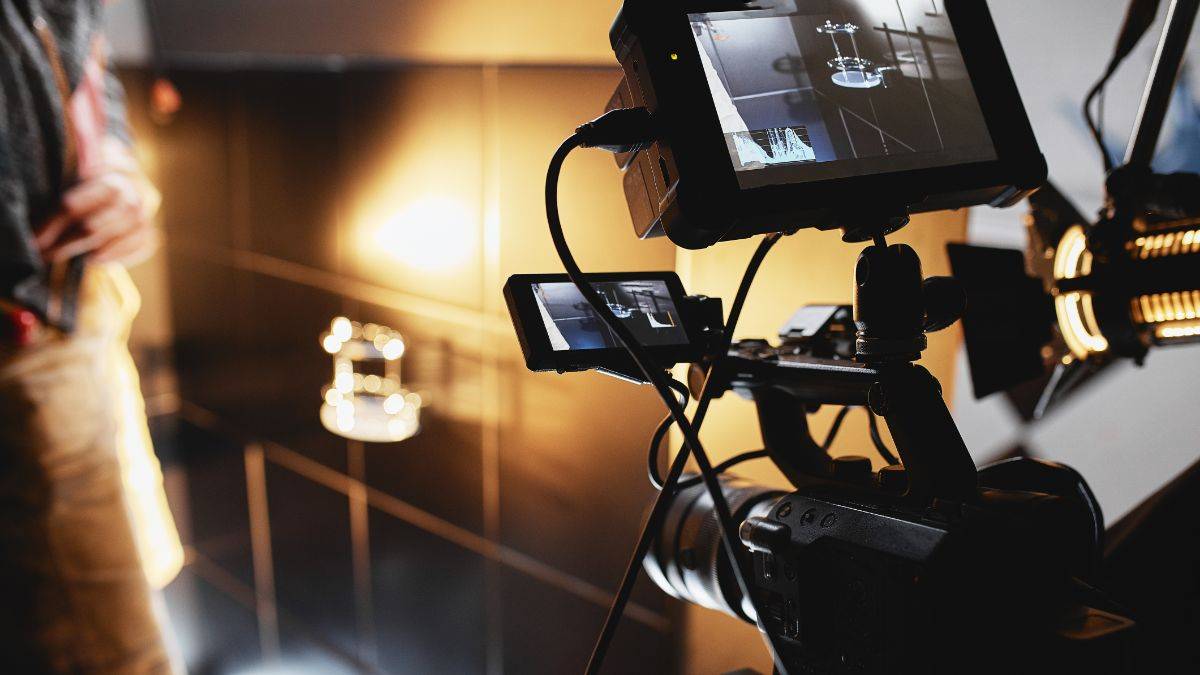
In 2025, sports streaming will continue to be a battleground between established broadcasters and newcomers to the digital world.
Steve Reynolds*
What's in store for media and entertainment in 2025? To kick off what will likely be another year of change and challenges, I'm sharing my top 5 predictions, along with some actionable resolutions to help you make the most of what's coming.
1. "Relinearization" could be the word of the year 2025
I'll start with a bold prediction for 2025: linear will experience a resurgence, but with a twist. Over the past year, a surprising trend has emerged as media companies rediscovered linear as a way to drive ROI and TCO within a streaming distribution context.
A prominent example in the United States was Amazon's live stream of the NFL's "Thursday Night Football," which it combined with linear ad sales. While Amazon certainly has the ability to sell streaming inventory as DAI or addressable impressions, it opted to sell the entire audience. The reason is purely economic: Amazon gets a higher advertising price for TNF's massive audience than is possible by selling this inventory based on impressions. This is amplified when you consider that the price paid for fulfillment and insertion could be considerably lower if the ad server being used allows for a linear parity or linear control model.
In 2025, the market's focus on the revenue-generating advantages of linear will continue to develop, especially when the goal is to reach large audiences simultaneously. With emerging innovations in ad tech, it's possible for big brands to buy ads that guarantee category exclusivity during a commercial break in the digital environment, something that was previously limited to linear TV.
New Year's Resolution: It's time to ditch the linear vs. digital mindset. Linear + digital is the path to profitability.
 2. Smart money can still be on-premise
Most of the clients we spoke to have a non-negotiable task for 2025: to reduce costs. And one of the ways they'll approach this challenge is to "do the math" to determine whether it's more cost-effective to run their operations on-premises or in the cloud.
For example, if you're deploying a disaster recovery solution or operating FAST channels that are never going to touch an antenna, it's probably cheaper to do so in the cloud. But if you're running workflows 24/7/365 or have significant investments in studios, IT equipment, HVAC systems, and backup generators, on-premises solutions may make more economic sense.
The balance between on-premises and cloud will change based on the percentage of usage, the type of workflows and solutions needed over time, and the fluctuating cost of the cloud. So, as we approach 2025 and beyond, you may need to periodically review total cost of ownership calculations to determine if on-premises facilities, the cloud, or a combination of both will best suit your specific needs and budgets.
New Year's Resolution: A single calculation is not enough in a rapidly changing industry. Be sure to periodically review your total cost of ownership calculations.
3. … But where the cloud makes sense, we have a proven path to access
While keeping things on-premises makes operational and economic sense for many broadcast workflows, one area where the scales have tipped in favor of the cloud is remote production. In 2024, the Paris Games helped accelerate the shift to remote and cloud-based production thanks to SMPTE ST 2110 and the native IP protocols used for cloud contribution.
One example is the synthesis between 2110 and JPEG XS (basically, native IP talking to native IP via VSF TR-07 and TR-08), which was demonstrated on the world stage at the Paris Games. We have also seen extensive use of H.264 through SRT in cases where the balance between cost and bandwidth favors higher compression. The openness and flexibility of native IP as a way to access the cloud is one of the main benefits of migrating to this more modern technology.
In 2025, sports streaming will continue to be a battleground between established broadcasters and newcomers to the digital world. Rights holders and broadcasters are actively looking for ways to move more live sports content into CTV and live streaming environments. For production environments already using ST 2110, the fastest, easiest, and most affordable way to make that change is to use JPEG XS as an on-ramp.
New Year's Resolution: Invest in modern, open-standards tools that allow you to say "yes" to whatever comes next.
4. Recognizing audiences as the ultimate inventory will be key to profitability
In 2025, we will see how the continued fragmentation of audiences will lead the industry towards a total TV marketing model that rejects the artificial divide between linear and streaming, focusing instead on the economics of supply versus demand for premium and non-premium ad inventory. The key to this shift will be to move from selling individual ad space to selling audiences, a model that is already yielding tangible results in international markets.
Here's how it works. High-demand inventory, such as live sports and primetime programming, is sold directly to advertisers to ensure maximum CPMs; This gives broadcasters control over valuable locations and the ability to serve customers looking for high-visibility opportunities. Inventory with less demand but significant reach potential, such as off-peak programming or niche audiences, is sold through automated, data-driven systems that efficiently target specific audiences.
In purely economic terms, premium inventory is about earning more by optimizing performance and price, while non-premium inventory is about spending less by automating sales and execution; Together, they create a path to sustainable profitability.
New Year's Resolution: Explore unified monetization solutions that allow you to sell your ad inventory the way viewers see it. For them, everything is simply "television".
 5. Business and environmental sustainability will converge
With no Olympics or elections boosting ad revenue in 2025, media companies will likely prioritize corporate sustainability initiatives over environmental initiatives if forced to make tough choices. Fortunately, many of the modern systems and strategies that are good for the planet are also good for a media organization's bottom line.
This year, we will continue to see a move toward more energy- and cost-efficient practices, including transitioning from analog to digital systems, adopting LED lighting, and implementing advanced cooling technologies for data centers. We will also see an increase in hybrid systems that combine on-premises infrastructure with cloud resources to further optimize energy use. In addition, there will continue to be momentum around remote production workflows supported by technological advancements such as ST 2110 and JPEG XS, which help minimize emissions and travel-related expenses.
By 2025, the same technology that helps reduce the carbon footprint of our traditionally energy-intensive industry will also enable broadcasters to consolidate and automate workflows, drive efficiency across multi-site operations, and achieve sustainable, profitable growth.
New Year's Resolution: Don't assume you can't afford a sustainability initiative. Emerging technology is a win-win in terms of costs and carbon footprint.
*Steve Reynolds is Chief Executive Officer of Imagine Communications.