
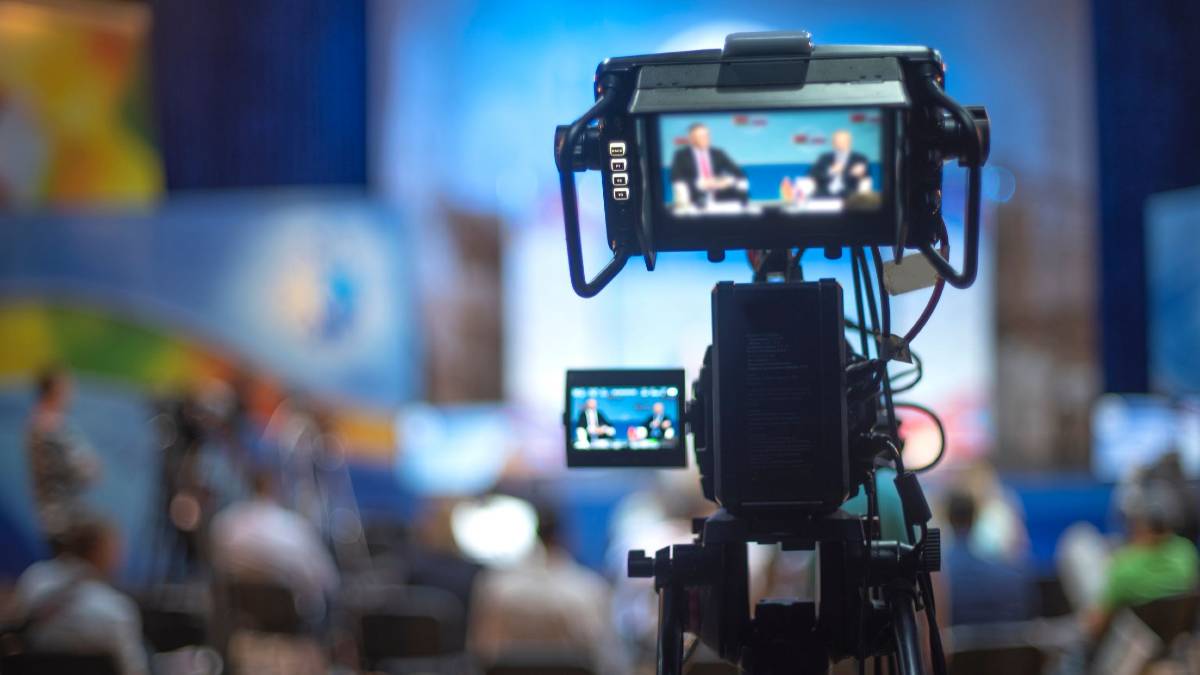
In the active search to understand where broadcasting is pointing in the future, software solutions derived from live streaming and the world of video games are being studied intensively, for example.
By: Carlos Pantsios*
The urgent need to find solutions for the continuity of industrial production in the world, caused by Covid-19, brought with it innovative solutions, both remote and distributed in the field of broadcasting production. For many of them, the cloud was, in one way or another, the right answer.
Real life clearly demonstrated that the concept of "public cloud," employed for both remote and distributed media production, and even live production, is a genuine proposition for the future. While some broadcasters have chosen to "cloud" their existing workflows, others have successfully begun to use their growing portfolios of native media services, tailored to the requirements of cloud providers. Today this first solution is far from perfect, but it has proven to provide quick and effective solutions under highly unusual and difficult circumstances.
Obstacles in the use of the cloud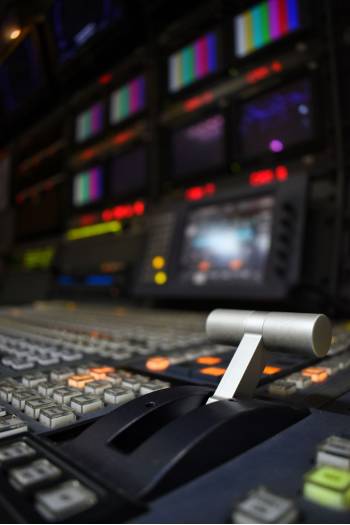 It was soon discovered that most of the standards and protocols normally used in studies were not designed for cloud-based systems. Network architects had to evaluate the type of connectivity (public internet, direct connection, or WAN) and, depending on the options, consider the properties of the links such as: latency, reliability, security, and bandwidth required.
Another obstacle to consider was that the "public cloud" is asynchronous, both historically and in nature. Imaginative artifices were necessary to implement to manage synchronous and delay-sensitive workflows. Cloud providers to the public have recently begun investigating the offer of multicasting and PTP for their customers.
While the offering of native media services is continually expanding, and synchronous workflows will be enabled in the future, we must nevertheless ask ourselves how much of our production remains truly time-sensitive?
Where can compromises be made for greater flexibility?
Until now, the adoption of technology over IP networks, by broadcasters for live production, has focused on the ecosystem of the "ST 2110 plus NMOS". The SMPTE ST 2110 is a suite of standards made available to users by SMPTE for the transport of uncompressed or lossless video, audio and digital data streams over IP networks, for contribution or production broadcasting. These standards have been created to guide professionals who implement these infrastructures for broadcasting, allowing the development of new products compatible with others that comply with SMPTE 2110. This is an important step towards standardizing IP networking technology, for the transport of professional media video, essentially replacing SDI connections.
Although the full protocol stack is not yet available, early implementations have generated confidence that this will be the path to the solution, to deliver high-performance, open, uncompressed, reliable and flexible infrastructures.
However, for uncompressed UHD/HD productions, the bitrates generated can easily make current, cloud-based systems unable to function.
There is a clear and urgent need to create a new solution for the mezzanine compression bit rate, which will allow the proper management of the bandwidth and costs involved, even for high value and high quality productions, based on the cloud or hybrid systems.
Current situation In the active search to understand where broadcasting is pointing in the future, software solutions derived from live streaming and the world of video games are being studied intensively to substantially improve the workflow in video production with live multi-cameras. The availability status of the cloud infrastructure for live multicam productions was also analyzed. It has been proven, for example, that the combination of cloud-based virtual machines (each with its own GPU) and the well-known live production software vMix allowed the production of live shows of moderate complexity.
Some of the big players in the industry are investigating alternatives for feedback from existing solutions, pointing to a future in the cloud. Simultaneously, SDOs has launched initiatives to enable time-sensitive cloud applications in a relatively unnoticed way. Examples include the Audio Engineering Society's AES67-over-WAN, and the ST 2110-WAN and GCCG (ground-cloud-cloud-ground) projects of the Video Service Forum.
The change that is now underway promises to be even more dramatic than the transition to IP that was predicted 5 years ago. New paradigms will have to be adopted quickly. Cloud giants are investing far more in research and development than broadcast groups ever could. They will soon take the media industry by storm, with new offerings that are not based on traditional broadcasting schemes.
For this reason, it is very necessary for media owners and cloud providers to talk openly to give the latter the necessary indications on the types of solutions that can be served, and to establish the types of requirements that have not yet been able to be met. All this, in order to influence these new offers, adapting them to the needs of high quality broadcasting.
*Carlos Pantsios Markhauser is a Telecommunications Engineer, PhD in Telecommunications Electronics, Master in Communications from Universidad Simón Bolívar, with Specialization in Telecommunications in satellite and networks The George Washington University - School of Engineering & Applied Science, Specialization in Digital Telecommunications University of Colorado Boulder. He serves as a postgraduate professor at the telecommunications schools at the Simón Bolívar University and Andrés Bello Catholic University. In addition to professional consultant in TV projects based in Argentina.