
LED screens and television
Television channels increasingly incorporate, in form
permanent, LED screens for recording your programs.
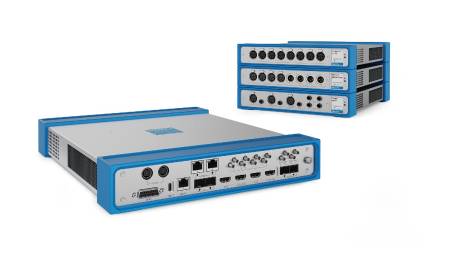
Television studios use standard interconnection
HD-SDI SMPTE 292M (1485 Gbits, 75-ohm, digital interface) for
route uncompressed HDTV signals, and being the same
perfectly compatible with display processors
Leds.
LED displays also work with dual link for signals
HD-SDI (Sony Cinealta F23 & Thomson Viper), with the system
Dolby Digital 5.1 and the improved Japanese Standard ISDB-T system
to H.264/MPEG-4 AVC in video compression and HE-AAC for audio.
Moiré effect
The moiré effect is a pattern of behavior not desired that distorts the image when transmitted by television. This behavior, which overlays images and blurs the contours, is imperceptible to the human eye but the camera video is highly exposed and can only be reduced by same or cancel it. The moiré effect is most noticeable in SO-called virtual LED screens where, for improve resolution, it doubles sweeps of image, accelerating the frames per second. For example, in the case of the Rod Stewart show in Buenos Aires, which used a LED screen of 19 mm real pixel pitch and 30 m2 of surface, the moiré effect tended to zero by placing the TV cameras at an optimal viewing distance. In the case of the television show Latin American Idol, Raul Brasesco from Argentina and specialist on LED screens, he tells us that a sheet had to be placed optical because the space of the recording studio was limited.
Conclusions
The world of entertainment and LED screens go from the hand. Most public shows that gather great number of viewers, commonly known as audience, today they use LED screens. In the television area, programs that have already adopted LED screens very successfully are CBS News, CBS Sport, Latin American Idol, El Gran Juego, Disney Channel, 2009 American football Super Bowl, between other. We can conclude that there is a progressive and almost almost increase exponential of LED screens in the broadcasting area, for its modular ability to make the size thought by the television production company.