
Scalable issuance
Beyond implementing a centralized workflow, any automation applications expected to give Backup to large environments must handle large numbers of broadcast channels within a single architecture. The most cost-effective to support new and lower-profit channels is to add them to an existing control system, allowing them to be added operations personnel manage them.
A system that uses a master distributed architecture or devices can be transparently scaled to more than a thousand channels, without loss of functionality. Any operator you can access any channel if required, and any source can exit through any channel. For example, any channel can be linked to any other channel for newsletters regional news in a dynamic way; the system manage content based on all schedules provided by a device, no matter how the device is located through the system. The close pairing of system components using native protocols and techniques developed for real-time environments, ensures that even the largest systems are fully responsive to the operator, without delays, through deferred messaging of commands both for editing as for control. This in contrast to architecture based on POD (Parallel-On-Die), which ends up losing some features, such as being able to switch to any source, as soon as the system is scaled.
A scalable automation system will enable operators in central or remote locations view and manage the activity of each channel. In this multichannel environment it is allowed the simultaneous operation of multiple channels. Flexibility to use fonts to the extent required through different channels, without artificial restrictions, is critical to provide a scalable and cost-effective infrastructure. To the provide full visibility across all channels with exception-based notifications, a single Operator can carefully monitor and manage a large number of channels.
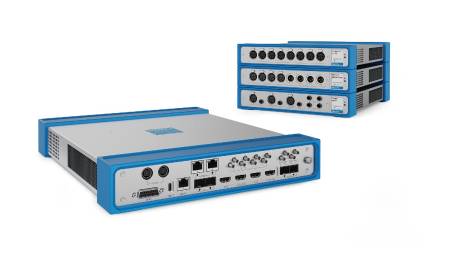
In addition, for a system to be genuinely scalable, any expansion or update must allow to be completed without downtime. For example, with Architecture Modular D-Series DSX Devices, from Harris, Operations Automation can be easily modified to support the addition of devices and a new distribution of channels, without downtime and with minimal interruption of operations.
As it supports new delivery platforms, the ability of the automation of supporting both classic serial controls as IP-based device control is becoming more and more essential. Systems such as the one outlined above will allow select the correct control layer that satisfies the customer requirements.
System reliability
Reliability is another key measure of the scalable system of automation. Media distributors require a environment characterized by the guaranteed and accurate conversion of the properties of the images, the dependence on the software and hardware solutions, historical high availability of the system and the ability to manage a large number of channels through the same architecture. The systems of Harris emission automation are created with elements of software and hardware that ensure the continuity of the broadcast of the channel without degradation, even in case of failure of a process or a component within the system.
The optimal emission automation system incorporates software focused on task execution, redundancy and high visibility of the operation:
Basic application-specific software
The starting point to ensure the best performance of the system is the use of operating systems that work on time real, combined with full control of the operating environment of critical missions. A non-proprietary, open source system like Linux, it has a kernel preemptable (command that modifies the operating system kernel so that the processes of this run with priority, and interrupt others of lower priority in access to necessary resources), which provides a real-time performance, ideal for broadcast applications and offers the scalability needed for even the largest multichannel applications. These same characteristics direct the use of Linux in 80% of the top 500 installations of supercomputers in the world (statistics of The 500 more Popular home operating systems: www.top500.org/stats/29/osfam).
As it is an open source operating system, a distribution can incorporate only the resources needed to specific applications, and any matter affecting the Automation system can be fixed by the development of the application without relying on a third party provider. Being a modern operating system, Linux provides full support for current and future hardware devices, software architectures and development tools.