
 Mexico. During 2011 Azteca made 15 thousand hours of own productions in their real and virtual sets which reach Mexico and the countries that have the signal of this producer.
TV & VIDEO met Azteca's facilities in Mexico City and spoke with Román Gómez, its director of engineering and technological development.
In 1994 Azteca became a private company and from that precise moment began its expansion in the Mexican territory, reaching 1002 analog transmitters, and 54 of high definition and covering the whole country. "In the national transmission network we have grown a lot. We cover 97% of the country's population and are currently broadcasting 14 television channels," Explained Román.
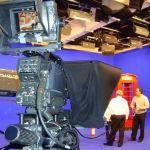
The production company has been dedicated to the realization of different programs for which it has physical and virtual sets in which the recordings of news, novels and special transmissions such as the Olympics are carried out.
"The use of virtuality in Azteca began in 1998," Gomez said. The first realizations were made with virtual sets and the creation of a virtual character through which special information of World Cups and Olympics was delivered to the public, this character was called the virtual Ponchito, who also performed within a virtual stage.
Since 1998 Azteca has used this technology to share ads and information in its productions, this is called an integrated product and is a process that is carried out in post-production.
"Currently Azteca makes different productions with studios and virtual teams as commercials for clients, complete sections of some programs and in sports programs are also being used, working on physical and virtual scenography, in this way that the image of the physical set is taken and taken to the virtual studio and with it it is superimposed on the real image. In the case of the transmission of the Olympic Games, there is a medal table that is included in the real set," explained Román Gómez.
In the same way, the production company is making remote transmissions through portable studios such as Newtek's Tricaster.
For the coming months Azteca will expand the number of equipment used for these broadcasts, in addition to creating special virtual sets for the 36 local newscasts that are produced in different cities and are integrated into the national newscast in order to standardize them and have the same image.
Román concludes by saying that these teams have two great advantages: their mobility and virtuality.