
Telson, a Spanish audiovisual services company, is remastering and restoring four films by Pedro Almodóvar, with the Digital Vision Optics (DVO) tool, incorporated into the Nucoda Film Master color corrector. Telson has already restored with this system the films Carne trémula (1997) and Átame (1989), and is currently working with Kika (1993) and Mujeres al borde de un ataque de nervios (1988). The objective of El Deseo, Pedro Almodóvar's production company, is to restore and remaster these four films, adapting them to a current medium such as HDCAM SR.
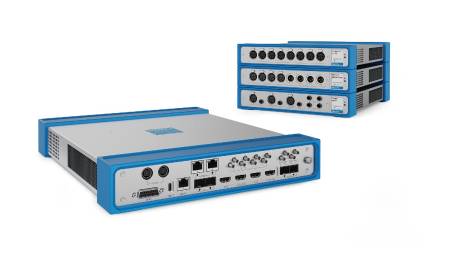
Nucoda Film Master is an independent resolution system that provides a complete workflow for DI, TV, advertising, etc., with primary and secondary color correction, and effects and shaping from SD to 4K. This system also includes the powerful DVO restoration tool, a set of plugins that minimizes grain and noise, automatically removes dirt, drops, etc., and increases overall image quality. DVO is based on the DVNR hardware technology of Digital Vision, an application developer specialized in solutions for film and video.
"The main advantage of the DVO is that it is a set of image enhancement tools that are integrated within a color correction equipment," says Felipe Muraca, Telson's Postproduction & DI technician. "This is extremely useful software; no other color correction system has such powerful and flexible tools in this regard as Nucoda," says Ximo Michavila, Telson colorist.
Another tool is the DVO Grain, which is used for grain or noise reduction. One of the advantages of each tool is that the user can control which of them is applied, and to what extent, in each of the planes.
"In El Deseo they have been very satisfied with this system since previously we worked with their films in an absolutely manual way being able to only eliminate the most obvious imperfections. But with this tool practically 90% of them are automatically corrected, leaving 10% for a later manual adjustment, "says Ximo Michavila. According to Felipe Muraca, "the workflow used consists of transferring in data the interpositive provided by the producer, in HD resolution and in 4:4:4 without compression, to the SAN-DVS for color correction and, once it is finished, the DVO tools are applied for its restoration. Finally, the finished film is recorded to HDCAM SR for delivery to the customer."