
By the end of this year, the Undersecretariat of Telecommunications of Chile, Subtel, would define the regulations for digital terrestrial television, as he commented Mariano Arana, president of the Regional Television Association Aretel - del Bío Bío A.G., in an interview with the electronic journal onoff.
The announcement about the Decision was made in the framework of the First Seminar International Local Television in Chile, made between the August 23 and 24. Arana also referred to success. of the event, which denotes a gradual strengthening of the local television in the Andean country.
On the legislation to be adopted, Arana said that among the three existing (the American ATSC, the European DVB and the Japanese ISDB), the most convenient for the country it would be the DVB. Among other reasons to opt for this norm, adduced its greatest massification in the world, the possibility of receiving the signal on mobile phones that depend on cellular telephony, the economy of equipment decoders and receivers, the least difficulty of propagation that have the transmission equipment in the spectrum in zones rugged geographies such as the Chilean one; and because it occupies less bandwidth.
In this regard, the president of Aretel stressed the need, on the part of local channels, to adapt their own projects to the new technology, without stop pushing for technical requirements to conform to the national reality.
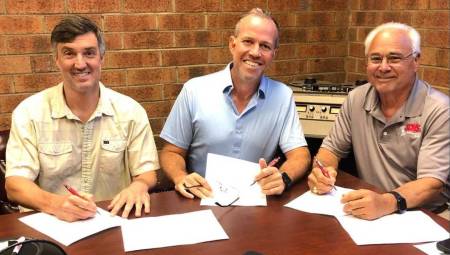
The seminar, for its part, convened to 250 representatives of the different regional channels of the country and was attended by members of the Associations of Local Televisions of Spain G9, which brings together more than 400 local channels, and with which an agreement was reached for the co-production of audiovisual works, as well as for the exchange of information and experience about the situation regulatory in local television in both countries.
During the event, attendees requested the regulation of their activity and highlighted the importance of their work in the internal development of each of them the communities in which they operate.