
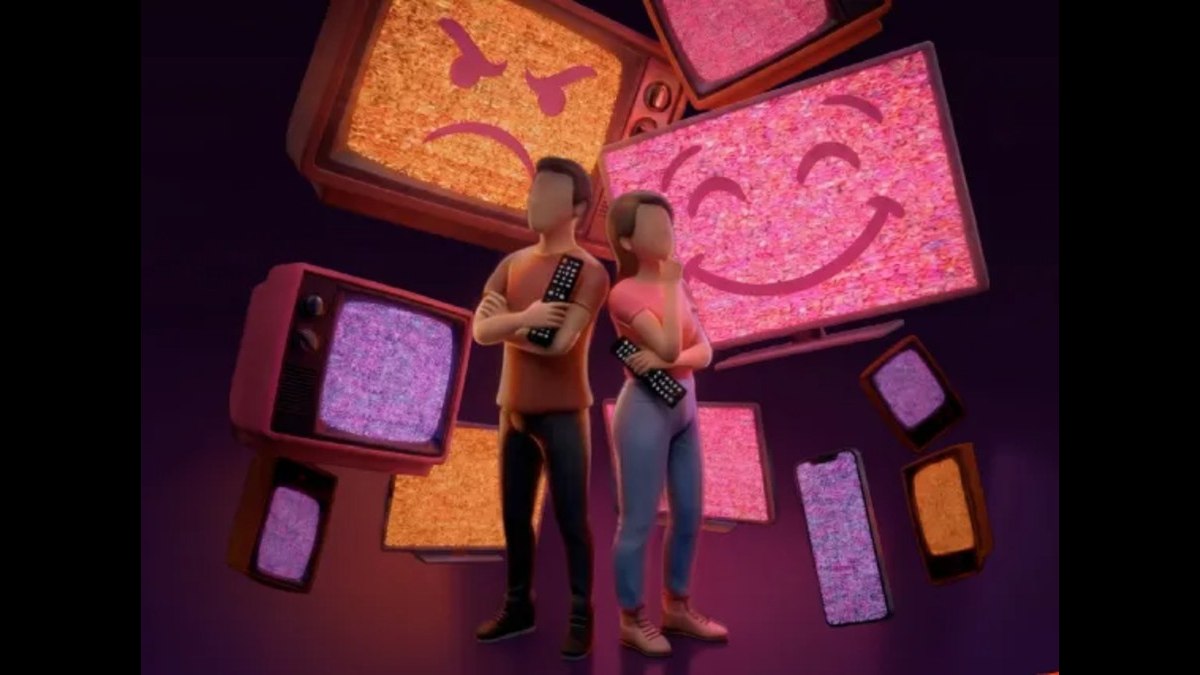
Chile. The Research Department of the National Television Council, CNTV, in conjunction with Ipsos Chile, presented the results of the study "Trust in Television 2025", a mixed research that analyzes in depth the levels of trust in open television, its meanings for audiences and the main challenges faced by the medium in a changing information ecosystem.
The study is composed of four complementary reports: a literature review, a qualitative phase, a quantitative phase and an integrated analysis of results.
A conceptual framework for understanding trust
The first report presents the bibliographic review that supports the study, addressing the main approaches to trust in the media, its link with democratic legitimacy and the factors that affect its strengthening or deterioration. It also analyzes the historical role of open television in the Chilean information system and its evolution towards a hybrid environment marked by social networks and digital platforms. Based on this, it defines key dimensions such as pluralism, independence, journalistic quality and transparency.
The emotional dimension of trust
The second report presents the results of the qualitative phase, based on eight focus groups. Among his findings, he highlights that trust is understood as an emotional state associated with honesty, coherence and closeness. Although open television maintains informative relevance, it faces questions for sensationalism and homogeneity of content. However, "anchors of trust" linked to certain content and television figures are identified.
Confidence levels and associated factors
The third report presents the results of 1,100 online surveys applied to people over 18 years of age. The study confirms low overall levels of trust in the media and moderate to low levels in broadcast television. Trust is mainly related to honesty and transparency, and depends strongly on the evaluation of content. Likewise, the "paradox of open television" is confirmed: despite the low declared trust, it continues to be widely consumed and recognized as a relevant source of information.
An integrated view: challenges for the future
The fourth report integrates the above findings and states that trust is a multidimensional phenomenon. Among the main challenges for broadcast television are to strengthen independence and pluralism, improve the quality and diversity of content, and strengthen more authentic links with audiences
With this new version of the study - which gives continuity to the research carried out in 2021 - the CNTV seeks to provide empirical evidence for public debate and generate inputs that contribute to the strengthening of open television as a relevant actor for democratic coexistence and the national information system.
Download the four reports:
Trust in TV 2025 – Literature Review
TV Trust 2025 – Integrated Analytics
Trust in TV 2025 – Qualitative Phase
Trust in TV 2025 – Quantitative Phase