
Although three satellites are sufficient to cover the earth in all its extension, there is no doubt that the satellite coverage area is inversely proportional to the signal strength and, therefore, the larger it is, the larger and much larger the receiving stations will be required.
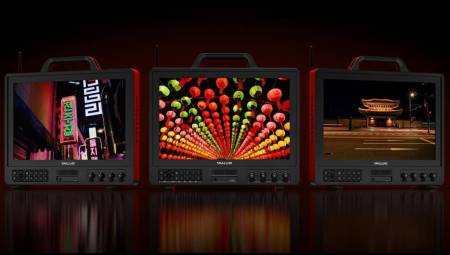
Satellites with DBS (Directive Broadcasting Satellite) systems thus provide specific television services that can be received in the areas to which they are directed, with flat antennas of only 60 cm. in length. Even – according to Álvaro Sandoval, of Colsago (Colombian telecommunications engineering company), the foreseeable developments will allow these antennas to be incorporated into the televisions that by then will have adapted a high definition system, in which the images will not be made as in the current NTSC system, with the electronic sweep of 525 lines, but they will probably achieve spectacular sharpness by introducing more than 1000 lines on the screens.
The DBS, which is currently used to provide integrated network services to companies or videoconferencing, is supported in parallel by the digitization of video and the support of fiber optics, "nervous system of the development of the world".
An experiment in Latin America
The saturation of the electromagnetic spectrum in the KU bands, which operates between the frequencies of 11 to 14 Ghz and in the C band, which uses 8 Ghz for the upload of information to the satellite and 4 Ghz for its sending, is one of the most important factors for the implementation of the DBS that operates in the KA band, with a frequency of 20 to 30 Ghz.
Two years ago NASA opened a competition among American universities to choose the one that would lead the experimentation of the project. Subsequently, Georgetown University was chosen, and in turn extended the initiative to several Latin American educational entities among which were the Andrés Bello University of Venezuela, the Catholic University of Quito and Valparaíso and the Javeriana University of Bogotá.
After the launch of the ACTS (Advanced Communication Technology Satellite) satellite, carried out in June 1994, Georgetown University, the Catholic University of Quito and the Javeriana were definitively linked to the experimental project and there is the possibility that the other Latin American institutions will be incorporated.
The first possibility that was raised and that is already a reality, is the creation of an inter-university connection network. At this time, the two Latin American universities already have a communication with NASA, which allows them to transmit voice and data. Videoconferencing equipment will start operating no later than April.
Electronic engineer Jorge Sánchez, from the Javeriana University, explains that the ACTS satellite works with a main beam that is always fixed and a steering beam that is alternately directed towards the cities involved in the project, so that each one receives it during certain periods of time. The satellite can cover up to 32 earth stations, even though so far there are only 13 in operation.
"The advantage of using the KA band is that unlike the frequencies tuned in the Cy KU bands, not only does it have a new geostationary space but the signals are not attenuated by the rain," says engineer Jorge Sánchez. In fact, the receiving stations installed in Quito and Bogotá have technical mechanisms that function as a climate anti-attenuation circuit of the signal.
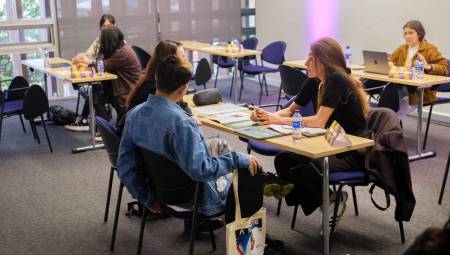
In this context, it is interesting to note that the orientation of the project is eminently educational and that its purpose is the international development of joint research between institutions, the transfer of technology and the expansion of education courses and continuous extension as well as the intention of achieving postgraduate studies via satellite.
The first program that is being experimented with, financed by the IDB (Inter-American Development Bank) consists of support for the generation of microenterprises. For its realization, the Department of Economic and Administrative Sciences of the Javeriana University, has internally the fiber optic ring that connects the entire university and that will allow it to receive and transmit videoconferences from any point of it.
If this experiment – which tests the operation of a technology in a much higher frequency band than those traditionally used – is carried out with total success, not only will the prospects for educational development increase enormously, but it will open the possibility of expanding the use of the electromagnetic spectrum and thus a new door for the journey of information. on.