
 Mexico. Riot Games is an online game developer and organizer of eSports events worldwide. Specifically, they have developed a gaming platform called League of Legends (one of the most famous online games in the world) that throughout Latin America has been very successful.
League of Legends was born in 2013 and has managed to consolidate itself as one of the most important eSports tournaments. The so-called esports are growing exponentially: the end of League of Legends two years ago was seen by 99 million people worldwide.
In the city of Santiago de Chile, all the production was carried out and Ligue of Legends (LoL) tournaments were played at the Latin American level, which were broadcast by streaming to the whole world.
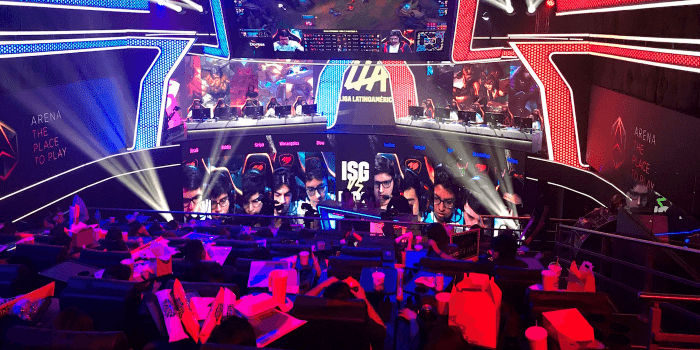
Given the success obtained and in order to cover a larger market, it was decided to move all production and games to Mexico City. The plus of making this strategic move is that the first eSports arena in Latin America was built to be able to offer the competitions to the general public, and offer the signal to a local television station (TV Azteca), and by streaming.
Through an agreement between the corporations ARENA, Riot Games and TV Azteca, the Arena Esports Stadium, located in the Mexican capital, has been equipped in one of the movie theaters of the Cinemex complex, within the Artz de Pedregal shopping center.
This space is at the forefront of technical means. With state-of-the-art technology, 140 square meters of LED screens have been installed with seventeen cameras, robotic light and all the technological advances that allow the player and tournament attendees to live an immersive experience.
Through a contract with Riot Games, Secuoya's recently founded subsidiary in Mexico has been responsible for the design as well as the equipment, production and broadcast service of the League of Legends Continental League.
Sequoya is a leading group in the creation, production and distribution of audiovisual content, specialized among other fields in the outsourcing of operational areas of television and other audiovisual content, providing personnel trained in exploitation and engineering, as well as the necessary equipment. Its operational scope reaches Spain, all of Latin America and the United States.
At the same time, and with a staff of forty people (workers of Secuoya Mexico) as technical staff, the company has incorporated into the room the necessary means of production and is responsible for the provision of the audiovisual retransmission service. For the coordination of these human resources, a powerful state-of-the-art intercom system is needed, whose supply and start-up Has Been contracted by Sequoya with AEQ-Kroma of Mexico.
Once the needs were jointly assessed, the following were implemented:
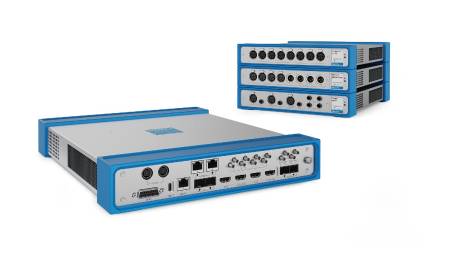
- Compact intercom matrix with IP Crossnet 72 connectivity and audio features compatible with its broadcast by television or radio (broadcast quality).
- 16 Intercom user panels with IP connectivity and rack format, TP 8116, for the stable workstations of Lighting Controls, Shading, VTR and Switcher, Producer, General Manager and Observers among other technical and operational personnel.
- 2 6 to 1 concentrators for 8 cameras on set for use by cameramen.
- 9 Xplorer wireless beltpacks for use by cameramen, coordinators and assistants.
Some important technical features of this project are:
- Intercom of panels through audio by IP with Dante protocol. An Allen&Heat audio console has been connected in the same way to be able to share the audios between the Intercom system and the sound booth, with the forecast of integrating more audio sources in AoIP in the future.
- Integration of wireless beltpacks through the 5G Wireless network of general purpose of the room. Service coverage includes the operating rooms, theater, backstage, main stage and reception lobby.
- It is planned to integrate intercom licenses in mobile devices such as Smarphone or tablet to be able to access the intercom system from any geographical location as one more panel.
The integration was carried out with Secuoya staff, being headed by the engineers Walter Gómez and Rodrigo Cotiart, supported by the manager of AEQ_KROMA Mexico Engineer Cesar Reyna, and from the Central of Madrid the Product Manager Roberto Tejero and the staff of the Customer Service Department.