
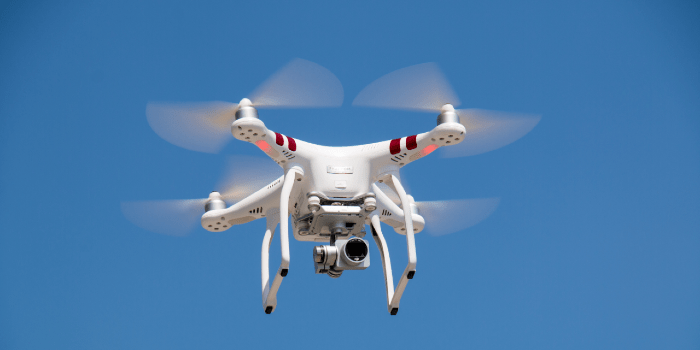
 Latin America. The fifth generation of mobile technologies, 5G, will bring major transformations not only for mobile phones, but also for a wide number of applications in industry, commerce, health care, security, and other areas of human life. One of the sectors where major changes are expected is in the unmanned aerial vehicles (UAVs) or drones.
UAVs or drones are a technology that is still in a growth phase, but with tremendous potential for application in various industries and applications. One of them, of great importance for Latin America, is its use in agriculture, either for land reconnaissance, soil analysis and crop monitoring, among other uses. But they can also be used in infrastructure, transportation, security, entertainment, health, telecommunications and mining, among several other areas.
The integration of UAVs into the 5G communication standard will bring great advances for these devices. First, the use of 5G networks to operate (command and control) these unmanned craft will allow flights beyond the line of sight between the aircraft and its controller, even incorporating some autonomous flight capabilities.
In a second instance, the standardization of UAV communications in 5G could lay the groundwork for the development of a centralized traffic management system or UTM (Unmanned Aircraft System Traffic Management).
This system will be vital to allow multiple drone operations to coexist at low altitudes in the airspace, maintaining safety conditions and verifying compliance with the applicable regulations.