
 Latin America. Singer Kirstin Maldonado's new music video was shot with 15 cameras designed by Blackmagic Design. During the filming of the images corresponding to his song "Naked", different units URSA Mini 4.6K, URSA Mini Pro, Micro Cinema Camera, Pocket Cinema Camera and Studio Camera 4K were used simultaneously.
Kirstin Maldonado is a singer-songwriter who has won several Grammy Awards and multi-platinum albums and is also part of the a cappella group Pentatonix. His first solo EP, which is titled "L•O•V•E" and was released in the middle of this year, quickly reached the top of the charts. The music video for the song "Naked", which is the third single from that work, has been seen by millions of people.
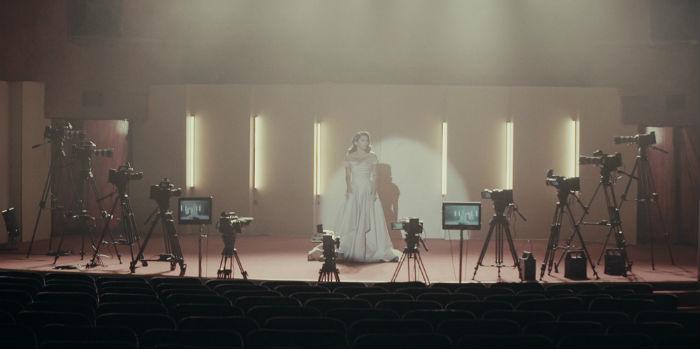
The black-and-white images, captured by cinematographer Corey Jennings under the direction of Daniel Carberry, attempt to simulate the glamorous appearance of old-time Hollywood and convey a sense of vulnerability to the world. In the video clip, Kirstin appears surrounded by cameras and microphones that monitor her and record her every move.
The 15 units of Blackmagic Design were part of the stage and are seen in the recorded material. Jennings and Carberry positioned them in such a way that each captured Kirstin from a different angle, with different lighting, and filmed the image of the singer on the camera monitor. All were used simultaneously in the filming, which took place in just one day, despite the fact that the production team only included a few cameramen.
"This video clip is about opening up to the rest of the world and how people see you in different ways. We wanted to go beyond the concept of a single camera that captures individual images, and that's why we surrounded Kirstin with several units recording simultaneously. It was a titanic task, and blackmagic Design's models allowed us to obtain an exceptional quality material with a uniform appearance," said Carberry.
Given the abundance of cameras and the small number of personnel, it was necessary to be able to prepare, move and handle them without difficulty. The team also needed to capture high-quality images that could be easily edited during post-production, as combining the recorded content with so many different units in a single video clip would have significantly increased the complexity of the project.