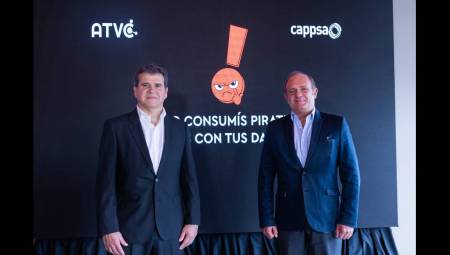

 Colombia. The National Television Authority, ANTV, participated in the second edition of the TV Summit Antipiracy tour 2015, which was held at the Sheraton Bogotá Hotel. The event is organized by Latin America Anti-Piracy and Intellectual Property Consulting – Laapip and had its first meeting on August 19 in Mexico and after Bogotá, the tour is scheduled to visit Guatemala, Chile, Argentina, Uruguay and the United States.
Ernesto Orozco, representative of the Governorates in the National Television Board - JNTV, participated in the panel 'Discussion of the current regulatory framework', together with Iván Mantilla, Deputy Director of Telecommunications of the National Planning Department - DNP and Giancarlo Marcerano, director of the National Directorate of Copyright - DNDA. During his speech, Orozco spoke about the difficulties of using clandestine television services and the direct effects on the user of these services, who receives an illegal service, of low quality and without commitment or guarantee.
"Clandestinity in the TV service is almost always accompanied by the violation of copyright and related rights, affects the market and competition because it has no tax commitments, contribution to public TV, quality regime, respect for infrastructure, or payments for content or broadcasting rights," noted by the Board Member during his intervention.
In addition, he assured that the sub-report of authorized operators is based on the tripod of fraud: evasion of contributions to the Television Fund, FONTV, VAT evasion and fraud to the economic rights of author and therefore, must be attacked with the maximum criminal, administrative and contractual sanctions, by the competent authorities, in this case, the ANTV, Prosecutor's Office, DIAN and Superintendence of Industry and Commerce, who must make coordinated efforts to attack piracy and ensure that the viewer has access to a legal and quality service, in which competition and efficiency are promoted.
For her part, Ángela María Mora Soto, director of the ANTV, said that there are two types of sanctions for those who commit this crime, one economic and one criminal, depending on the fraud and the type of service. "The sanctions can be: preventive and definitive confiscation of the equipment used in the illegal provision, face prison sentences, economic fines ranging from 100 to 1,000 legal monthly minimum wages in force and for those who fall on the fault the fine may be up to 6,000 salaries. In addition, for some cases the license to operate the service may be canceled, "said the official.