
 United States. Technology in data transmission continues to surprise by its advances in improving quality and signal for the television industry. That's why some journalists at the WCBS-DT network in New York are now using a cellular transmitter, which allows them to send live HD images from anywhere there is a 3G or 4G mobile connection.
Some call it the beginning of the microwave end, as during breaking news journalists can create and move quickly without needing to worry about offline localities.
This technology is becoming increasingly common and implemented by some CBS stations in different cities in the United States, including the camera brand JVC implemented in one of its models (GY-HM790U) a WiFi transmission module with which a journalist can connect to a local or personal Internet access point and send images to the station.
"The reliability of a connection has a lot to do with the provider and the congestion of the Internet network. We are not suggesting that a simple WiFi connection and access point is a substitute for a microwave link in Full HD, but the reality is that when reporters go to a breaking news story, they want to return to the station as soon as possible. The point is that even if you can get an in-air visual, even if it's in low quality, that's a competitive advantage," said Dave Walton, vice president of marketing and communications at JVC.
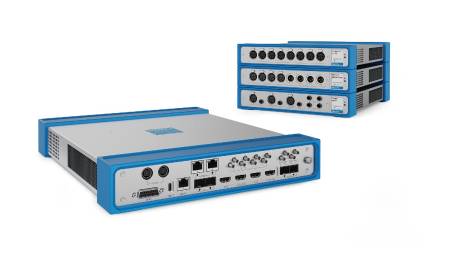
Another brand like Streambox offers a hardware-based encoder that provides more than eight 3G/4G networks, which allow live or file-based video streaming over wireless networks. Stations managed by Fisher Communications are using them as an alternative to SNG/ENG vehicles. It also allows you to send files in HD/SD live.