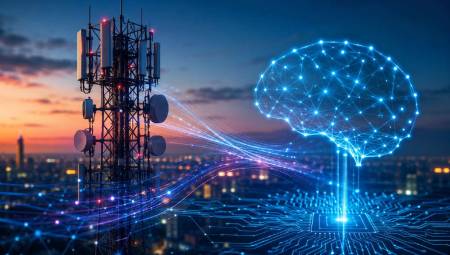

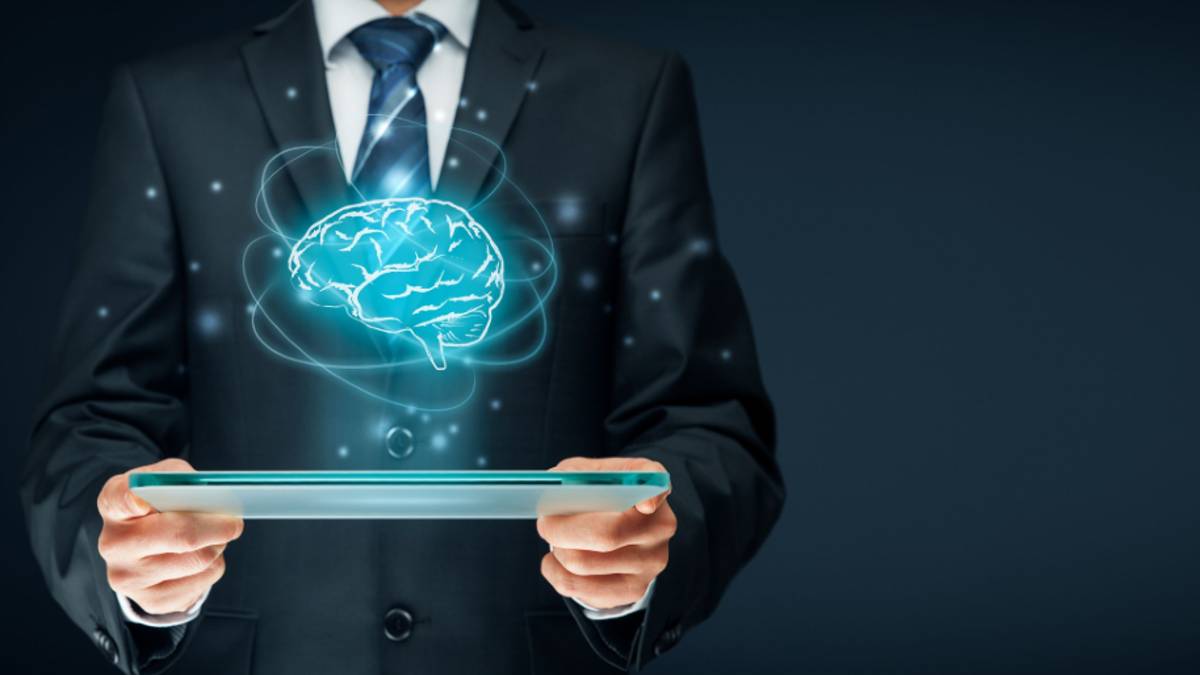
Experts believe that deep learning can help and accompany human creativity, but not replace it.
He can compose songs, write books, and even beat a good chess player. Therefore, one of the concerns regarding artificial intelligence (AI) is whether it will end up being more creative than humans. AI can't generate fundamentally new ideas on its own, according to an article published in ScienceDirect. What it is capable of is helping humans to do so by catalyzing human creativity.
"Although technologies such as GPT-4 are characterized by being creative and generative artificial intelligences, their development is still in their infancy and, at least for the moment, their capacity for creativity is not at the level of a team of creative people, it only complements it. That is why, in work environments, creativity continues to be a highly valued skill," explains Enrique Baleriola, professor of Social Psychology of Work and Organizations at the Faculty of Psychology and Education Sciences of the Open University of Catalonia (UOC). For Baleriola, "this skill is and will be in demand especially by those companies that are at a time of start or growth, or that need to modify their processes and ways of working to gain efficiency or differentiate themselves."
According to the expert, in the areas where the latest technological innovations are most intensely penetrating is where creativity can maintain and save jobs. "Especially in a work and professional environment as dynamic as the current one, and although it is not explicitly or directly related to the skills or knowledge of many jobs, it is one of those most appreciated meta-skills or soft skills," he explains.
The reason is that creativity brings novelty. And this novelty, applied to problems and their solutions, to new formulas, protocols or ways of working, to new products and designs, is what adds value to the workplace. "It speaks of other characteristics that companies tend to look for: their own brand or positioning that is different from those of the competition, new trends, innovation in the products or services offered, getting out of their comfort zone, anticipating possible challenges or problems...", says the UOC professor. " This fosters a more open and flexible team mentality with change and adaptation, which is absolutely necessary today," he adds.
What is creativity? But what is meant by creativity? According to the UOC professor, it is not exclusively related to the canonical idea of being a person with many ideas or very artistic, but also to the ability to solve more routine aspects or not so given to exploring new ideas from scratch. For example, the ability to seek new solutions to emerging problems or to establish new ways of carrying out work already established.
From neuroscience, creativity is defined as the ability of the brain to produce a work or a product that is new, that is, original and unique, and that is also useful within a social context. Something crucial in culture, science, education... But it can also be key in the economic or industrial sphere, says Diego Redolar, director of the Psychology degree and principal investigator of the UOC's Cognitive NeuroLab group. "Creative people are characterized by their fluidity of ideas, by the originality and novelty of these ideas, and also by their ability to think flexibly. There are different tests that try to measure creativity in people taking into account all these aspects," he says.
How does creativity arise?
Neuroscience has measured creativity through electroencephalography (EEG), with electrodes that measure brain rhythms. "Neurons work using different rhythms. It is as if there were an orchestra in which the neurons would be the musicians, and the conductor, the one who directs them. Sometimes musicians can play in unison, which is when we talk about great synchronization. There is a brain pattern called delta, in which there is a lot of synchronization. Other times musicians can play instruments whenever they want, without paying attention to the conductor, which is what happens when we talk about a great desynchronization, which would be a beta pattern. What has been seen is that brain activity during creativity seems to be related to a type of activity that is called alpha," explains Redolar.
Neuroimaging studies have shown that creativity is related to an increase in activity in different brain regions. One such region is the prefrontal cortex. Specifically, an increase in activity has been observed in the left dorsolateral prefrontal cortex and in the right ventrolateral prefrontal cortex. "Activity increases in these regions when it comes to solving problems or looking for the most appropriate ideas to solve certain situations in which new and creative ideas are the only ones that solve this type of situation," says the UOC researcher. "This is not surprising, because this prefrontal cortex is involved in other cognitive processes such as cognitive flexibility, attention, processing of semantic information or working memory, and all these functions play a crucial role in creativity," he adds.
In addition, from a neurochemical point of view, creativity is related to different neurotransmission systems. Specifically, there are three neurotransmission systems involved: serotonin, dopamine, and norepinephrine and adrenaline.
Is the creative person born or made?
The study Creativity in Spain highlights that one in three Spaniards says that creative is born, while six out of ten consider that creativity is a mixture of innate skills and what has been learned throughout life. The opinion of science is that, although there are some genes that could be involved in creativity, "the most important thing is the interaction between genetics, the environment and different epigenetic factors that could complicate this relationship a little more," explains Diego Redolar.
So much so that creativity can be encouraged. Even within the company. For Enrique Baleriola, the best way to do this is to have a team that supports and encourages it, that is, to have resources and possibilities for creative development that do not fall exclusively on the person who must be creative or improve their creativity. "For example, by fostering spaces for dialogue and open reflection, offering training in creative thinking techniques or promoting an organizational culture that rewards innovation, despite the possible increase in small failures or slower processes due to the implementation of new ways of doing things," he says.