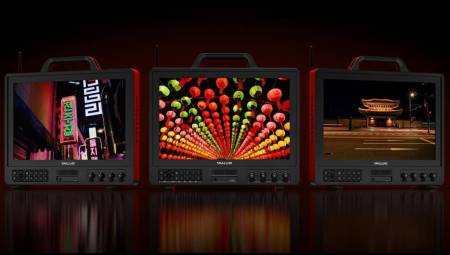

 In this article the author takes a tour of the history of LEDs that ends with the use of this technology in televisions. It also explains the benefits of LEDs and their disadvantages in the current market.
By: Yisell Hernandez*
How to analyze and forecast the future of emerging technologies without getting lost in the illusion of something new and captivating? How to arrive at logical reasoning and observe the future from the point of view of the end user, without raising the functions to an unattainable level? To do this we have to start by learning from the past and history of this technology and its industrial and commercial evolution. In this article we will try to analyze LED technology (Light Emiting Diodes), its implications and its most common uses to date.
A bit of history
Light-emitting diodes are semiconductors that work when electrons combine in such a way that light energy is born in the form of photons. This effect is called electro-illumination and the color of the light corresponds to the energy that the photon gives off which in turn is determined by the space within the semiconductor where the electrons are located.
Complicated, isn't it? In order not to go into more physical details, we will only summarize that the electro-illumination effect was discovered by the British H. J. Round of Marconi Labs in 1907, although later the Russian Oleg Vladimorich Losev reported his creation of LEDs in 1927; the technology was not practically visible until 1962 thanks to Professor Nick Holonyak while working as a research scientist at General Electric. The professor and physical engineer at the University of Illinois, is recognized as the father of LED since then and is part of NIHF (National Inventors Hall of Fame). In 1968 HP (Hewlett Packard) implemented the technology in the first handheld electronic calculators.
More than 30 years later, professor and engineer Shuji Nakamura achieved the first high-intensity blue LED, and although the technology was a mega discovery, the controversy was caused by the multimillion-dollar lawsuit that the professor raised against Nichia Corp for not having paid him the sum agreed in his annual bonus for his discovery.
Types of LEDs
LED colors also correspond to its most common uses. Among the existing colors are red, orange, yellow, green, blue, violet, ultraviolet, infrared and white. Blue and ultraviolet LEDs originally did not have much use due to their poor ability to send off light, currently you find them in the famous black lamps, commonly used to find traces of microorganisms that are photosensitive and therefore give off light when illuminated with such lamps.
In the case of red, green and blue LEDs or also called RGB LEDs (Red, Green, Blue), these diodes are used for LCD lighting that need to have high accuracy in their color gamut, the life of RGB LEDs can decrease quickly if they are exposed to high temperatures and the level of colors can decrease substantially.
One of the most used LEDs currently for the illumination of LCDs are white, which normally require a pigmentation process with yellow phosphor that gives them that white lighting tone. The LEDs commonly used for this coating process are the blue ones. This process can increase the degree of illumination but has its disadvantages in the long term, causing the degradation of the phosphor and therefore the final illumination of the LCD or bulb, in addition to shortening the life cycle of the LED. But do not worry the next time you go to buy a monitor or LCD LED TV, since there are studies and various methods to optimize the efficiency of white LEDs.
LED and LCDs.
After THE appearance on the market of LED TVs and monitors (as well as portable with LED screens), consumers have fallen into a black hole of confusion about the implementation of LEDs in their new equipment. Most people think that an LED screen is not LCD and vice versa; the misconception is part of the communication strategies of companies that do not care about educating their consumers to acquire the best product or the one that is closest to their real needs.
The myth is very easy to unmask, LED technology is a lighting technology while LCD (liquid crystal display) is a display technology that uses some lighting method to display the image. The use of cold lamps, CCFL (cold cathode fluorecent lights) has been the most common since CRT screens were almost totally displaced from the market.
LCD screens use rear lighting included within their equipment, LED is the new lighting alternative that many companies are using in their LCDs. Another big confusion lies in the position of the LED lighting, as it can be located on the back of the LCD or on the edges of the screen, obviously this has an impact on the final price, efficiency, final contrast of the image, and dynamic brightness settings in moving images. The LED located on the edges also determines the thickness of the equipment, with the quality of making the lightest and thinnest screens on the market. But if you're looking for better image quality and sharpness, then the rear-lighting "Full Array" is your best bet, albeit at a slightly higher price.
Why LED is better
LED lighting offers many benefits, the most popular are efficiency in saving electrical energy, cost savings in production, because they do not need color filters like traditional lighting systems, and the size factor (less than 2mm) reduces the cost of materials used in production for the final equipment. Other advantages include that they are environmentally conscious and do not contain toxic substances such as mercury.
LEDs radiate little heat in infrared form, which keeps a room with quite a few LED monitors much more ventilated than with CCFL LCD monitors. The life cycle is longer, depending on the color and the ambient temperature to which they are exposed, the cycle varies between 35,000 to 50,000 hours of use. LEDs are also more resistant to drops or shocks than other types of traditional bulbs. One of the advantages that influences the popularity of its implementation in LCD screens, is the fact that they turn on and off in micro seconds and the fluctuation of light can be moderated dynamically, benefit that helps control the contrast of black and white in moving images, thus avoiding shadows and ghost pixels, very common on old LCD screens.
Like all good things, LED also has its disadvantages. One of them affects the pocket of end users, since the cost per lumen, although it has fallen in recent years, is still higher than that of CCFL. Another thing to keep in mind is the temperature, since the life of the LED suffers a lot in extremely hot environments. The last negative implication lies in the health of our eyes, due to the exposure of the retina to high degrees of photochemical radiation; but this last thesis has not yet been tested and safety regulations have not been established.
OLED and the future
Another of the many confusions caused by the term "True LED" is OLED technology and its uses. The OLED (Organic Light Emitting diodes), born from the experimentation of Martin Pope, by injecting electrons into organic liquid crystal, this was in 1960 and since then the technique has been polished and variations in the implementation of OLED have increased since the PLED, used in digital watches, very famous in the 80s. New techniques such as TOLED, transparent LED, can be used for screens exposed to a lot of sunlight; the SOLED, "stacked" superimposed LED of three primary colors, allows the increase of the range of colors and the reduction of the spaces between pixels.
OLED can be the future beyond the future of LED as a lighting alternative. It is the future of flexible and lightweight commercial displays, the solution for true technological mobility. OLEDs can be printed by laser or "Ink-Jet" printers on certain types of flexible sheets that resemble paper, this would theoretically be more economical than LCD production. The current problem lies in the cost of these sheets, although solutions that can improve the cost and increase production are already being considered.
The future is in organic LED or not, in any of its most common forms and uses. OLED would lead the electronics industry to reinvent itself after new self-illuminating pixel techniques demand new high-resolution technologies, to read that dynamic newspaper while changing the color of your clothes when you leave the office and head to the nearest restaurant, after the map of your car's viewfinder has marked the fastest routes. There is no doubt that although certain corporations, governments and the lack of good environmental regulations impede the advancement of technology, the future will always be just around the corner.
*Yisell Hernandez is a product marketing manager for LG Electronics Miami, USA.