
Fans who are lucky enough to receive the ESPN 3D channel and have the right receiver and glasses, will enjoy in stereoscopic format at least 25 matches of the soccer world cup that is played in June in South Africa. Thanks to the combination of various initiatives by manufacturers of the required technologies, content providers and signal distributors, the FIFA Cup will be the first of many events of global interest to be made available under this new modality.
For the soccer cup, Ericsson is supplying ESPN 3D with a video processing solution exposed to the professional public at the recent NAB, which ensures high image quality from capture to delivery to the user at home. The network has been testing its new channel for more than two years, developing best practices for the use of technology in live sports shows, including adjusting the positions of 3D cameras, refining workflows, improvements in the transmission and "calibration" of amateur reactions compared to the reception of a traditional signal.
According to information provided by Ericsson during NAB, some analysts predict that by 2015 80 million 3D TVs will have been sold. Staffan Pehrson, director of the firm's television division, highlighted how advances in cameras, distribution and receiver equipment already make the 3D experience possible at home: "Consumers will have the opportunity to experience the same sensation they perceive in movie theaters today." Ericsson's 3D solution addresses the challenges of this modality in both contribution and distribution, among which the most important is perhaps the need for the best possible image quality, including spatial resolution.
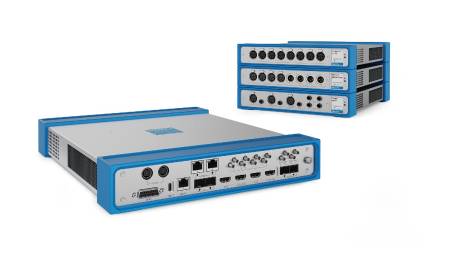
Ericsson's CExH42 MPEG-4 AVC HD encoder provides a natural platform for 3D, ensuring full control of encoding parameters, precise synchronization and time stamping of compressed frames, as well as the generation of fully packaged 3D simulcast. Meanwhile, the RX8200 modular receiver ensures that the precise temporal and spatial relationship between the left and right flows are maintained until the end, avoiding possible reductions in the conformation of the mass of consumers due to possible early frustration with their experience.
"Our research labs consistently show that high image quality is the number one desire of consumers in today's market. Having pioneered HD, we are in the best position to offer a video processing platform for 3D, which is the next wave of innovation among consumers," said Pehrson. It's worth remembering that Ericsson's technological advantage in this area comes from its acquisition of Tandberg Television three years ago.
DirecTV enters the playing field
In development of the ESPN 3D channel project, the first of its kind in the industry, it was announced at the beginning of last April that the signal distributor DirecTV will add that service to its nascent 3D offer, which also includes its own channel, called N3D, with the support of Panasonic.
"ESPN and DirecTV recognize the ripple effect 3D has had on the television industry in recent months," David Preschlack, vice president of sales and marketing for Disney & ESPN Networks Group, recently stated. The agreement with DirecTV is the first step, he said, "to bring fans access to engaging and dynamic content, and our affiliates new opportunities to deliver innovative products to their subscribers."
In addition to the Panasonic-supported N3D channel, which will incorporate 3D programming from content producers such as MTV, AEG/AEG Digital Media, CBS, Fox Sports/FSN, Golden Boy Promotions, HDNet, MTV, NBC Universal and Turner Broadcasting System, Inc., DirecTV also announces a 24/7 3D pay-per-view channel and an on-Demand channel for June. HD subscribers in the United States will receive a free software update for their set-top boxes that will allow them to access the 3D service.