
On November 6, Campus TV will begin operations, the first high-definition digital television channel Honduras and Central America, in the Sula Valley and beyond in cable systems nationally and internationally via satellite, transmitting from its studios located in the University of San Pedro Sula, Honduras.
The history of this project dates back to 2007, after than Honduras, through the National Commission of Telecommunications (CONATEL) approved the frequency of channel 59 in ATSC digital format. The university partnered with recognized multilateral entities such as the Television Association Educativa Iberoamericana (ATEI), Educational Television Iberoamericana (TEI) and Ibero-American Cultural News (NCI), for the purpose of interacting and participating with all your partner organizations and collaborators, through a network of educational and cultural communication for production, dissemination and exchange of audiovisual and multimedia content within the regional cooperation framework.
Campus TV is also linked to other institutions academic and technological as the University of the Communications UNIACC of Chile, INCAE, of Costa Rica and integrates the ATSC Forum, an institution dedicated to education and promotion of the Committee on Advanced Television Systems (ATSC).
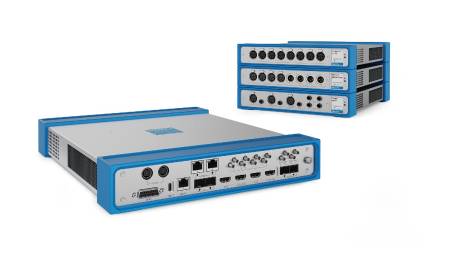
Technologically, Campus TV in strategic alliance with VSN of Spain with sales and support offices in Latin America (Video Stream Networks) will become the first digital channel high definition, fully automated and tapeless. How As a result of this relationship, the USPS will be the training center authorized for all Central America (Autorized Training Center) of this company of complete automation solutions and digitization for television.
AtSC digital television signal can be tuned to through the digital channels 59.1 (SD) and 59.2 (HD) of open television and the digital cable signal that CampusTV will broadcast to Honduras, Guatemala, El Salvador, Nicaragua, Costa Rica, and for Central Americans in the United States and Europe through the satellite signal of NSS-806.