
Mexico. The accelerated expansion in the contracting of subscription video-on-demand (SVOD) streaming platforms in Mexico has brought with it a phenomenon that is beginning to gain momentum, that is, the increase in churn or cancellation rates.
According to The CIU, the cancellation of subscriptions is no longer an isolated event, but a structural dynamic that reflects the maturity of the ecosystem of these platforms.
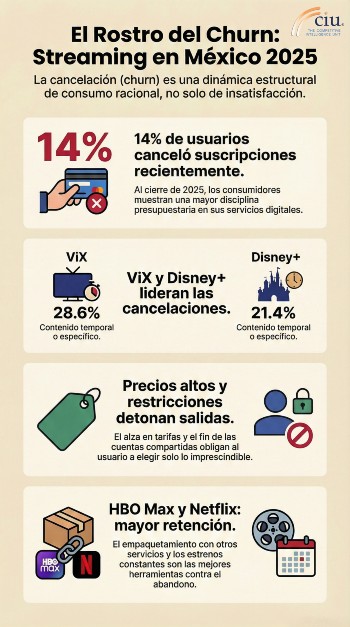
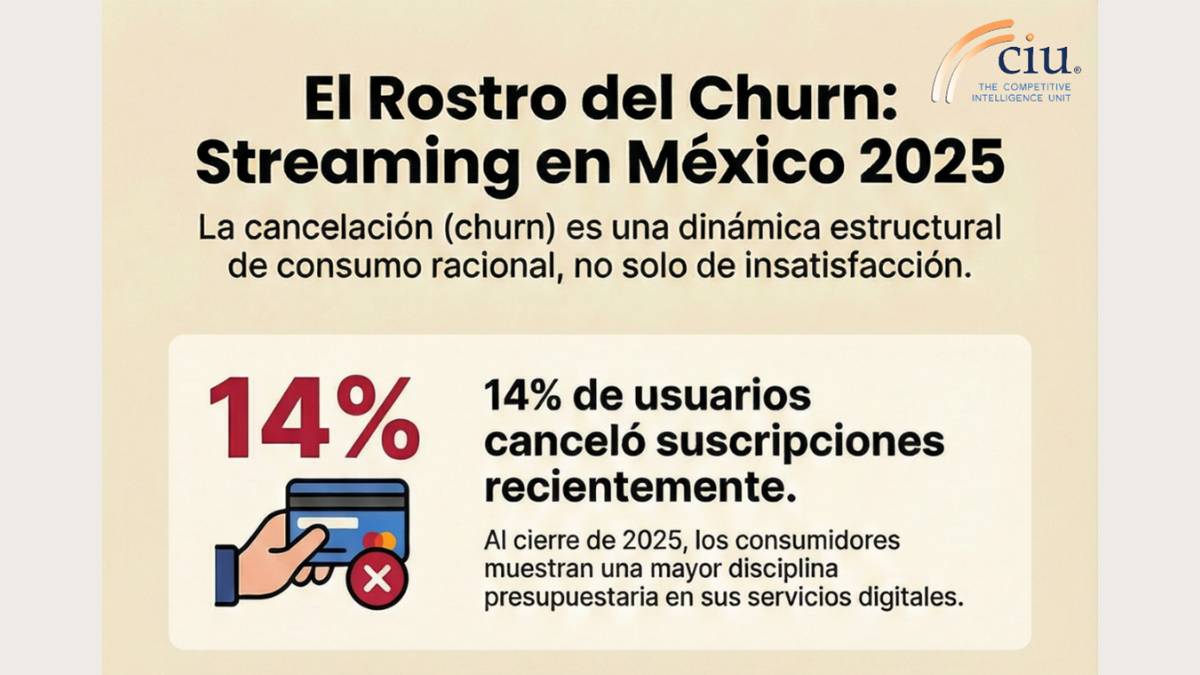
According to figures at the end of 2025, 14% of users have canceled at least one subscription in the last six months, which shows a greater rationality in contracting this form of digital entertainment.
In an environment characterized by the proliferation of alternatives, tariff increases and restrictions on account sharing, permanence has become more volatile and churn more noticeable.
From Accelerated Expansion to Structural Maturity
In just a few years, the SVOD market transitioned from a concentrated competitive ecosystem to a fragmented and highly competitive one. The multiplication of platforms generated a first stage of expansive adoption, however, the saturation point came quickly.
In the top of platforms with the highest proportion of total canceled subscriptions, ViX Premium (28.6%), Disney+ (21.4%) and Amazon Prime Video (17.9%) are located, followed by Apple TV (14.3%) and Netflix (10.7%). At the lower end are Paramount+ and HBO Max (3.6% each).
These differentials reflect not only content preferences, but also the strength (or fragility) of each platform's value proposition. The user has internalized the possibility of rotating services according to the windows of premieres, availability of sporting events or launches of relevant content, raising the churn of the platforms.
Price Increases, Locks on Sharing and Perception of Value
One of the most relevant triggers for churn has been the upward adjustment in subscription prices. In a context of inflationary pressures and restrictions on disposable income, streaming competes directly with other items of household spending.
The elasticity of demand becomes more evident when the price exceeds the perceived value threshold.
In addition, padlocks are added to the sharing of accounts. While these measures seek to increase ARPU (Average Revenue per User), they also increase the risk of cancellation, especially in price-sensitive segments. The cost perceived by users rises and forces them to reevaluate which platforms are essential.
In the case of ViX, its high proportion of canceled accounts may be due to the consumption of specific content, such as sporting events or reality shows, which do not necessarily generate continuous permanence.
Disney+ registers a similar dynamic, generating relevance for its global franchises, but with intensive consumption and limited in time. Once the interest cycle is over, the probability of cancellation increases.
Amazon Prime Video is a hybrid case. Although part of a comprehensive package, the decision to keep the video component depends on its differentiation from competitors. When content is not perceived as exclusive or recurring, churn increases.
Exclusivity, Packages and Churn Reduction
In contrast, platforms with a lower cancellation rate combine catalog relevance, relentless production of exclusive content, and packaging schemes that reduce the marginal propensity to cancel.
This is the case of HBO Max, which has reduced its cancellation ratio through attractive packages and a premium content strategy with consolidated franchises. Integration with other services and tariff promotions decreases the likelihood of unsubscribing.
Netflix, despite price adjustments and restrictions on shared accounts, maintains a relatively low proportion of canceled accounts as a result of the diversification and recurrence of its offer, by incorporating even sporadic sporting events, reality shows and talk shows. The continuous generation of premieres builds habit, a critical element in mitigating turnover.
Paramount+, while smaller in scale, could benefit from a more segmented user base aligned with its niche value proposition, limiting precipitous cancellations.
Rationality in Platform Contracting
The Mexican streaming market has entered a phase in which churn is a central indicator of performance and tracking. Cancellation is not exclusively synonymous with dissatisfaction, it responds to deliberate strategies to rationalize spending and optimize the time spent consuming content by users and households.
From now on, competition will not be defined only by the acquisition of subscribers, but by the ability to retain and reduce churn through sustained relevance, attractive tariff schemes, bundling with other subscriptions, models with advertising and strategic alliances.
The rise of streaming continues, but it has shown its other side of the coin, in which the user exercises greater budgetary discipline and selectivity. Under this phase of market maturity, permanence is not an indicator that is presumed, but is built and defended month by month.