
Latin America. Greet ChatGPT with a "Hello, how are you?" and receive its friendly response ("Hello! Alright, thanks for asking. 😊 And you? How are you? How can I help you today?") it represents an energy consumption, according to ChatGPT, similar to having a 10-watt LED bulb on for 72 seconds.
Although it may seem like a minimal expense, if you multiply this consumption by the 122 million daily active users that ChatGPT has on average worldwide (not counting other artificial intelligence tools available), the expense is immense. "Every word you send me contributes a little bit to energy consumption, even if it's just to say 'hello', 'goodbye' or 'thank you'," ChatGPT tells me.
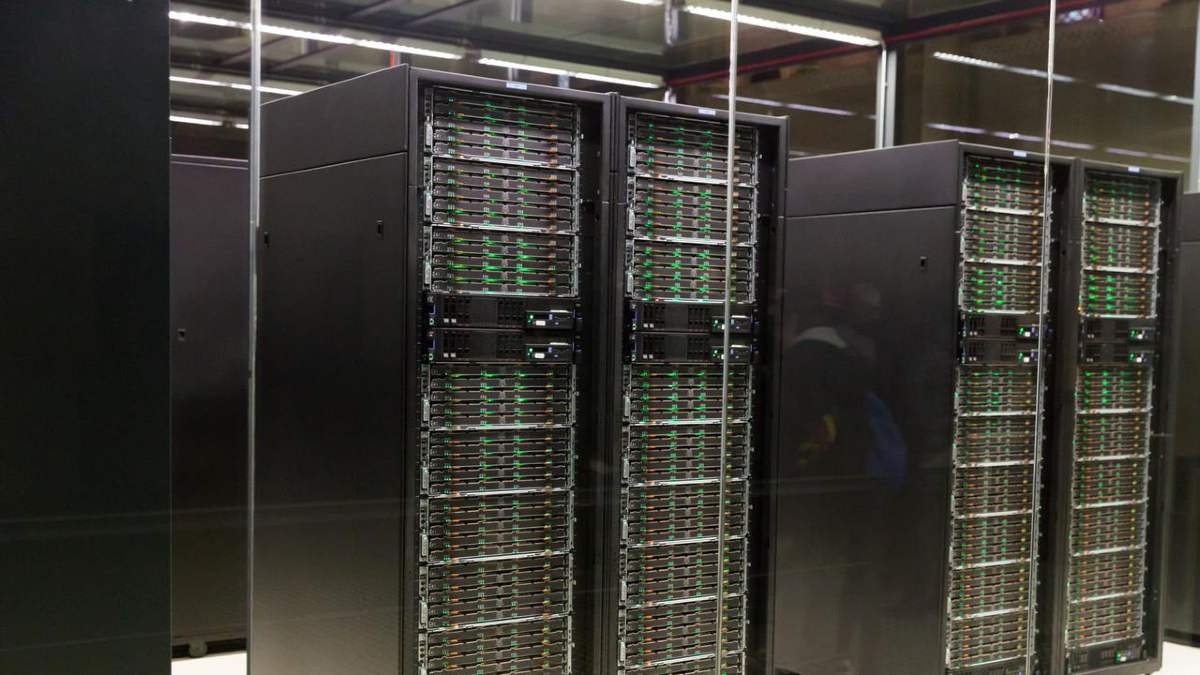
"The energy consumption of an AI is divided into two major moments: the training of the model and its use or exploitation," explains Antonio Pita, professor of the Faculty of Computer Science, Multimedia and Telecommunications at the Open University of Catalonia. In this first stage, training is the most expensive. "It requires weeks or months of intensive computation in data centers where thousands of graphics processing units (GPUs) work in parallel to analyze and learn from trillions of words and data. This process is done only once (or a few times, if retrained), but its energy footprint is enormous and takes place in data centers and processing," he details.
The second part is what we humans do with this tool: the questions and queries we send it once the model is already trained and available to be used. "It's much less expensive, although it's still considerable compared to simpler services, such as email. Even in this exploitation phase, each request triggers millions of calculations to generate a new response from scratch," Pita adds.
What does a conversation mean for the planet? And an image?
"If we just chat or ask me for text, I'm relatively efficient; if you ask me for artistic images, heavy graphics or AI-generated videos, this increases the necessary power a lot," ChatGPT explains to me about which requests require the most energy. And he warns me: "If you ever have access to train models from scratch (like researchers), you're entering the most energy-intensive terrain of all."
"The models are more efficient than before, and now a simple text query in ChatGPT consumes the same as a Google search. If you perform more complex tasks, it's different: the generation of images or graphics or complex requests that require a lot of contextualization, memory or access to external tools consume more," says Andreas Kaltenbrunner, a researcher in the Artificial Intelligence and Data for Society (AID4So) group of the digital transformation, AI and technology unit, in the same line that AI tells me.
Thus, and according to ChatGPT, one of the least sustainable tasks is the analysis of large volumes of data such as large documents or databases: "for example, analyzing 100 pages or more can cost me a high expense (20-50 watt-hours)". This is followed by the generation of images with models such as DALL· E, Stable Diffusion or Midjourney, because it requires very intense calculations to create pixels, at a high cost (between 10-100 watt-hours for each image). Video generation with generative models (e.g., Sora or Runway) is "one of the heaviest tasks right now, with extremely high consumption (more than 1,000 watts per minute)." And finally, as experts confirm, training large language models (for example, training a new GPT, not just using it) involves a huge expense, between 1 and 10 gigawatt-hours, because it involves weeks with supercomputers with thousands of GPUs.
"The weight of daily activity is very relevant: although it may seem that daily use is less intensive per person, if it is multiplied by millions of users every day, consumption can be equal to or higher than training, in cumulative terms," explains Kaltenbrunner.
The cost of water: the hidden side of AI
"Water and energy are the two most mentioned resources when it comes to the environmental impact of AI. This technology uses water to cool data center servers and prevent overheating. One way to consume less water is to place data centres in cold places," says Zora Kovacic, a professor at the UOC's Faculty of Economics and Business. In fact, some companies have started to locate their servers in Ireland, Iceland and Norway, where the climate helps to reduce water costs.
"Others prioritize having access to cheap and renewable energy, so they place their data centers in countries like Spain, with a lot of solar radiation, but then have a higher water consumption," warns the expert.
Recently, National Geographic stated that generating a text of one hundred words (about three paragraphs) with ChatGPT consumes, on average, 519 milliliters of water, a figure equivalent to a bottle. But it is not that artificial intelligence "drinks" water, but that it uses it to maintain its infrastructures. "The use of water is non-consumptive: the water is not consumed, as in agriculture, but is used for cooling and can then be returned to the streams," explains Kovacic, also a researcher in the TURBA Lab group. The expert warns that "in countries such as Spain, where there is a shortage of water, water consumption by the AI sector can compete with other uses, and become a sustainability problem if it is prioritised over other needs".
In this regard, Kaltenbrunner points out that while AI's water use may seem insignificant on a global scale, it can have a critical impact on a local scale, especially in water-scarce regions. "Many data centers are located in vulnerable areas for logistical and economic reasons (cheap energy, space or more permissive legislation)," he adds.
AI will go further. Environmental spending as well?
The latest report from the International Energy Agency (EIA), from April 2025, states that the electricity demand of AI data centers will double: from 415 terawatt-hours in 2024 to 945 in six years, which is equivalent to Germany's total electricity consumption for one year.
This increase is primarily driven by the mass adoption of artificial intelligence, both by general data centers and those working on AI development. The former are general data centers that use this technology in their digital services, such as Google, Netflix or Dropbox, which use it – and will continue to do so in the future – to improve their services. It is estimated that they will double their electricity expenditure by 2030. On the other hand, AI-based data centers, such as ChatGPT or Google DeepMind, which make intensive use of this technology, will quadruple their energy consumption by 2030.
Growth or limits? The two sustainability strategies
For its part, Google has committed to replenishing 120% of the water it uses by 2030, although a recent report revealed that it barely reached 18% replenishment in 2023. "Public policies should require transparency about the energy and water footprint, encourage good practices, commit to renewable energy and avoid the location of data centers in vulnerable areas," says Kaltenbrunner. Some proposals to regulate this impact are beginning to be discussed. For example, Europe has promoted the Green Deal and the AI Act.
"There are two ways to manage AI's water and energy use. One is driven by the hope that this technology will improve competitiveness and focuses on supporting it. In this case, management will contribute to AI and create regulations that make this technology 'green', with the use of renewable energies and the restoration of the water used," explains Kovacic. This strategy prioritizes the growing use of AI. However, when it conflicts with green requirements (because energy is finite and does not support infinite growth in AI use), these requirements are breached.
The second strategy is called a strong sustainability strategy. According to the expert, this alternative "requires establishing a maximum amount of energy and water that can be used, and limiting the development of AI to that maximum." However, the professor warns that this approach may conflict with the growth strategy.
"Reducing the energy consumption of AI is not easy, but we must reflect on when it is really worth using it and when it is not necessary," recommends Pita, who adds "we can be polite if we want, taking advantage of the same message or prompt with which we make our query." The explanation is based on the idea that it does not depend on the number of words in the message, but on the cost of a response, because the system must also go through the entire machine to generate it. Still, Chat GPT advises me: "Don't stop being kind to me, because it has a social and emotional value that adds courtesy, greetings and thanks, and this has a human value, even if from the point of view of watts spent it is not the most efficient." I'm not saying goodbye, because I've already spent 18 watt-hours asking him these questions (only with text, no graphics or image!), as well as having a 10-watt LED bulb on for almost two hours. By now, being kind has already consumed its own.
Text written by Núria Bigas Formatjé of the Open University of Catalonia, UOC.