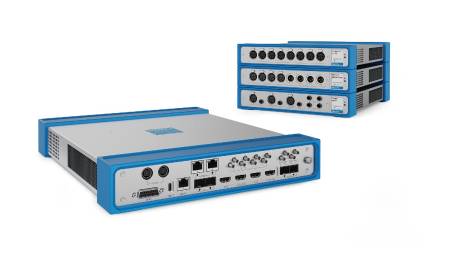

Argentina. After more than two decades without a substantial renovation in the management and control of the radio spectrum in Argentina, the National Communications Entity, ENACOM, acquired new equipment for this purpose, which represents a fundamental advance to guarantee the efficient coexistence of radio communications networks and avoid interference that may affect the safety of the population and the quality of service.
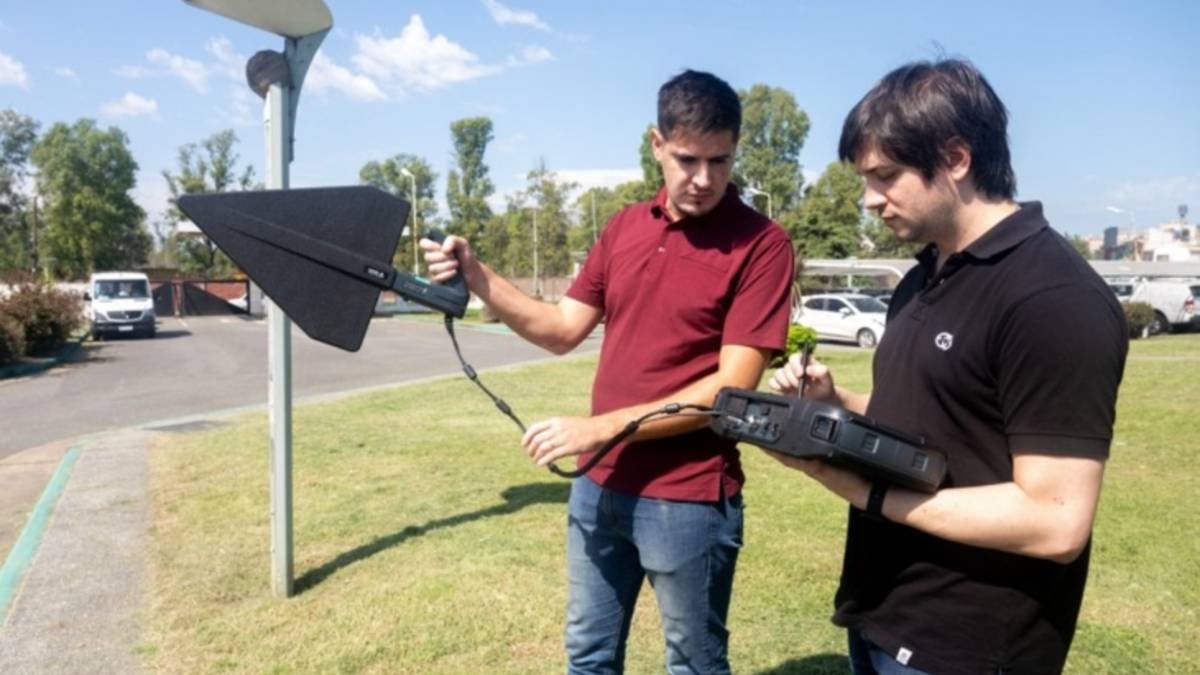
Among the devices acquired are portable radio-goniometers, an instrument that allows measuring angles of arrival of radio signals and accurately locating their origin in real time. It stands out for its portability and versatility.
Unlike previous systems, which date back to 1997, the new goniometer can be easily moved around in a van and even used on foot, making it easier to detect hard-to-find signals in complex urban environments or hard-to-reach areas.
The difference in terms of design and functionality is remarkable, as the new devices are not only much more compact and energy-efficient, but also offer versatility that adapts to various environments. While the old equipment required a fixed infrastructure, with antennas mounted on the roofs of vehicles or 50-meter-high towers and bulky racks, the new ones are much more compact and lighter.
Although fixed stations are still essential for certain measurements, the portable radio direction finder fulfills the same functions in more dynamic and varied contexts. This flexibility is crucial in urban scenarios with complex radio scenarios, where precision and speed in signal localization become essential.
The National System of Technical Monitoring of Emissions (SNCTE), in charge of ENACOM, is in charge of supervising the correct use of the radio spectrum and the emission levels of the antennas throughout the national territory, as well as detecting and solving interference events that affect the different radiocommunication services, including those that may put the population at risk (including police, bank alarms, civil defense and air navigation systems).
However, the current structure of the SNCTE was implemented in the late 1990s and had not received significant updates since. As time went by, old equipment began to show signs of wear: reduced sensitivity, deterioration in its operating bands, longer downtime due to repairs, and a decrease in the number of functional devices.