

Latin America. Akamai has launched Akamai Cloud Accelerated Compute Instances, a new category of specialized compute chip-based computing designed to perform specific tasks more efficiently than general-purpose processors.
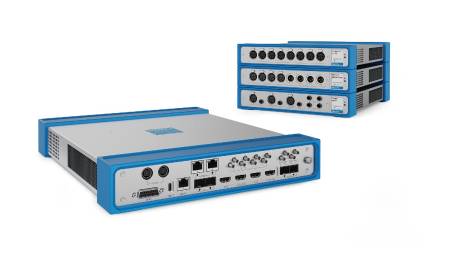
The new instances are powered by NETINT's video processing units (VPUs), NETINT's proprietary hardware for media transcoding. Akamai is the first and only cloud provider to offer cloud VPUs.
NETINT VPUs are designed for workloads where minimizing the cost of distributing high-quality video streaming events is essential or where reducing power consumption is a priority.
Akamai Accelerated Instances are powered by Quadra T1U VPUs, a single-chip solution that supports encoding resolutions up to 8Kp60 in industry-standard formats such as AV1, HEVC, and H.264 with 8/10-bit support, including HDR. As the highest density encoding hardware available, the Quadra T1U VPU can encode 32 live streaming events with 1080p30 streaming quality, and with capacity adjustment linearly for resolutions above or below HD.
The rise of live and on-demand video streaming, user-generated content, and video-based social media has led businesses to look for hardware and cloud solutions optimized to improve application performance. However, cloud computing resources optimized for transcoding are scarce.
Previously, the only way to deploy NETINT VPU hardware was to purchase it directly and run it on-premises or in a colocation facility. Akamai Accelerated Compute Instances is designed for media companies that offer video-on-demand and live streaming services, providing the scalability needed without increasing IT budgets.
"By bringing traditionally hardware-limited power to the cloud, we are removing the barriers that have held businesses back. Enterprises can now reduce costs, scale seamlessly, and deliver better streaming experiences, solving a significant industry challenge that has been overlooked for far too long," said Jon Alexander, vice president of product management at Akamai. "Being the first cloud provider to offer VPUs provides Akamai with a new competitive advantage to extend our long-standing relationships with our media partners."
NETINT VPUs allow enterprises to reallocate their application CPUs by offloading compute-intensive video processing tasks to the VPU. A VPU architecture delivers up to 20 times the performance of CPU-only solutions.
This frees up the CPU to do other things like dynamic packaging, deinterlacing, generating real-time captions from speech-to-text, decoding unsupported standards in the VPU, and running popular applications like Ffmpeg and GStreamer.