
Brazil. Open satellite television, which was once considered a technology in decline, is making a strong comeback in Brazil. This resurgence is being fueled by the migration of households from analogue C-band to digital Ku-band, a government-mandated move to free up 3.5GHz spectrum for 5G deployment.
According to the most recent study by the firm Dataxis, before the transition, it is estimated that 30 million Brazilian households depended on satellite television in C-band. Now that this spectrum has been repurposed for 5G, many viewers have turned to other TV services, making it difficult to determine the exact number of people who will migrate to the Ku-band and use free-to-air satellite TV. However, early adoption figures indicate strong growth.
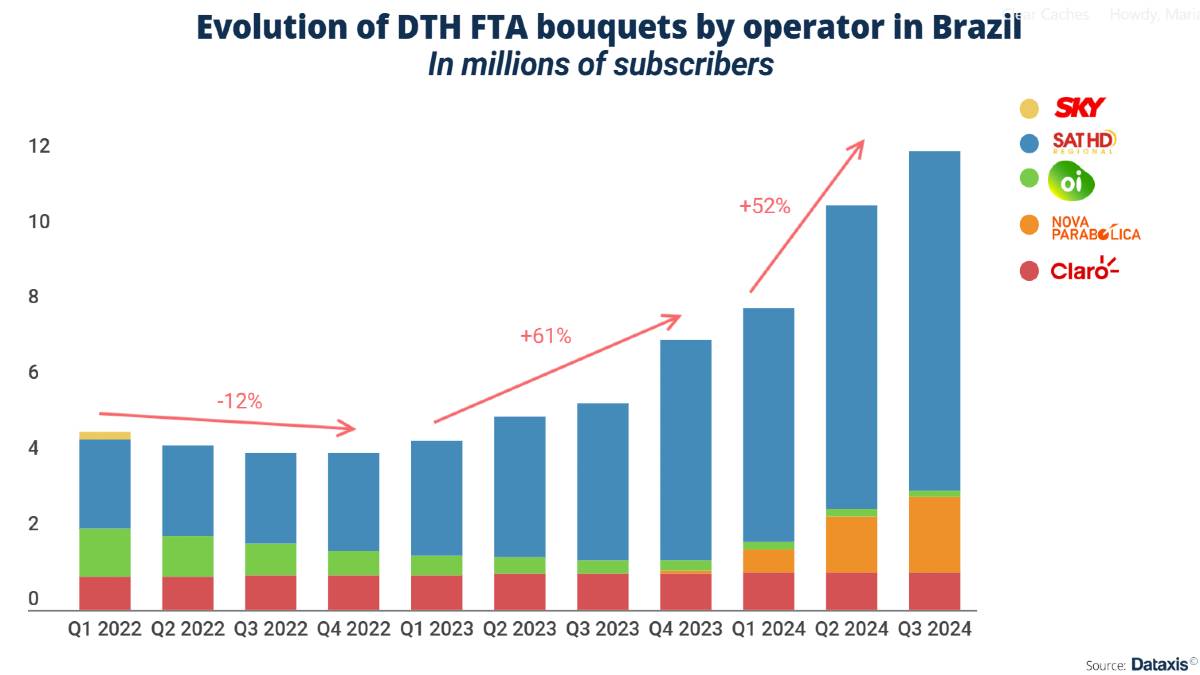
This technology, officially referred to as receive-only television (TVRO), refers to a kit, a ground station used to receive satellite television signals directly to the home. It is now available on two key satellite platforms: SAT HD Regional, which operates through the StarOne D2 satellite (owned by Globo and designated for migration public policy), and Nova Parabolica, a Sky brand that uses the Sky Brasil satellite.
Both platforms offer around 80 free-to-air TV channels, covering national and regional content. As seen in the graph below, these two services are driving the rapid expansion of free-to-air satellite TV in Brazil.
To ensure a smooth transition, the Brazilian government has distributed more than 4 million free TVRO kits since the fourth quarter of 2023, with tens of thousands of new installations each month and 3 million households expected to migrate in the second half of 2024.
Dataxis estimates that this trend will continue, with an estimated 9 million households using TVRO by 2025 and 11 million by 2029, discounting overlays with other TV technologies. This reinforces the importance of satellite television in Brazil, particularly in remote areas with limited access to broadband.
To learn about the full study, click here.