
With the right approach, broadcasters can leverage HDR to deliver a first-class viewing experience without an exceptional budget.
John Mailhot*
Live HDR production is no longer a luxury reserved for global sports broadcasts. Thanks to smarter workflows and affordable processing tools, high dynamic range (HDR) is now accessible to broadcasters and content producers throughout Latin America.
From big football matches to music festivals and national celebrations, HDR is transforming the way we capture and broadcast live events. And it's possible without a full transition to 4K.
In fact, 1080p HDR has become the industry's ideal choice: affordable, efficient, and noticeably better than standard definition or traditional HD. With the right approach, broadcasters can leverage HDR to deliver a first-class viewing experience without an exceptional budget.
Why HDR, not just UHD?
While 4K resolution was initially supposed to define image quality, industry experience and viewer feedback tell a different story. The jump from HD to 4K isn't always apparent to the average viewer. HDR, on the other hand, makes a noticeable visual difference. Increases contrast, enhances color depth, and preserves detail in shadows and highlights. The result is a sharper, more vibrant and realistic image, even at 1080p.
As viewers in Latin America invest in modern TVs and streaming devices, many of which support HDR, their expectations for quality are changing. For broadcasters, meeting these expectations requires a new approach to workflow and a willingness to reframe traditional assumptions about visual quality.
The opportunity of HDR 1080p
Globally, HDR 1080p is now a proven solution. Amazon Prime Video uses it to stream Thursday Night Football in the US; Paramount+ offered Super Bowl LVIII broadcasts in HDR 1080p and 4K HDR; and LaLiga matches in Spain are offered in both 1080p HDR and 4K HDR. Even for regional content, HDR 1080p can enhance the viewer experience without the burden of high data rates or costly upgrades.
This model is ideal for both national and regional broadcasters, as it offers the wow effect of HDR, especially in fast-paced sports and high-intensity outdoor shows, without the complexity of 4K production and distribution.
One Workflow, Two Outputs: The Single Mastering Approach
Previously, one of the biggest obstacles to HDR adoption was the need to manage separate production lines for HDR and SDR outputs. Today, most broadcasters are adopting a unique mastering workflow, where production is mastered in HDR and then scaled down to SDR with high visual fidelity.
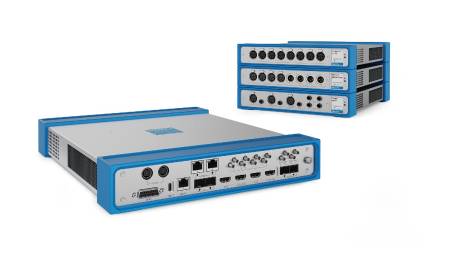
This approach minimizes operational complexity and allows broadcasters to serve both advanced and legacy platforms from a single source. The key is to manage consistent conversions using well-defined LUTs (lookup tables) and thorough calibration. Tools such as Imagine Communications' Selenio Network Processor (SNP) make this task easier by offering real-time conversion between HDR formats such as HLG and PQ, while maintaining consistent picture quality across all outputs.
This model has been implemented for mass events, but is also currently used for medium-sized live sports productions and entertainment programs that are broadcast on various platforms, from digital to terrestrial and pay television. Distribution still has shortcomings, but OTT technology closes them.
While OTT platforms are increasingly capable of delivering HDR streams directly to compatible devices, traditional streaming systems still face challenges. Cable and satellite often require HDR-compatible set-top boxes, and over-the-air broadcast standards such as ISDB-Tb (used in most Latin American countries) do not yet support HDR natively.
But that doesn't mean broadcasters should wait. Producing in HDR now means your content is future-proof, and digital platforms that already support HDR can immediately deliver a higher-quality experience to viewers on smart TVs, phones, and tablets.
HDR Production in the Field: Lessons Learned
In live production, flexibility is key. Mobile units covering HDR events, such as Formula 1 in São Paulo or El Clásico, must be able to adjust on the fly. This includes managing color correction, HDR and SDR camera compatibility, and on-site LUT adjustment. Rigid workflows don't work in real live streaming environments, and any HDR strategy needs to be agile and well-documented.
For Latin American production teams, this means detailed pre-production planning, clear coordination between camera shaders and technical directors, and adaptable tools in the field.
Conclusion: A Practical Path to Impactful Live Video
HDR has gone from being a cutting-edge technology to a practical, scalable enhancement for live production. From sports to entertainment, it allows broadcasters to deliver premium picture quality without the need for 4K. With affordable equipment, proven workflows, and rising audience expectations, it's becoming easier to integrate HDR into any production strategy.
The future of live streaming is focused on higher resolution and better pixels. For broadcasters that are ready to take the leap, HDR is the smart next step in giving viewers the exceptional quality they expect.
*John Mailhot, Senior Vice President of Product Management at Imagine Communications.