
Differences between the audio levels of television channels are a frequent problem among different private multichannel operators, where a greater number of channels involves an equal number of audio differences. This problem has been addressed by different traditional methods, which include the use of peak and volume control systems, which despite their efforts have limitations given the particularities of the perception of viewers. To solve this mess, Dolby created and proposes the use of LeqA.
Although not a totally new method, LeqA, a system of measuring and controlling audio through an algorithm, resembles the way viewers listen.
And boy is it necessary! For the sample, in a recent study conducted by Dolby laboratories in Europe, it managed to measure audio differences of up to 17 decibels between the different channels. Here it is enough to remember that variations of 3 dB are quite remarkable for listeners, while those of 10 dB are almost double, according to studies on environmental noise of the O Hare Sound Compatibility Commission.
The reasons for these shortcomings in sound homogeneity indicate that there are actually few tools for TELEVISION operators to handle the already finished products that come into their hands. Products that, by the way, come from numerous sources and from different analog and digital technologies. Another factor is price, which has made transcoding systems a popular choice in the industry.
The advantages of this system the use of transcoders are that they eliminate the need to include encoding and decoding devices, with the consequent cost advantage, but at the same time implying limitations in the control of audio.
These limitations are complicated by the diversity of volume of the commercials, which is often greater than that of the programs transmitted as a result of their audio compression systems, resulting in this same television piece having a different volume from the rest of the programming.
As if that were not enough, the relativity of sound is another drawback, because it is psychological and depends on many factors, ranging from the noise of the environment to the mood of the listener, so it is difficult to judge how high the volume of something is. However, there are standards that although they do not solve the problems in their entirety, they give some parameters.
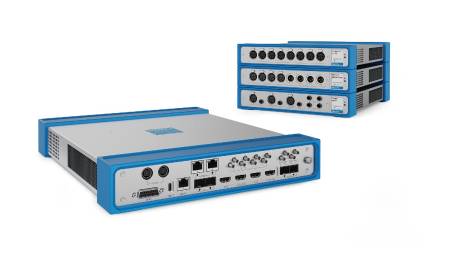
To aid in this task, Dolby developed a method called "Dialogue Intelligence" that emulates the human way of hearing, selecting portions of dialogue, in the transmission, and using them as a measure to help the audio control system in a more efficient way. This technology is present in the LM100 sound measurement equipment, which captures the sound differences between channels to determine an audio homogeneity between them.
A bit of history
Leq, itself, is a measurement system used to determine the average intensity of a sound over a given period, and has been used successfully in film. As a study by John Couling for Dolby laboratories recalls: "The problem with the big screen a couple of years ago, was the great variety of sounds of the different reels exhibited in theaters and although in the beginning peak alignment systems were used, these fell short, more taking into account the handling of several audio channels that each piece involved."
That is why the film industry, in team with Dolby, created Leq(m) as a standard sound measurement system, which was quickly adopted by different equipment manufacturers in the industry and became a standard that solved the reigning sonic chaos.
Leq(A) now comes with the same objectives, thanks to its technology that allows a more credible acoustic sounding than current models. We must bear in mind that both standards have several differences in their wavelength measurement system, because while Leq(A) is designed to measure frequency responses of normal conversation levels, the Leq(m) was created with the audio levels of film projection, seeking to determine when a signal is annoying to the viewer.
Designed to meet the needs of Dolby television, it also implemented a signal control system called Dialnorm (Dialog Normalization).
To understand how dialnorm works, it is worth remembering that the standards imposed by the FCC on NTSC sound systems include a large loss of high-frequency sounds and drastic losses of the dynamic range of sound. Dolby included numerous technologies to combat system deficiencies, such as Digital Perception Coding and Dynamic Range Control (DRC), which allow the operator to choose the desired degree of compression.
As for a mechanism to ensure audio uniformity, Dolby was at a crossroads, because while it could create a fixed volume, the lack of consensus about a single measure opened the door to dialnorm, which uses a variable range of sound between -32dBFS and -1 dBFS, for dialogues, with a Leq(A) measurement system. This system was perfect as long as the Dialnorm value of each program was provided to each decoder.
But the set-up of Dialnorm is not as easy as etvcookbook.org, a website that obeys an effort of different American television operators, arguing the lack of Leq(A) measurement tools in local television operators, in contrast to the always numerous PPM and VU systems.
Another point is the subjectivity of Dialnorm, because for its operation portions of dialogues are chosen and the volume of the musical shows is left to the discretion of the operator. In addition, for the configuration of the Dialnorm it is advisable to use controlled listening environments, since it is sought that the listener does not have to alter the volume of his receiving equipment when changing channels, demanding time and trained personnel to operate these equipment. In addition, Dialnorm requires the use of metadata-compatible systems and, as is well known, many operators currently own equipment, cassette libraries and servers, unable to work with this system.
Although various operators have taken effective and local measures in their way of combating audio, the use of standards is a necessary step that requires investment and qualified personnel to install solutions to make audio a problem of the past.