
TV and Video: What is the sonidista's job?
César Salazar:
The main thing that has to be done, in the sonidista's job, is the capture of the direct sound of the dialogues and, in addition, the atmosphere and some sound effects. It is better to make them in the place where it is recorded, than to try to get them later on effect discs.
The sound engineer must ensure a good understanding of the texts of each actor and from the technical point of view, he must make a good register, a good modulation and a good relationship between the acoustics of the place and the voice, all this depending on the image. The idea is to try at all times to avoid dubbing, although there are directors who have no problems with this. In Latin American productions there is no correct post-production infrastructure to do dubbing and, budgetarily, there is no money for this type of work, so the sound engineer must guarantee 100% quality.
Sometimes the work of the sound engineer is not so easy because, depending on the places where it is recorded due to environmental noise issues or by the same equipment used in the filming, which is sometimes not the most appropriate, it is possible to carry out an acceptable sound, but not with optimal quality. For example, if you are making a period film, from the 50s or earlier, it is much more complicated to make the sound because before there were no ambient noises that there are today and filtering the noises of cars, cell phones or things like that is sometimes more complicated.
It is quite a struggle the direct sound in this era because it is recorded much less in studios and work more in what they call "natural decorations", and those places are chosen more with an artistic criterion and by the architecture of the place, but sometimes they turn out sites, acoustically speaking, difficult to work; in all this it is important to differentiate, in addition, that, depending on how the sound is recorded, if it is monophonic or stereo for example, it can also affect how the final result is heard.
TV and V: What qualities should a good sound engineer have?
C.S.: This work involves above all a great auditory sensitivity, obviously. In this it can be said that those who study music have this more developed aspect, but sound, apart from that, is also an art and a technique.
Initially, you have to have a good technical basis to understand a number of phenomena inherent in sound itself such as creation and propagation. That involves disciplines that have to do with basic sciences such as physics, architecture, electricity and now the new digital theories that must be compared with the analog technique. The sound engineer must be able to solve any problem of breakdowns in cables or equipment of his use. And, on the other hand, the humanistic part that has to do with knowing how to listen and never losing attention. The case where this is best exemplified is when documentaries are being recorded because they require a concentration and special teamwork and also require a lot of sensitivity to be able to capture what is really of interest; it is to know and feel all the time that with the sound you are also making memory.
TV and V: What is the basic equipment for the work of a sound engineer?
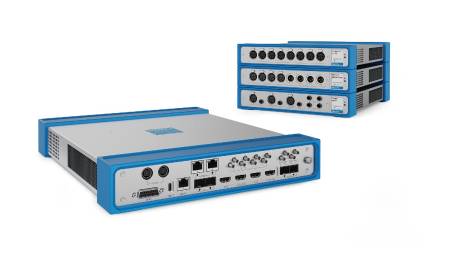
C.S.: As minimum resources you have to have a captor, that captor is the microphone, this is linked to a cable through which the signal is transported to an element that records it and that has the ability to reproduce it, to this recorder must be connected the headphones that allow to have a monitoring of what is being done. This part is fundamental because it depends on what you really hear is looking good and there are no problems in post-production.
For the use of boom type microphones it is essential to mount on a reed, since it allows to work more easily depending on the image because it becomes an extension of the arm and collaborates with the distance that must be maintained for the framing, In addition, if you work outdoors, you must have a windbreaker to minimize the noise that this element can generate.
TV and V: What are the main differences between sound work for cinema and for TV?
C.S.: There are differences from the planning, the ideal is that there is a previous discussion about how it is going to work and what considerations must be taken.
With regard to television, there is a clear feature and that is the speed with which it has to be produced, you have to be fast and it has to be profitable and sometimes that haste makes it demerit a little to quality.
What can be compared more easily is when you make some fiction for TV or for cinema, in cinema there is much more time, preparation and even budget. In TV for work at least 2 or 3 cameras, almost no aerial microphones with cane are used but more wireless microphones are used to speed up the work. In addition, this type of microphone does not have the problem of the shadows that the cane sometimes generates. Anyway, although that facilitates some things it also complicates others, for example, when friction occurs or the actors can not use microphones due to the characteristics of the scene.
The intermediate genre between these two is the telefilm, which is made in cinematographic format, but with a more agile way of working, it is also done with two cameras and the way of capturing sound is more similar to cinema than to TV.
Even so, everyone chooses the way of working, for example the French choose the direct sound with reeds, in the United States they mix the direct sound with dubbing and combine the wireless with the cane, even, there are directors in the east of the United States, the most independent, who prefer industrial techniques to wireless, the Spanish are returning to direct sound and the Italians continue to double a lot.
TV and V: How are Latin American productions in terms of sound?
C.S.: It's very variable. If the same French who have a great cinematographic tradition, complain about certain problems of standardization in the production of sound and in the projection rooms, then Latin America is no exception.
In Latin America the post-production part has been very abandoned and obviously the exhibition also has many technical problems, so much so that in our countries, for example, not more than 5 years ago there are exhibition rooms with Dolby Stereo. In addition, you do not have the right post-production and mixing infrastructure, you only find studies with more or less acceptable conditions in Mexico, Venezuela, Argentina, Chile and, of course, in Brazil. In general, the quality has improved, but the problems that still exist a lot have to do with the little continuity of our productions and the lack of trade and industry.
TV and V: You had the experience of working on a film shot in HDCAM, did that change the way you work for sound?
C.S.: No, we simply planned the way it would be captured, and in the same high-definition cameras by means of a cable a mixture of the signal was sent to have reference and it was recorded on the tape, this facilitated in practical terms, the audio synchronization work, because when the off-line assembly was being done in Betacam, the sound was easier to work with. What did change was the use of the clapper because it was not lacking for synchronization. For example, in the moments of recording with the video cameras, the director was in a mobile unit and from there with the help of intercoms the instructions were made to the equipment. In this the work was very similar to that of TV.