
Ignorance, uncertainty, rejection and constant noise without purpose is how people see artificial intelligence today.
Boris Cruz*
For many reasons, this perception is growing, and not because AI is obscure or incomprehensible, but because the public conversation was filled with noise before it was filled with judgment. They filled us with tools, but not with understanding; of urgency, but not of purpose; of grandiloquent headlines, but not of emotional education.
Collective anxiety does not arise from technology itself, but from the speed with which it is transforming everything, without us having had time to assimilate it. They talked to us about efficiency, automation and productivity, but not about how to navigate change from a human perspective; And when a society does not understand something that runs through it, the most basic reaction is not curiosity: it is fear.
That fear has become the main obstacle to AI adoption, because it doesn't just feel abstract, but also personal. Fear of making mistakes. Fear of not understanding. Fear of not being enough. Fear of losing relevance. Fear that "the human" will lose its place. Today we are not discussing technology; We are discussing identity.
Studies confirm this: in global surveys by the Pew Research Center (2024), most people do not reject AI because of its capabilities, but because of the symbolic threat it represents. Kantar (2024) and Microsoft & IAON (2025) agree: the lack of clarity generates more fear than the tool itself.
And as if that were not enough, another trigger was added: the labor market began to demand mastery of generative AI without prior literacy, without emotional training, without conceptual bases and without respect for the original discipline of each professional. People are asked to "adapt quickly", without accompaniment, without context and without a serious conversation about risks and limits.
You are hiring by software rather than by look. By technique rather than by criteria. By function rather than by sensitivity.
But the tool is not a substitute for perspective. And the fear is aggravated when it becomes work pressure.
In the midst of this climate, we forget something essential: creativity has never been a solitary or perfectly original act. Painters always learned from other painters. Writers always dialogued with previous books. Musicians inherited chords from entire generations. And the most renowned actors play lives they never lived, guided by directors who were not there either, but who have the sensitivity to make them true.
That doesn't take away from their authenticity. It gives them depth.
AI did not invent the idea of creating on top of what has already been created. It only amplifies the scale. What it cannot replicate – and there is the key – is the human intention behind each decision.
That is why the conversation about AI must stop focusing on "how it works" to focus on "what it exists for" and "from what sensitivity we use it". When the narrative is reordered, fear is deflated and the possibility of integrating technology without losing identity appears.
Fear is not the enemy: it is a message. It says where it hurts, where there is a lack of clarity and where we have to educate. If we listen to it, it does not paralyze: it guides.
Conscious adoption of AI doesn't depend on tutorials or speed, but on critical thinking, ethics, imagination, and purpose. And that combination remains, and always will be, profoundly human.
At this point, it is also necessary to talk about how AI is reshaping professional life. Today, technology is not only changing processes: it is redefining priorities, expectations and ways of adding value. The conversation is no longer just about what tools we know, but about how we sustain our professional identity in a scenario that moves faster than any manual.
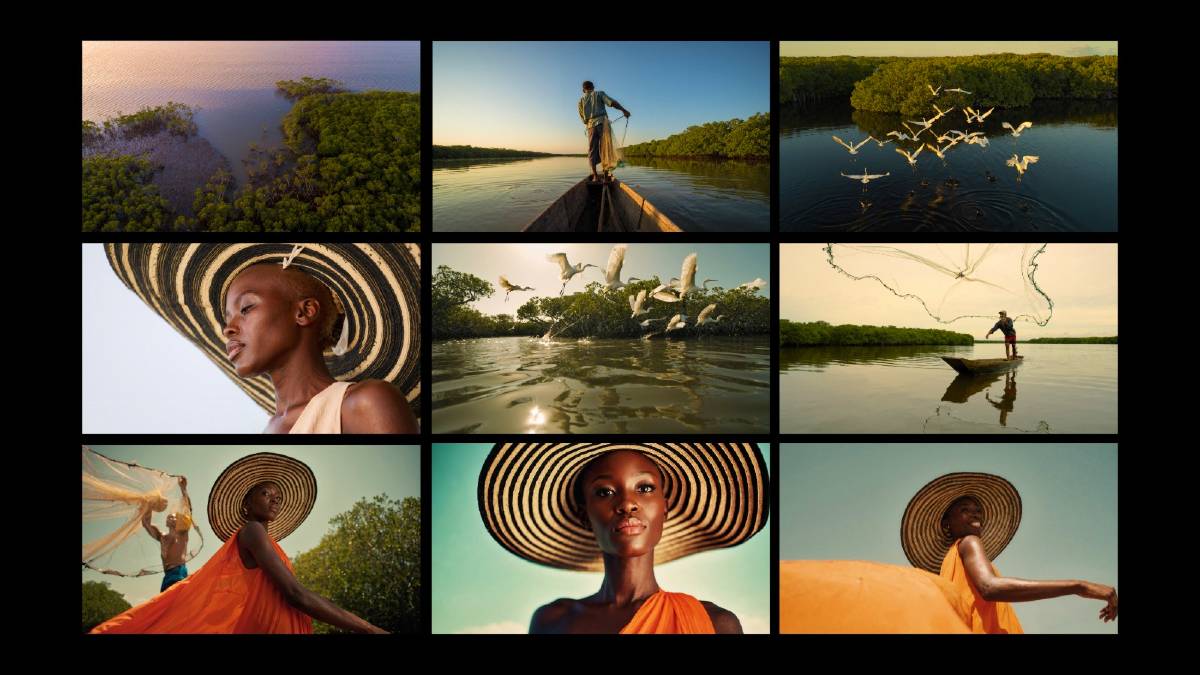
This is where my own experience comes in, because understanding this change from the inside also provides perspective. I mention The Vanta Project because, as a founder, I've seen firsthand how AI demands a clear stance rather than a technical mastery. Vanta was born as an audiovisual production hub with AI focused on creative direction, and that premise led me to understand that the essential thing today is not the tool itself, but the ability to sustain an idea with criteria, intention and sensitivity.
In practice, that means that no visual key, storyboard, animatic, or narrative piece I produce is based on a technological shortcut, but rather on a solid concept that guides every creative and aesthetic decision. Technology comes in later, as a multiplier and not as a substitute. Vanta's workflow—which mixes conceptual curation, controlled experimentation, art direction, and precise post-production—doesn't seek to impress with AI, but to preserve the coherence of the idea.
And I mention this because it reflects something broader: a possible path for any professional in times of AI. Integrate technology without losing intent. Use it to broaden the look, not to replace it. Understand that tools change, but sensitivity, ethics, and narrative clarity are still the true value.
At a time when fear dominates the public and work conversation, examples like this – from my own practice or from any discipline – remind us that AI only makes sense when it amplifies the invisible chain of collective inspiration that has always sustained creativity. It's simply the coherent final note: a practical demonstration that AI only makes sense when there's soul behind the prompt.
Sources consulted
Pew Research Center. (2024). How people around the world view artificial intelligence. https://www.pewresearch.org/
Kantar. (2024). Study on social perception of artificial intelligence. Kantar Insights.
Microsoft & IAON. (2025). Annual Observatory on the Relationship between Society and AI. Microsoft Spain.
*Boris Cruz is a Colombian Creative Director with more than 11 years of experience developing visual narratives for high-profile brands. His career integrates art direction, branding, interface design and audiovisual production, combined today with advanced artificial intelligence processes. He has led projects in industries such as mass consumption, hospitality, tourism, automotive and lifestyle, creating visual universes with a strategic focus and cinematographic finish. He is the founder of The Vanta Project, a creative hub that fuses concept, editorial aesthetics and technology to tell stories with intention. His vision is based on research, Latin American sensitivity and a clear conviction: AI only makes sense when it amplifies a good idea. You can contact him at [email protected]