
 Although its main function is to help people who are hearing impaired, closed caption has other functions. Here are nine points about this system.
Luis Guillermo Torres *
1. Not only for people who are deaf or hard of hearing
Closed caption is the technology developed to allow people who are deaf or hard of hearing to understand what is said in a television program or in a more general way, to access audiovisual content.
But closed caption has proven to be very useful, not only for people with hearing impairments, but also for people in the process of learning to read their mother tongue or a second language. Additionally, it is useful in situations where there is a lot of noise and you want the audience present to access certain information.
An important feature in the definition of closed caption systems is that the user has the possibility to activate and deactivate the service.
2. Line 21 and closed caption on analog TV
The NTSC system displays approximately 30 frames of video per second (fps). Each frame is divided into lines and each line into pixels. The first 21 lines of each frame correspond to what is known as the VBI or Vertical Blanking Interval. These lines are not visible on TV screens.
These lines contain information for different purposes, the most important of which is the synchronization of frames. Line 21 is the one used to send the closed caption information.
As in the NTSC system, the signal is interlaced, there are two 21 lines, one in each field, so two sets of data or characters can be sent. The signal on line 21, field 2, corresponds to line 284. Each of these fields form two independent streams of information in the TV signal, from which the four channels of cCaption, known as CC1, CC2, CC3 and CC4, are formed.
3. VANC and Closed caption in digital television
Closed caption for digital television (DTVCC) can be carried in different ways, but the most common is through the use of the SMPTE-334-1 standard, which defines a method of embedding DTVCC and other data services in the auxiliary vertical space (VANC) of SDI and HD-SDI signals.
The SMPTE 334 defines a caption distribution package (CDP), the basic unit of data that is carried through the DTVCC distribution chain. The CDP consists of a specific sequence of bytes that can carry caption data for digital television (CEA-708), caption data for analog television (CEA-608), caption and Time-Code information services.
4. In digital television you can send more information of closed caption
In the NTSC system, CEA-608 allows each field to contain only two characters at a time (2 bytes, 16 bits); thus, the data rate is 2 x 60 = 120 characters per second, or 960 bps. In DTV, the data rate is 9,600 bps. This allows you to send caption information in several languages at once.
5. How does the viewer receive the closed caption on the TV?
In the past, when the entire production and distribution chain was basically analogous, it was enough to ensure that the NTSC signal passed from the source to the TV, keeping line 21 intact. The TV is responsible for "decoding" the information of line 21 and showing it to the viewer, when he activated the corresponding function.
Today, with a mix of digital and analog signals, the situation is more complex. If the signal is sent over the air, it is the TV that is in charge of "decoding" the closed caption and showing it to the viewer.
However, when the signal is sent through cable or satellite distributors, additional difficulties arise. The STB will be able to recode the information of closed caption CEA-608 directly on line 21 and send this signal to the TV, who will be responsible for decoding and showing the user the text.
For DTVCC signals, the TV will receive the video from the STB, only the captions can be decoded by the STB itself or by the TV. An additional problem arises with the connection between the STB and the TV. Currently, to make the best use of the quality of high definition (HD) signals , the HDMI connection is used.
This type of connection does not allow the passage of closed caption information, so if this is the case, it is required that it is the STB that decodes the caption and includes it in the video signal it sends to the TV.
All these situations make this a subject difficult for the end user to understand, which entails additional obstacles to the use of this type of services.
6. Stenotype and voice recognition for live closed caption
Although there are more and more aids for the insertion of closed caption to a television program, this is still a process with a high component and human intervention.
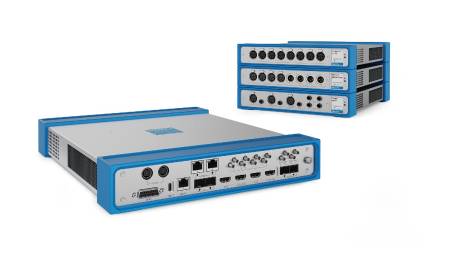
In the case of programming that is broadcast live, such as newscasts, magazines, etc., the production of closed caption requires: a CC encoder that inserts the text into the video signal, a software that allows the text to be sent to the encoder in real time and a way to convert the audio into text. This last aspect is the one that entails the most difficulties.
There are two main ways to convert audio to text: using speech recognition (SRV) software or using a stenograph. SRV requires a trained operator to repeat the program's audio in real time. In addition to repeating, and for the viewer to understand what they read, the operator requires inserting punctuation marks and character identification.
The stenography or stenotype system requires a trained operator who writes in real time on a machine, the stenographer. The best trained stenographers can write between 150 and 180 words per minute, with accuracies greater than 95%. The training time to achieve these speeds is more than 18 months.
With the SRV, results are also produced greater than 150 words per minute with accuracies between 85% and 90%. A person's training to use an SRV and produce acceptable results is between two and three months.
In neither method, all people who start a workout achieve acceptable results. For SRV between 60% to 70% of those who start training, achieve the desired result. In the case of stenography, this percentage is between 30 and 40% of those who start training.
7. Importance of closed caption made for pre-recorded programming
Producing good quality CC for pre-recorded programming, involves taking into account among others, the following characteristics: good spelling, character identification, sound description, synchronization, transcription of audio into text, conversion of HD to SD and vice versa, etc. All this makes inserting CC to an hour of programming takes between six to eight hours of work.
For today's digital workflows, it is also necessary to take into account the editing systems used, the broadcast servers used, the format of the files, and so on. When selecting a CC software, it must be taken into account that it is capable of handling the workflows and formats used to have a tapeless CC production .
Inserting CC with these characteristics involves production time and costs. This means that tv channels often want to produce the CC of pre-recorded programs, using the workflow of live programming. However, doing this means that the primary objective of making television programming accessible to people with hearing disabilities is not met, as the delay, the little or no identification of characters in programs such as novels and serials, the non-inclusion of sound effects and the lack of other features that are lost in the live workflow, they do not allow an adequate understanding of the contents.
8. Other considerations when producing closed caption
For pre-recorded programming, in many cases, the production chain does not leave the desired time for the insertion of the closed caption, since the completion of the production is very close to the broadcast of the program (time less than 24 hours). This is why specialized and reliable systems of transcription, review, correction and insertion within the program and personnel specifically trained in each of these areas are required to make the production of the closed caption within the required times.
Although the equipment for the production of closed caption does not have a very high cost compared to others used in television production, a large component of labor is required, and this staff for live programming requires training that in many cases is greater than two years.
There are not enough trained personnel in performing closed caption.
9. Outsourcing of the service
Hiring an external company to provide this service has several benefits for TV channels:
Better quality service, as this is the core of your business
Permanence of the independent service of holidays or illnesses of the plant staff
Versatility in schedules and programming to which the service is provided
Provision of the service with the best technologies available in the market
Less impact on the production processes of the channel
Ease in the increase or reduction of programming to which the closed caption is inserted
Reduction of operational burdens in terms of specialized personnel required
Minimization of acquisition of high depreciation assets by the channel
No major investments related to the acquisition, installation and training of new technological platforms are required.
*Luis Guillermo Torres is president and founder of the company Atmedios. What you should know about closed caption