
 Through a restoration technology, it is possible to bring classic high-quality television content to viewers with high definition (HD).
By Paola Hobson*
Viewers are more demanding than ever today, when HD programming has become the norm and high-quality , large-format displays are common and affordable. At the same time, there is a high demand for classic programming and many television networks – including several Latin American ones – boast of having extensive collections of appreciated classic series such as telenovelas, documentaries and comedies, whose original format was the videotape or the film.
The networks are eager to broadcast these programs or reuse them for Blu-ray distribution, but much of the material requires considerable repairs in order to meet consumers' expectations of high quality.
The loss of quality in programs produced decades ago occurs due to many factors, such as poor production conditions, deterioration of the tape or film, or defects introduced in the early stages of material transfer. The film can have scratches, dirt, flashes, among other problems. The video may feature noise and pixel loss.
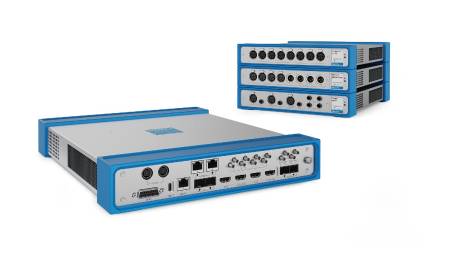
Traditionally, restoring high-quality movies and video has been a laborious and time-consuming process that requires frame-by-frame editing, but the technology has made great strides in just a few years. In this article, we will track the restoration of a piece with content from the early 90s using Snell's Archangel Ph.C-HD real-time restoration system.
Dirt and dust
The initial review of the material by an expert will reveal the presence of some quality problem, such as dirt, holes, scratches, instability, low contrast, flashes or noise. Even if it has been carefully stored, physical dirt and dust may appear on the film.
When a film is transferred to video, dirt and dust appear in the form of white, black or colored spots, dots or lines, of different sizes and shapes. Dirt and dust issues can be very annoying for viewers, especially when scrolling around the screen. On the other hand, large particles of dirt can hide the details of the image.
Dirt and dust can be removed by washing the film before scanning it, but washing is not an option for content holders who possess a large amount of content that needs to be repaired quickly and cheaply. Likewise, washing is obviously an inadequate option for programs in which the original film was transferred to videotape and this is the only format available.
One way to remove dust and dirt in real time is to employ motion-compensated processing to reconstruct a certain video frame from the frames before and after it. If the motion vectors are accurate, this is a very fast and effective way to repair areas of dirt seamlessly.
It is important to preserve the contents of the image when performing dust and dirt removal. Any automatic or semi-automatic restoration system must ensure that authentic moving objects are not confused with unwanted stains, it is also important to preserve the grain of the film, which can be mistaken for dust.
Additionally, any repair method based on motion compensation could damage the image if the motion vectors are not calculated accurately and if the frame reconstruction is not perfect.
Scratches
Vertical scratches on the contents can be caused by problems during the film scanning process. Scratches are often unacceptable to viewers because they can be distracting, especially when scrolling through the image or hiding an actor's face. Once a film has suffered a scratch, the defect remains in the contents unless prolonged physical repair processes are carried out.
Such repairs are usually extremely expensive, especially in series with several episodes. Manual removal of scratches using frame-by-frame software tools is very slow, and poorly managed or overly aggressive automatic scratch detection and repair can damage the image and remove authentic vertical details.
The system used uses powerful algorithms to automatically detect scratches and distinguish them from areas with fine details in the image. Once scratches are detected, an automatic repair is applied and provides tools to allow operators to choose how sensitive the detection and repair should be. Thus, by combining advanced digital processing techniques with the expertise of the restoration operator, the best results in terms of quality are obtained.
Noise reduction
Low lighting and outdoor scenes lead to the generation of noise and grains in the image, due to the sensitivity of the film and the thermal noise of the camera in video productions.
A careful analysis of the image allows to observe the noise reduction in the wall area at the top of the scene. The adaptive noise and grain reduction and in real time is controllable by the user, allows to vary the noise that will be removed, depending on the desired final result. Because directors often deliberately introduce noise and grain into an indoor shot to increase the dramatic effect, the operator employed a moderate noise reduction setting.
Instability
Instability in film and video is caused by camera movement or by the telecinating process. Movement can be very distracting and ruin the viewer's enjoyment. The manual correction of frame-by-frame instability is extremely long and involves a high cost in terms of operator time. However, any instability in TV shows can be fixed with Archangel Ph.C-HD's real-time instability correction, which quickly balances the scene.
To achieve stabilization, the system continuously analyzes the motion profile of a sequence and identifies a global motion vector for each frame. The global movement is then temporarily filtered to extract the desired stable components (due to horizontal or vertical camera movements) and the unwanted components due to instability. Once the unstable movement is identified, the system automatically corrects it by adjusting the position of the image frame by frame.
In conclusion
The system is ideal for correcting frequent defects such as dirt, dust, grain, scratches, flashes and instability. Not only can television networks adjust these settings scene by scene, but they also have the ability to customize the settings according to the requirements of the project, as well as protect the artistic integrity of the content.
*Paola Hobson is Snell's vice product manager.